Fontlu is transforming visual communication, and designers and marketers need to reconsider the way the text can alter perceptions of people. Typography has long been an architecture of communication, silent structure of information over a long period of time, silent in the background. Now, when the digital world is tearing the focus apart and requires quick and profound relationships, the font itself becomes a strong means of expression.
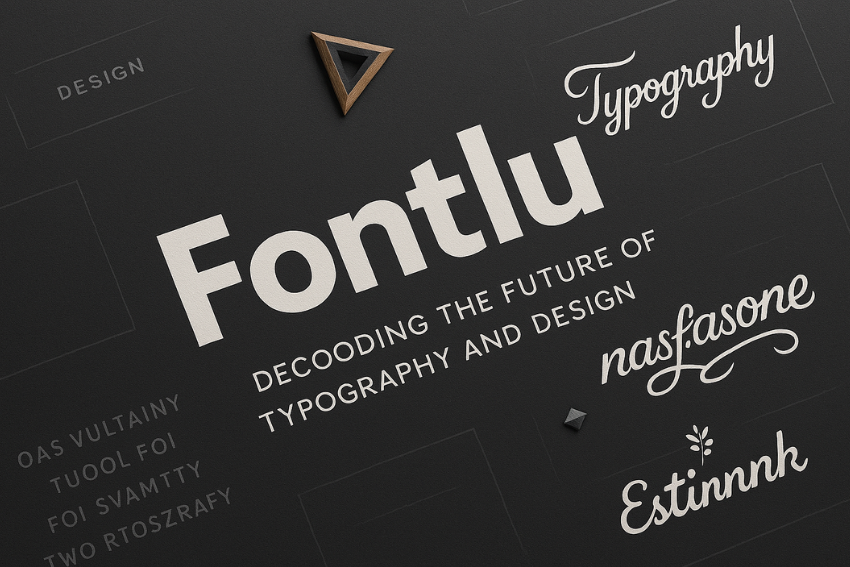
It is not any other typeface; Fontlu is a philosophical turn in the history of design, and a mixture of practical readability and intricate, emotive experience. We are entering a new era of typography and knowing the main principles of Fontlu is the key to learning what is behind the design aesthetic of the future.
The transformation of Fontlu started slowly, and it was a process that happened at the crossroads of several digital trends. To start with, high-resolution displays have broken the technical barriers that previously enforced the use of mere type designing on the tiniest smartphones to the biggest 8K displays. Second, brand identity has been closely connected with the online experience; a simple logo is insufficient. Brands require an active visual voice which cuts across all platforms.
Fontlu fills that requirement by providing a digital-native, flexible, and expressive typographic system. It provides dynamism and fluidity which the traditional immobile fonts cannot provide. Its light weight and stylishness have been taken up by designers, and its versatility has been used to produce sophisticated storytelling directly in the text. That is why it gains popularity among big creative studios and technology businesses.
The Typographic DNA: What Makes Fontlu Unique?
To comprehend the influence of Fontlu, we should also comprehend its distinct peculiarities. The design by Fontlu is superior to most traditional typeface in print because it is designed to meet the demands of the digital display and variable font technology. Its distinctive DNA is premised on several of its major factors:
Variable Axis Intelligence
Fontlu tends to use variable font technology which allows the designer to manipulate multiple axes such as weight, width, slant and even optical size with only one font file. Such a degree of fineness of control permits innovative freedom never before seen and very optimized loading of web speed. Designers produce subtle, contextual differences in the text which customizes the reading experience to the device and environment of the user.
Adaptive Legibility
The designers considered legibility in both extreme cases, that is in tiny printing on a single icon, or in huge lettering on a billboard. Fontlu preserves its clarity and character despite its size, and this is the credit of its strong geometrical basis. Its counters are receptive, its lines are well proportioned, and its natural rhythm takes the reader through without much effort.
A Fusion of Tradition and Modernity
Fontlu is a graceful fusion of traditional and modern typography, which combines the principles of classic typography with the digital geometry of the avant garde. It honors traditional calligraphical shapes and introduces fresh lines and sharp edges to the design and new terminal treatments. This peculiarity gives the typeface an eternal look, which means that it is not going to lose its significance in the wake of ever-fashionable digital trends. It is both retro and technologically advanced.
This combination of characteristics makes the design of Fontlu appear to be bursty. It is not as drab and homogenized as most of the contemporary quirky sans serifs. Rather it enables great contrast and dynamism within the same typographic hierarchy, and the text is a crucial element of the visual spectacle.
Impact on Web Typography and User Experience (UX)
The most dramatic effect of Fontlu is executed on the web typography and the consequent user experience. Since years UX researchers maintained that familiarity created trust. Memorability is now created by distinction in a content saturation environment. Fontlu offers such a difference without compromising usability.
Variable fonts are better in performance, as Fontlu uses them often, and can significantly enhance the online performance of a site. Rather than carry several font files with regular font, bold font, italic font and light font, there is only one, small Fontlu file that has all the variations. The direct effect of faster load times is a lower rate of bouncing and better SEO positioning, which makes Fontlu a good option when it comes to performance driven websites.
From a pure UX standpoint, Fontlu enhances the reading experience:
- Emotional Pacing: Designers use Fontlu’s variable weight to control the emotional intensity of the text. A sudden jump to a heavier weight emphasizes urgency, while a gradual transition suggests a slow, unfolding narrative.
- Accessibility Through Customization: The flexibility of Fontlu means designers customize it to meet specific accessibility standards, such as adjusting the contrast or slightly widening the letterforms for users with reading difficulties. This level of adaptability ensures a wider, more inclusive audience connects with the content.
- Visual Hierarchy Redefined: Instead of relying solely on size, designers use Fontlu’s inherent variations in weight and width to create complex, multilayered hierarchies. This visual sophistication guides the user’s eye more effectively than simple size changes, making complex data sets or long form articles easier to digest.
Embracing Fontlu means embracing a typography first approach to UX, where the text itself drives engagement and retention.
Branding, Marketing, and the Voice of Fontlu
In the realm of branding, choosing a typeface is akin to choosing a spokesperson. Fontlu offers a voice that sounds both authoritative and innovative. Global brands are rapidly adopting it because it signals an understanding of contemporary digital culture while maintaining corporate credibility.
Consider the psychological effects:
- Innovation Signal: Its clean yet flexible forms signal a brand that looks toward the future, embraces technology, and values modern aesthetics. Companies in AI, fintech, and digital services find this alignment particularly powerful.
- Authentic Personality: Because Fontlu allows for such minute customization, brands define highly specific typographic personalities. A fashion brand uses a light, highly condensed version to feel exclusive, while a news organization uses a slightly wider, medium weight for impartiality and clarity. The underlying typeface remains Fontlu, but its expression is entirely unique.
- Consistency Across Touchpoints: Whether the brand appears on a mobile app notification, a printed business card, or a smart TV interface, Fontlu maintains its unique character. This typographic consistency builds unconscious trust and reinforces brand recognition across every single user touchpoint, solving a critical challenge for omnichannel marketing.
Effective marketing leverages Fontlu by turning headlines into art forms. The ability to smoothly animate the font’s variables creates engaging motion graphics that capture attention far more effectively than static images. This dynamic capability makes Fontlu an indispensable tool for video production and interactive advertising.
Practical Implementation: Integrating Fontlu into Your Workflow
Integrating Fontlu into a design workflow requires a slightly different approach than using a static font file. Designers must leverage modern design tools and understand CSS properties to harness its full potential.
Key steps for successful implementation:
- Selection and Licensing: Choose the specific Fontlu variant that aligns with your brand values. Ensure the license covers web embedding and the use of variable font technology, as some older licenses may restrict this.
- Tool Mastery: Utilize design software like Figma or Adobe Illustrator that fully supports variable font axes. Practice manipulating the weight, width, and other parameters to understand the entire spectrum of possibilities available within the single file.
- Code Implementation: On the web, implement Fontlu using the standard CSS font-face rule. Crucially, use the font variation settings CSS property to control the axes.
- Performance Testing: Always test the Fontlu implementation across various devices and browsers. While variable fonts are generally efficient, complex rendering requires validation to ensure smooth performance on lower powered devices.
Fontlu offers a fantastic opportunity for design systems. By defining a core set of typographic rules using Fontlu’s variables, teams streamline their workflow. They avoid the fragmentation of using multiple, disparate font families, leading to a cleaner code base and a more coherent brand identity.
Conclusion: The Road Ahead
Fontlu is not only an aesthetic fashion, but also the rational progression of typography in a digitally interconnected high resolution world. It provides designers and brands with the means that would help them speak with precision, emotion, and unmatched effectiveness. Fontlu provides unbelievable versatility with variable axis intuition and retains adaptability legibility: how to be different and at the same time universal.
Adopting Fontlu is investing in futuristic design solutions. It enables creators to construct visual languages which are dynamic, performance tuned and immersive. Those who have mastered the versatility of Fontlu will be the ones leading digital communication and crafting the story and the looks of online experience in the future. The era of the static text is giving way to dynamic typography and Fontlu is the first brand to enter this dynamic new world.
Frequently Asked Questions about Fontlu
The rise of Fontlu naturally brings questions from the design community. Addressing these common inquiries helps solidify understanding and encourages broader adoption.
What is the core difference between Fontlu and a standard static font like Helvetica?
A standard font is a single file representing a fixed style, such as Regular or Bold. Fontlu is typically a variable font file containing an entire range of styles, defined by various axes (e.g., thin to black weight). This single file offers exponential design flexibility and improved performance.
Does using Fontlu slow down my website compared to system fonts?
Surprisingly, no. While the variable font file is larger than a single static file, it replaces multiple static files (Regular, Medium, Semibold, Bold, etc.). For a site requiring many weights, the single Fontlu file often results in a net decrease in overall file size and fewer server requests, speeding up the page load.
Is Fontlu suitable for long form reading material?
Yes, absolutely. Fontlu’s core design philosophy prioritizes adaptive legibility. Its variable axes allow designers to select optical sizes and weights optimized specifically for extended reading, making it more comfortable than many fonts designed purely for display purposes.
Can I animate Fontlu?
Yes, and this is one of its most exciting features. Because the font is defined by numerical variation axes, you animate the text using CSS or JavaScript. For instance, you smoothly transition the weight of a headline upon hover, or gradually increase the width as the user scrolls, creating a sophisticated and engaging interactive experience.