Choosing the right software development model is a critical decision that directly affects how successful a software project will be. It influences everything from planning and budgeting to development speed, product quality, and customer satisfaction. In an era where businesses must adapt quickly to changing market demands, the development approach you choose can either become a growth enabler or a bottleneck.
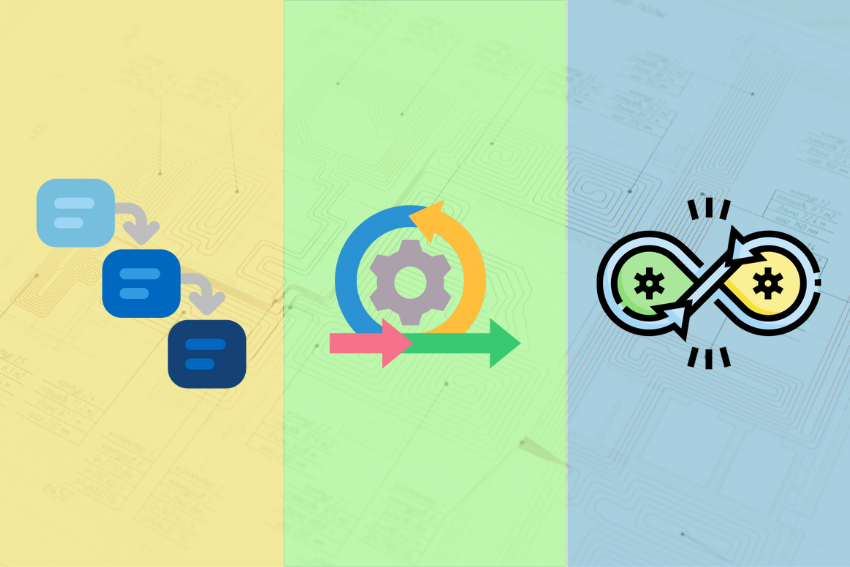
Over the years, several development approaches have emerged, but Waterfall, Agile, and DevOps continue to dominate the conversation. These three software development models differ significantly in structure, flexibility, collaboration, and delivery speed. While some organizations still prefer traditional models, others are transitioning to faster and more adaptable approaches.
This blog provides a detailed examination of Waterfall, Agile, and DevOps, explaining how each software development model operates, comparing them on key parameters, and helping you determine which one is the best fit for your business or project.
What is a Software Development Model?
A software development model is one of the first working frameworks that outlines the software´s preliminary planning and building approach, and is then followed by a period of testing, deployment, and maintenance. This works towards giving a clear path for all stakeholders and development teams, making sure all parties involved understand their function and the division of their responsibilities, as well as all project dates and deadlines.
As technology continues to evolve, software development models are also adapting to meet new demands. Emerging trends such as artificial intelligence, machine learning, cloud-native architecture, and low-code platforms are reshaping how software is built and delivered.
Applying the correct software development model allows companies to address complexity challenges, mitigate development uncertainties, and implement quality control throughout the complete project life cycle. Each software development is slightly different, and as a result, some models will fit the objectives better than others. Thus, it is essential to understand the advantages and disadvantages of each software development model to make an informed decision for your business.
What is the Waterfall Software Development Model?
The waterfall software development model is one of the most traditional and earliest software development models. It has a linear and sequential structure, where one development step flows into the next, and is very much like a waterfall.
Linear and Sequential Process
The Waterfall software model divides the project into different segments like requirement analysis, system design, development, testing, deployment, and maintenance. Each segment has to be finished before the next beginning. This is how the flow of the entire project is structured, and it allows easy understanding of the progress and milestone tracking, especially for project managers and stakeholders.
Due to the sequential nature of the process, there is a clear understanding of what has to be completed at every stage. However, it also means that some gaps and errors may be extremely costly to rectify later on.
Strong Focus on Documentation
Another pillar of the Waterfall model is documentation. Before any development begins, there are comprehensive requirement documents, design specifications, and a test plan. This is to ensure all teams are on the same page, especially in big organizations where a lot of different stakeholders are involved.
Projects that will undergo audits or require approvals from regulatory entities will benefit the most from the strict guidelines of documentation. However, it will also slow the rate of development, and the adaptability in the project will decrease with the increase in requirement changes.
Limited Flexibility for Changes
When it comes to the Waterfall software development strategy, the scope is often set in stone. The waterfall development model is the most resistant to change. After the requirements are decided and development starts, altering the scope means going back to earlier stages, and they are likely to need to be reworked. This ends up costing more and setting the team back in terms of schedule.
This is why Waterfall is the least compatible for projects that have vague requirements or that will continue to change based on user needs.
Best Use Cases for Waterfall
When it comes to projects that have stable and well-defined requirements, the waterfall is the most compatible. This is why the model starts seeing most use in industries like Banking, Healthcare, Government, the Defense sector, etc. The structured nature and the focus on documentation and compliance are what these industries appreciate most.
What is the Agile Software Development Model?
The agile software development model catered to the shortcomings of the more rigid development approaches. This is best suited to the fast-changing world that we live in. Focusing on flexibility, collaboration, and continuous improvement.
Iterative and Incremental Development
At Agile, development is broken down into individual portions known as sprints. Sprints last anywhere between two and four weeks, and especially at the start of the stage, a segment of the larger working product or a feature is developed.
With Agile, a working product is not developed in its entirety before it is given to the customer. Instead, Agile allows there to be a constant stream of development and delivery of value to the customer. This allows teams to continuously improve something.
Continuous Customer Feedback
With Agile, collaboration and constant customer feedback are of utmost importance. After each sprint, feedback is requested, and it is used for enhancing the immediate next stage of development.
This creates a feedback loop where the developed product is always valid in context to the immediate business goal and the users. This greatly reduces the building of features that do not align with user needs.
Faster Time-to-Market
Agile is centered around development in small, usable segments of software, which results in quicker software releases. Businesses can release a product to the market at an earlier stage. This also allows them to improve the product based on feedback they receive from real-world use.
This is particularly a useful feature in fast-growing industries where competition, innovative ideas, and quick implementation are important.
Challenges of Agile Adoption
Although Agile provides more options, it requires more work. Teams must coordinate their efforts, focus on their tasks, and document their work practices in a lucid manner. Without guidance, Agile designs may suffer from scope changes, timeline ambiguities, and distribution of resources difficulties.
Best Use Cases for Agile
Agile methodologies have proven effective in newly established companies or in products that undergo constant evolution, especially in applications that the end user employs. Favor innovation, constant improvement, and user-centered designs.
What is DevOps Software Development Model?
DevOps is a contemporary model in software development that focuses on the software lifecycle and its various components, from inception through deployment to maintenance.
Integration of Development and Operations
With DevOps, the gap between the development and operations teams is closed. They partner with each other for the entire lifecycle and equally share the obligation of creating, executing, and sustaining the software.
This partnership enhances communication, increases speed and delivery, and strengthens accountability.
Automation and Continuous Delivery
Automation is a crucial aspect of the DevOps software development model. Activities like code integration, testing, deployment, and infrastructure management, operations automation are done through continuous integration and continuous delivery pipelines.
This allows teams to release updates swiftly and consistently without having to intervene manually to erase errors and delays.
Improved Stability System and Monitoring
DevOps prioritizes continuous monitoring and feedback. Metrics, logs from errors, and user engagement data analyze behaviors to help teams pinpoint and address problems quickly.
This emphasis on stability provides excellent user experience and maintains system reliability, even with many updates.
Challenges in Implementing DevOps
Applying DevOps calls for a cultural shift, a certain level of technical know-how, and investments in new tools. Organizations need to change focus, educate teams, and reorganize their workflows. For smaller teams or short-term projects, this shift can be complex.
Best Use Cases for DevOps
DevOps applications include cloud-based technologies, SaaS services, and large companies that need to improve and scale output quickly and affordably. It is even more useful in maintaining revenue and user confidence where downtimes are unallowable.
Waterfall vs Agile vs DevOps: Key Differences
It is essential to understand the key differences between different software development models to make an informed decision. Here are some of the key differences explained-
Approach to Planning
Waterfall is inflexible and does not alter its detailed planning design. On the other hand, Agile employs short planning iterations that result in complete change. However, DevOps adds Agile planning with a design in which deployment and operation are included in the initial planning and not just as afterthoughts.
Handling of Changes
At Waterfall, changes are either out of the question or are far too expensive to add. Whereas Agile accepts changes and even implements them in the next update. Changes are safely and easily enabled in DevOps with automated processes for testing, deploying, and rolling back design alterations.
Speed of Delivery
The waterfall method is unresponsive and does not show the client the completed design until after the full development cycle. The Agile method shows the client increments of completed features. In DevOps, the design is there for continuous delivery. Organizations get to all but guarantee reliable updates are sent out on a fairly regular schedule.
Risk Management
It isn’t until late in the project that Waterfall identifies what its actual risks are. With Agile, the risks present are minimized with early testing and constant feedback, but DevOps goes even further by placing highly active automated processes in place to monitor what is happening in real time.
Choosing the Right Software Development Model
There are many factors to consider when selecting a software development model, and any combination of these factors may warrant a preferred model. These factors may include the complexity of the project, the regulations, the objectives of the business, and the expertise of the development team. Waterfall is the most useful model when projects have a fixed scope. Ripples of change demand Agile. Speed, reliability, and scalability are essential in a DevOps model.
Projected time and costs vs. Actual time and costs spent on a project are the variables of most importance to any business; the mitigation of variance caused in the project scope is most beneficial. It is then understandable that many organizations choose a combination of waterfall and agile models, or others. It is the attainment of the most convenient form of structure and the most beneficial form of flexibility.
At the same time, these advancements are pushing organizations to favor more flexible and automation-driven approaches, making Agile & DevOps a better option. Industries with strict regulatory requirements continue to rely on structured planning, keeping the Waterfall software development model relevant in specific contexts. Another growing trend is the emphasis on customer experience and real-time analytics, which encourages faster feedback loops and continuous improvement.
As businesses scale globally and operate in competitive digital markets, the ability to blend models and evolve processes over time will become a key differentiator. Organizations that remain adaptable and open to process refinement will be better positioned for long-term success.
The Rise of Hybrid Software Development Models
Any business can customize its software development model further to suit its purposes. Businesses may choose to develop in a Waterfall approach for planning and compliance, then pivot to Agile for Development, and finish with DevOps for Deployment and Maintenance.
The choice of these models allows businesses to retain and enhance the benefits of structure and flexibility in their business. These models have proven to give greater control over the business. They can gain the benefits of faster delivery and enhance the quality of the product.
Which Software Development Model Wins?
There is no single winner among Waterfall, Agile, and DevOps. Each software development model excels in different scenarios.
Waterfall, Agile, and DevOps all contain benefits. There is no clear winner. Waterfall accommodates the needs of a structured, compliance-driven environment. Agile complies with the needs of an ever-evolving environment that demands periodic updates. DevOps accommodates the needs of environments that require continuous delivery and are goal-oriented towards high reliability, quick delivery, and scalable products.
The real success lies in selecting the right software development model, or combining models thoughtfully, aligning with business goals, team capabilities, and customer expectations.