SEO, AEO and GEO are now the three pillars of organic visibility, and choosing the right mix can make or break your results as search shifts from lists of links to direct, AI generated answers. To help you decide your strategy today, this guide explains what each approach does, where it wins, where it fails, and how to build a practical roadmap that grows traffic, mentions, and revenue across classic search and the new answer surfaces.
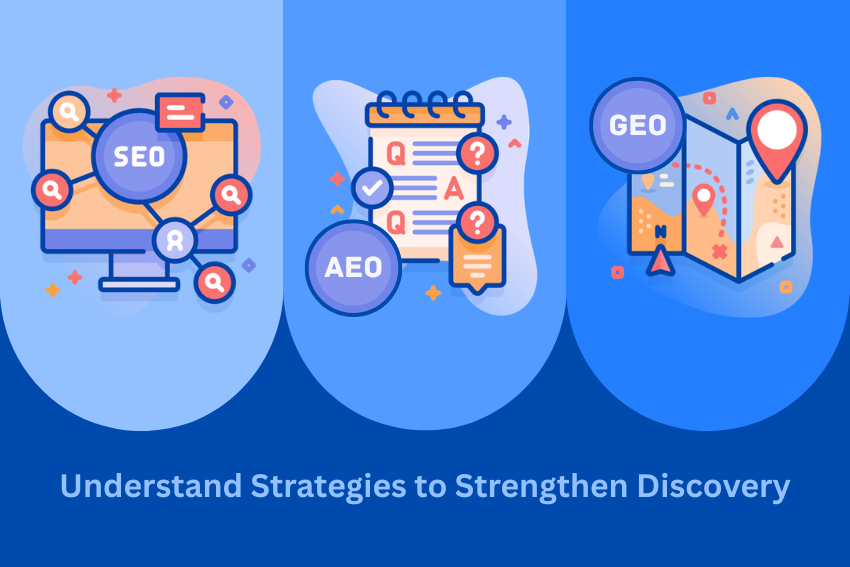
- SEO still matters for rankings, rich results, and long tail queries.
- AEO helps you get named and cited in AI assistants and answer engines like Perplexity, ChatGPT, Copilot, and Google AI Overviews.
- GEO extends AEO with research backed tactics designed specifically to increase visibility and attribution inside generative engine responses.
If you only optimize blue links, you risk disappearing in a zero click world where a majority of searches end without a site visit.
Why This Decision Matters Right Now
Google’s AI Overviews and similar generative features summarize answers at the top of results and link to their sources. Google began broad rollouts in 2024 and reported that hundreds of millions of users would gain access, with plans to reach over a billion. Bing also launched a generative search experience that synthesizes results with citations while keeping traditional listings visible.
The visible impact is fewer clicks to the open web and more complete queries on the results page. Studies in 2024 showed about 58 to 60 percent of Google searches end without any click, and only around 36 percent of clicks go to the open web in the United States.
So, the playbook is no longer just rank and wait. You need to win three outcomes:
- Rank where people still click.
- Get cited where AI summarizes.
- Earn recall so people search your brand later.
What is SEO?
Search Engine Optimization improves your pages, so they rank higher in traditional results and appear in rich results. Structured data helps your content appear with enhanced displays, while helpful content and E-E-A-T remain core signals Google encourages.
What is AEO?
Answer Engine Optimization improves your odds of being named, linked, or cited inside answers produced by AI platforms like ChatGPT, Perplexity, Microsoft Copilot, and Google AI Overviews. Unlike SEO, that aims for positions, AEO aims for citations in answers.
Writers and analysts describe AEO as optimizing content for direct answers, featured snippets, and conversational queries so assistants can extract a crisp response and attribute it to you.
What is GEO?
Generative Engine Optimization is the research driven version of AEO that targets visibility inside generative engines. The seminal paper formalized how generative engines gather and synthesize information and introduced methods to improve source visibility, reporting gains up to 40 percent in experiments.
Industry guides now frame GEO as the practice of positioning your brand, so AI platforms consistently cite and recommend you across answers.
How Search is Changing Under the Hood
- AI Overviews. Google’s custom Gemini model assembles quick overviews with sources and lets users adjust complexity.
- Bing and Copilot. Generative answers grounded in Bing’s index show sources and keep classic results on the page.
- Zero click behavior. Measured studies show the majority of searches end without a website click, which forces brands to compete for answer real estate as well as rankings.
SEO vs AEO vs GEO: Quick Comparison
| Factor | SEO | AEO | GEO |
|---|---|---|---|
| Primary Goal | Rank webpages in traditional SERPs through relevance, authority, and technical optimization. | Earn citations or mentions in AI powered answer engines like ChatGPT, Perplexity, Copilot, and Google AI Overviews. | Increase visibility inside generative engine responses by optimizing content for citation friendly extraction. Backed by research showing up to 40 percent visibility gains. |
| What It Optimizes For | Keywords, content quality, backlinks, structured data, page experience. | Short, direct, extractable answers suited for snippet like responses and conversational queries. | Entity clarity, structured snippets, multi platform presence, and machine friendly formatting for consistent inclusion in generative answers. |
| Output Type | Blue links, rich results, featured snippets. | Citations in AI responses, assistant summaries, featured snippet style extractions. | Placement as cited or referenced sources inside AI summaries across engines. |
| Where It Matters Most | Traditional search engines like Google and Bing. | AI chat systems and answer engines where users ask direct questions. | Multimodal generative engines synthesizing multiple sources into an answer. |
| User Intent Focus | Navigational, informational, transactional searches. | Informational, conversational, question based intent. | High value, high trust informational queries inside AI engines. |
| Success Indicators | Rankings, organic traffic, CTR, conversions. | Frequency of citations in AI answers and referral visits from answer engines. | Share of voice inside generative answers, stability of mentions across engines. |
| Why It’s Important Today | Still drives significant traffic where clicks remain. | AI answers increasingly replace clicks; being cited boosts visibility and conversions. | Research shows generative engines are the future of discovery; content needs optimization for AI, not just SERPs. |
The Strategic Choice: SEO vs AEO vs GEO
When SEO is the Main Lever
Choose SEO first when:
- You target queries with transactional or navigational intent where users still click.
- You can win rich results through structured data that lift CTR. Google’s documentation and case studies show rich results drive higher engagement and clicks.
- You need to build durable site architecture, internal linking, and crawlability that powers every other channel.
Risks if you only use SEO
Relying on rankings alone exposes you to zero click outcomes, shrinking organic CTR, and the rise of answer surfaces that outrank classic listings.
When AEO Should Lead
Choose AEO when:
- Your buyers ask questions into assistants and answer engines, not just search.
- You compete on expertise and need to be quoted or referenced in explanations.
- You can package answers as short, extractable blocks with follow on depth. Best practice articles emphasize a direct two sentence answer followed by details, plus schema.
What success looks like
Your brand appears in citations under AI answers in ChatGPT, Perplexity, Copilot, or Google AI Overviews, which can send fewer but higher intent visits. Multiple industry write ups describe assistants as a growing referral source, often with above average conversion from those clicks.
When GEO Becomes Essential
Choose GEO when:
- You need a systematic way to increase your inclusion in generative answers across platforms.
- You can invest in entity clarity, extractable structures, and citation friendly content that generative engines prefer. Industry and research explain that clear entities, structured snippets, and multi platform presence correlate with consistent mentions.
- You want to benchmark answer share of voice and iterate like you track rankings.
Why GEO is credible
GEO is not just a buzzword. The 2023 to 2024 research formalized the field, defined generative engines, and tested optimization strategies, showing measurable visibility lifts in responses.
A Practical Framework You Can Use This Quarter
You asked for a real writer’s voice, so here is how I would run this as a blogger who ships.
Step 1. Map Queries to Channels
Create three buckets:
- Click seekers. Product comparisons with specs, pricing, availability. These reward SEO and rich results. Use structured data for products, reviews, and FAQs where eligible.
- Answer seekers. Definitions, steps, frameworks, and how to make decisions. These reward AEO and GEO.
- Brand seekers. Queries where recall matters. These reward entity work, author pages, and consistent mentions that AI trusts under E-E-A-T.
Step 2. Engineer Extractable Answers
On every page, write a crisp 40-to-60-word answer to the primary question right after the H1, followed by deeper context. That mirrors what featured snippets and answer engines tend to pull. Guides for featured snippets highlight short definition blocks, lists, and tables as the most common extract formats.
Use:
- Paragraph blocks for definitions.
- Bulleted or numbered lists for steps and ranked items.
- Mini tables for clear comparisons.
Featured snippet studies show these formats dominate position zero opportunities.
Step 3. Add The Right Structured Data
- Mark up Article, FAQ, HowTo, Product, or Organization as applicable, using JSON LD. This helps Google and other engines understand and present your content.
- Check eligibility with Google’s Rich Results Test and validate syntax.
Note that Google has deprecated or reduced some rich results from 2023 to 2025. Keep your schema current as support evolves.
Step 4. Making Entities and Authors Unmistakable
Google stresses helpful, reliable, people first content and encourages clear source and author background. Build author pages, add bios, and show first-hand experience to strengthen E-E-A-T signals that influence both rankings and AI citations.
Step 5. Publish in Answer Friendly Venues
Answer engines often cite:
- High authority sites
- First party research
- Clear tutorials and explainer videos
Distribute on YouTube, reputable communities, and partner publications that ranking assistants frequently reference. Industry practitioners report that off-site citations across trusted platforms often feed answer engines.
Step 6. Instrument a New KPI: Answer Share of Voice
Track how often you are cited across engines and prompts:
- Pick 50 to 100 high value questions.
- Test in ChatGPT, Perplexity, Google AI Overviews, and Copilot monthly.
- Record whether your brand appears and how it is described.
Analysts find answer citations volatile month to month, so trend lines matter more than any single check.
Step 7. Respect Google’s Spam Policies
Google’s March 2024 update tightened policies around scaled content abuse, site reputation abuse, and expired domain abuse, with the stated goal of reducing unoriginal content in results. Do not mass produce thin pages, rent third party domains for off topic content, or auto generate filler.
Following these policies is not only ethical. It is practical, because answer engines will not reward low value content either.
What To Actually Publish: An Editorial Blueprint
Use this repeatable structure to satisfy SEO, AEO, and GEO in one shot.
Headline and Hook
Write a clear headline with your primary keyword and an immediate value promise. Keep it natural.
Example:
SEO, AEO and GEO: Choosing the Best Strategy Today
Opening Answer Block
Start with a short, direct answer that a model can lift verbatim. Keep it factual, neutral, and complete in about 50 words.
Decision Tree
Add a simple scannable decision section:
- Choose SEO if you need product SERP coverage, category pages, and rich results at scale.
- Choose AEO if your users ask assistants and you can package short, precise answers that deserve citations.
- Layer GEO when you want repeatable visibility across generative engines and can invest in entity clarity and extractable structures.
Deep Dives with Extractable Sections
For every subtopic, use one of these formats so engines can quote you:
- Definition block with a two-sentence answer.
- Checklist with bullets.
- Steps in numbered order.
- Comparison table with 3 to 5 rows.
Featured snippet research shows paragraph, list, and table formats are the most commonly extracted.
Structured Data and Sources
- Add Article, FAQ, or HowTo schema where relevant.
- Cite primary sources from vendors and standards bodies whenever you quote statistics or platform claims.
Author Proof
Close with an author bio that showcases hands on experience and your publication’s editorial standards to support E-E-A-T.
Tactics That Work Across All Three Approaches
Make Answers Easy to Extract
- Lead with the answer, then expand.
- Use short sentences and plain language.
- Keep lists tight and order logically.
Use Structured Data Like a Pro
- Prefer JSON LD. Validate every release.
- Prioritize schema types that still earn enhancements and are relevant to your topic. Google’s supported gallery is your source of truth.
Design for Answer Engines
- Add Q and A sections that mirror the way users ask.
- Include concise summaries of 40 to 60 words under subheadings.
- Use clean HTML, semantic headings, and minimal boilerplate so parsers can find the answer.
Build Trust Signals
- Publish original research and cite data.
- Show credentials and first-hand experience. Google’s people first guidance asks for clear source and expertise.
Stay Safely within Spam Policies
Google’s spam policies call out tactics like scaled content abuse and doorway pages. If a tactic exists to feed an algorithm rather than a person, skip it.
Concrete Examples
Example 1. Comparison Post
Topic: SEO vs AEO vs GEO for a SaaS with limited content resources
- SEO: Optimize pricing, features, and integration pages. Add Product and Organization schema.
- AEO: Publish a guide with extractable definitions and a table of differences. Aim for featured snippet formats.
- GEO: Produce a short original survey and publish results as a clean table with methodology. Generative engines prefer original sources when forming answers. The GEO literature focuses on improving visibility of your content in generated responses.
Example 2. Local Services Site
- SEO: Google Business Profile, local schema, and location pages.
- AEO: Q and A block answering common intent questions succinctly.
- GEO: Record a one-minute video answer for the top three queries and host on YouTube. Lists, steps, and short clips often surface in snippets and answers.
Example 3. Editorial Blog Like Yours
- SEO: Long form cornerstone pieces mapped to clusters.
- AEO: Each post opens with a short answer followed by details and FAQs only where they add true value.
- GEO: Publish on reputable third-party sites that assistants already cite and interlink with canonical originals to reinforce attribution. Practitioners report off site citations feeding answer engines.
Measuring Success without Fooling Yourself
- Classic SEO
- Impressions, rankings, clicks, and conversions.
- Rich result coverage and validation.
- AEO and GEO
- Citation count across engines for your key questions.
- Brand recall signals like increases in branded search after answer appearances.
- Assisted conversions from answer engine referrals.
Independent tracking shows that answer engine citations can be volatile by 40 to 60 percent month to month, so measure trend lines and run A B tests.
Common Pitfalls to Avoid
- Thin “AI rewrite” content that violates spam policies on scaled content abuse.
- Over relying on deprecated schema types that no longer earn enhancements. Keep an eye on support changes.
- Ignoring E-E-A-T. Without clear authorship and sourcing, you are less likely to rank and less likely to be cited by answer engines.
Which Strategy Should You Choose Today?
If You Are Starting from Scratch
- Lay the SEO foundation
- Solid technical hygiene, fast pages, clean architecture, and structured data for key types.
- Ship AEO ready content
- Each article begins with a 50-word answer block and includes lists, steps, or tables where relevant.
- Pilot GEO
- Track 50 core questions across engines and improve extractability, entity clarity, and offsite citations. The GEO framework exists to increase generative answer visibility.
If You Already Have Strong SEO
- Add AEO layers to your top posts. Rework opens into clear answer blocks and add FAQs only where they truly help the reader.
- Launch a GEO experiment focused on one topic cluster. Publish original data, clean tables, and a short explainer video to become the source assistants prefer to cite.
If Your Audience Lives Inside Assistants
- Go AEO first, GEO second, SEO third.
- Prioritize platform agnostic clarity and attribution. Your goal is to be the brand that appears in the answer, even if the click happens later.
Final Thought
If you asked me to commit to one strategy, I would not. The future favors stacked optimization. SEO makes you discoverable, AEO makes you quotable, and GEO makes you indispensable inside generative answers. The shift to AI summarized results is not a storm to wait out. It is the new weather pattern. Brands that adapt early will capture outsized mindshare and the compounding benefits of being the source others reference. Google’s own announcements and policy updates reinforce the direction: helpful content, trustworthy sources, and clean structure win across both classic search and AI surfaces.