Reduce cortisol levels naturally by improving lifestyle habits that support your body response to stress, energy balance, and emotional health. Cortisol, often called stress hormone, plays a critical role in how your body manages pressure, metabolism, sleep, and inflammation. When cortisol remains elevated for long periods, it can quietly disrupt nearly every system in your body.
In today’s fast paced work culture and always in digital environment, chronic stress feels normal. However, living in a constant state of stress is not normal for the body. High cortisol levels over time can contribute to fatigue, weight gain, anxiety, poor sleep quality, and weakened immunity.
The good news is that you can reduce cortisol levels naturally without relying on medication. Small intentional lifestyle changes can restore balance and help your nervous system reset.
This guide explores science backed and practical ways to regain control using everyday habits. Before learning how to manage cortisol effectively, it is important to understand what cortisol does and why it matters.
What Is Cortisol?
Cortisol is a hormone produced by the adrenal glands. It plays an essential role in your body ability to respond to stress. Cortisol helps regulate blood sugar, blood pressure, inflammation, energy production, and sleep wake cycles.
Your body releases cortisol in response to a perceived threat. This reaction supports survival by preparing the body for action. In short bursts, cortisol is helpful. When cortisol remains elevated for weeks or months, it becomes harmful.
Cortisol follows a daily rhythm. Levels rise in the morning to help you wake up and gradually decline throughout the day. Chronic stress disrupts this natural rhythm, keeping cortisol high when it should drop.
Causes of High Cortisol Levels
Several factors contribute to prolonged cortisol elevation. Many of them hide in everyday routines.
Common causes include:
- Chronic work stress and time pressure
- Poor sleep or irregular sleep schedules
- Excessive caffeine consumption
- Over exercising without recovery
- Processed foods and unstable blood sugar
- Emotional stress anxiety or unresolved trauma
- Lack of relaxation or downtime
Understanding these triggers allows you to create a plan that targets the root cause rather than masking symptoms.
Signs and Symptoms of Elevated Cortisol
High cortisol does not always feel dramatic. It often appears as subtle changes that worsen over time.
Early signs include:
- Difficulty falling or staying asleep
- Persistent fatigue despite rest
- Sugar or salty food cravings
- Irritability and mood swings
Long term symptoms may include:
- Weight gain around the abdomen
- Brain fog or poor concentration
- Frequent colds or infections
- Digestive discomfort
- Reduced libido
- Anxiety or low mood
If these symptoms feel familiar, it may be time to evaluate your stress response and daily habits.
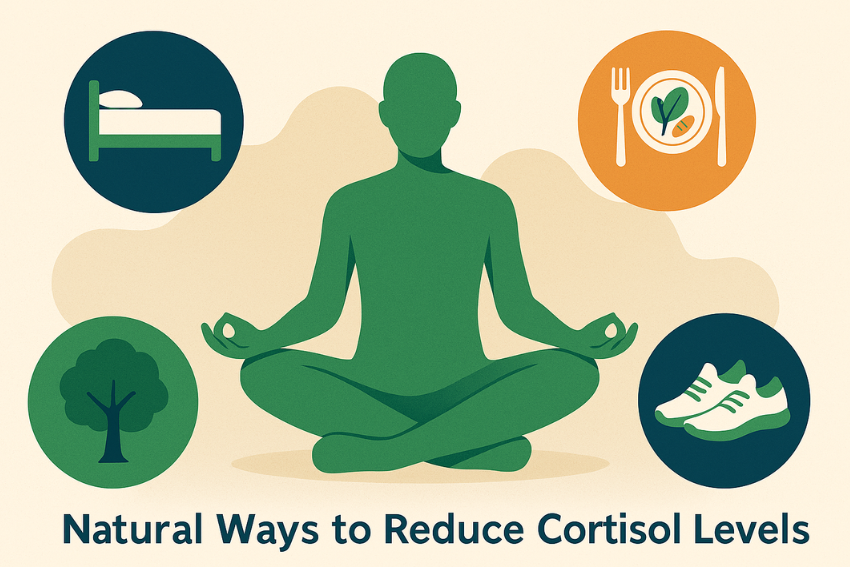
Natural Ways to Reduce Cortisol Levels
The most effective way to lower cortisol is to create a lifestyle that signals safety and stability to your nervous system. The following strategies work together to restore balance over time.
Improve Sleep Quality
Sleep remains one of the most powerful tools to regulate cortisol naturally. Poor sleep raises cortisol while high cortisol makes it harder to sleep. Breaking this cycle starts with sleep habits.
Aim for seven to nine hours of consistent quality sleep each night. Go to bed and wake up at the same time daily including weekends. Dim lights in the evening and avoid screens at least one hour before bed.
Additional tips:
- Keep the bedroom cool and dark
- Avoid heavy meals late at night
- Limit caffeine after early afternoon
- Establish a relaxing pre sleep routine
Quality sleep helps reset the cortisol rhythm and improves overall stress resilience.
Practice Mindfulness and Meditation
Mindfulness shifts the nervous system from alert mode into relaxation mode. Even a few minutes of daily meditation can significantly reduce cortisol.
Mindfulness does not require silence or perfection. It simply involves noticing your breath, your body and your thoughts without judgment.
Effective practices include:
- Deep belly breathing
- Guided meditation apps
- Body scan exercises
- Short mindful walking sessions
Regular mindfulness training improves emotional regulation and lowers stress hormone output over time.
Exercise Regularly Without Overdoing It
Physical activity helps regulate cortisol when done correctly. Moderate exercise lowers stress hormones while improving insulin sensitivity and mood.
Beneficial options include:
- Brisk walking
- Light strength training
- Yoga or Pilates
- Swimming or cycling
Intense endurance workouts every day may increase cortisol especially without proper recovery. Balance movement with rest days to support hormonal health.
Eat a Balanced Nutrient Rich Diet
Nutrition plays a direct role in cortisol regulation. Blood sugar fluctuations trigger cortisol release. A balanced diet helps maintain stable energy levels.
Focus on:
- Lean proteins such as fish poultry and beans
- Complex carbohydrates like whole grains and vegetables
- Healthy fats from nuts seeds and olive oil
- Plenty of fiber to support gut health
Avoid skipping meals and limit ultra processed foods which can spike blood sugar and increase stress hormone production.
Reduce Caffeine Intake
Caffeine stimulates the adrenal glands and increases cortisol levels especially when consumed in excess or on an empty stomach.
If you rely heavily on coffee or energy drinks, consider gradually reducing your intake. Replace some caffeinated beverages with herbal teas or water.
Simple adjustments help:
- Avoid caffeine after noon
- Eat before drinking coffee
- Limit to one or two cups per day
These changes support healthier cortisol patterns without sudden withdrawal effects.
Build Strong Social Connections
Human connections play a surprisingly strong role in stress regulation. Positive social interactions lower cortisol and increase oxytocin which promotes calm and trust.
Prioritize time with friends’ family or community groups. Even small moments of connection can have measurable physiological benefits.
Ideas include:
- Weekly phone calls
- Shared meals
- Group activities or hobbies
- Supportive conversations
Social isolation increases stress signals in the brain. Connection signals safety.
Manage Time and Set Boundaries
Constant urgency keeps cortisol elevated. Time management reduces perceived pressure and supports relaxation.
Start by identifying unnecessary commitments. Learn to say no without guilt. Break large tasks into manageable steps and schedule regular breaks.
Helpful strategies:
- Plan your day the night before
- Protect personal time
- Stop multitasking
- Disconnect from work emails after hours
Clear boundaries communicate control and predictability to your nervous system.
Spend Time in Nature
Nature exposure reduces cortisol levels through sensory calming and gentle stimulation. Research shows time outdoors lowers stress hormones even after short durations.
You do not need to hike in the mountains. Simple exposure works.
Try:
- Walking in a park
- Gardening
- Sitting under trees
- Listening to natural sounds
Aim for at least twenty minutes outdoors a few times per week.
Try Adaptogenic Herbs Optional Section
Adaptogens help the body adapt to stress more efficiently. These herbs support adrenal balance and promote calm.
Popular options include:
- Ashwagandha
- Rhodiola
- Holy basil
Consult a healthcare professional before starting supplements, especially if you take medications or have health conditions.
Lifestyle Habits That Increase Cortisol Levels What to Avoid
Knowing what raises cortisol helps reinforce positive change.
Avoid:
- Chronic sleep deprivation
- Excessive screen time
- Overtraining without rest
- Skipping meals
- Constant multitasking
- Unmanaged emotional stress
Reducing these habits creates space for healing and recovery.
When to Seek Medical Advice
Natural strategies work well for most people. However medical evaluation is important if symptoms are severe or persistent.
Seek professional guidance if you experience:
- Unexplained weight changes
- Constant fatigue
- Depression or severe anxiety
- Irregular menstrual cycles
- High blood pressure
Testing may identify underlying hormonal imbalances or health conditions that require treatment.
Conclusion
Cortisol management is not about eliminating stress. It is about building daily habits that help your body recover and adapt. When you reduce cortisol levels naturally, you improve physical health, mental clarity, sleep quality and long-term resilience.
Small intentional changes practiced consistently create powerful results. By supporting your nervous system through rest connection nutrition and movement, you reclaim balance and control in a demanding world.
Frequently Asked Questions
How long does it take to reduce cortisol levels naturally?
Many people notice improvements in sleep and mood within two to four weeks of consistent lifestyle changes.
Can supplements alone lower cortisol?
Supplements support stress management but work best when paired with sleep nutrition and emotional care.
Is cortisol always bad?
No. Cortisol is essential for survival and energy. Problems arise only when levels stay elevated chronically.