Generative AI in marketing is reshaping how brands plan campaigns, create content, personalize experiences, and scale growth across every digital channel. What once required large teams, long timelines, and manual experimentation can now happen faster, smarter, and with stronger performance signals. But behind the buzzwords and hype, many marketers still ask one core question. How exactly does generative AI apply to real marketing work?
This article answers that question with clarity and depth.
We will break down practical generative AI use cases in marketing, explain how teams are applying them today, and share fresh insights you will not find in surface level guides. Whether you are a marketing leader, strategist, content creator, or performance marketer, this guide will help you understand where generative AI delivers real value and how to use it responsibly.
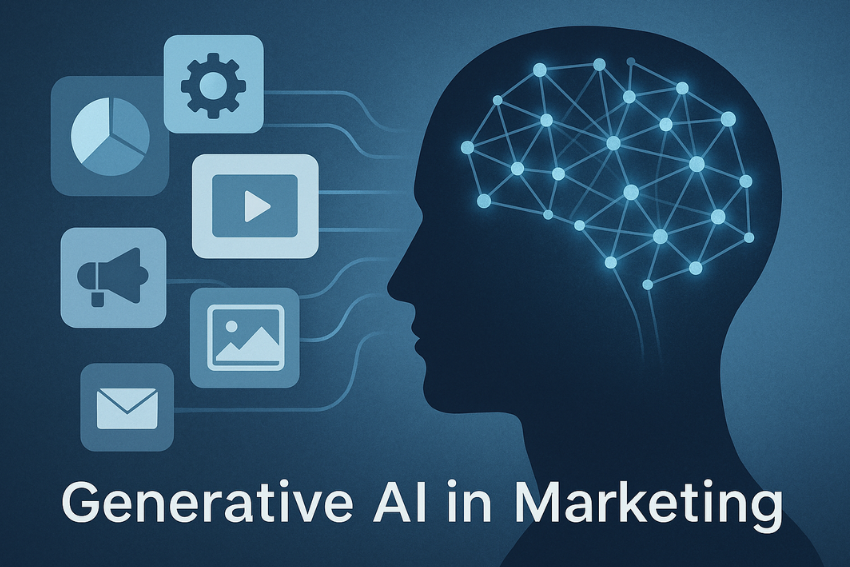
What Is Generative AI in Marketing?
Generative AI in marketing refers to artificial intelligence systems that can create original content, ideas, predictions, and experiences based on patterns in data. Unlike traditional automation tools, generative models do not just follow rules. They generate outputs that feel human, contextual, and adaptive.
In marketing, this usually includes:
- Text generation for blogs, ads, emails, and landing pages
- Image and video creation for visual campaigns
- Voice and conversational content for chatbots and assistants
- Predictive modeling for customer behavior and demand
- Personalization engines that adapt content in real time
The goal is not to replace human marketers. The goal is to amplify creativity, reduce repetitive work, and unlock deeper audience insight.
Why Generative AI Matters to Modern Marketing Teams
Marketing today faces three major pressures.
Audiences expect personalization. Budgets demand efficiency. Competition moves fast.
Generative AI addresses all three challenges at once.
With AI driven creation and analysis, marketing teams can:
- Launch campaigns faster without compromising quality
- Personalize messaging at scale across channels
- Reduce content production costs while increasing output
- Improve conversion rates through intelligent testing
- Turn data into actionable insights without delays
What makes generative AI especially powerful is its ability to learn and improve continuously. Every interaction becomes training data for smarter decisions.
Core Generative AI Use Cases in Marketing
Below are the most impactful generative AI use cases in marketing today, explained in practical terms with real world application.
Content Creation at Scale
Content remains the foundation of modern marketing. Blogs, social posts, emails, ads, scripts, product descriptions, and landing pages all depend on consistent output.
Generative AI enables teams to scale content production without sacrificing relevance or tone.
Blog and Long Form Content
AI models support writers by:
- Generating outlines based on search intent
- Suggesting angles based on keyword opportunities
- Drafting first versions that writers can refine
- Optimizing headings for featured snippets
- Improving readability and flow
When used correctly, generative AI acts as a writing partner rather than a replacement. Human oversight ensures originality, brand voice, and credibility.
Ad Copy and Social Media Content
Paid ads and social content demand variation and speed. Generative AI excels here.
Marketers use AI to:
- Produce multiple ad variations for testing
- Adapt messaging for different platforms
- Rewrite high performing copy at scale
- Maintain consistent brand tone across channels
This dramatically improves experimentation velocity while reducing creative burnout.
SEO Optimization and Search Visibility
Search engine optimization remains one of the strongest long-term growth channels. Generative AI plays a growing role in SEO strategy and execution.
Keyword Driven Content Planning
AI tools analyze search trends, competitor gaps, and keyword clusters to suggest content topics that align with demand.
This allows marketers to:
- Map content to buyer journey stages
- Identify low competition opportunities
- Prioritize topics with featured snippet potential
On Page SEO Improvements
Generative AI can assist with:
- Optimizing title tags and meta descriptions
- Structuring content for snippets and FAQs
- Improving semantic relevance without keyword stuffing
- Updating old content to match current intent
When combined with human judgment, AI powered SEO becomes both scalable and sustainable.
Personalized Customer Experiences
Personalization has evolved beyond adding a first name to an email. Generative AI enables dynamic, context aware experiences across touchpoints.
Email Marketing Personalization
Marketers use AI to:
- Generate personalized subject lines
- Adapt email body content based on behavior
- Optimize send times using engagement signals
- Recommend products dynamically
This leads to higher open rates, click-through rates, and conversions.
Website Content Personalization
AI driven personalization engines can adjust:
- Headlines based on visitor source
- Product recommendations based on browsing history
- Offers based on intent signals
- CTAs based on stage of consideration
This makes websites feel more relevant and responsive to each visitor.
Conversational Marketing and Chatbots
One of the most visible generative AI use cases in marketing is conversational AI.
Modern chatbots go far beyond scripted responses.
They can:
- Answer complex product questions
- Qualify leads automatically
- Guide users through pricing and demos
- Provide instant support around the clock
- Learn from interactions to improve responses
When aligned with sales and support teams, conversational AI becomes a revenue and retention driver.
Visual Content Creation
Visual storytelling remains critical for brand engagement. Generative AI now plays a major role in visual marketing workflows.
Image Generation
Marketers use AI generated images for:
- Social media creatives
- Blog illustrations
- Ad concepts
- Mood boards and ideas
This speeds up creative iteration and reduces dependency on stock images.
Video and Short Form Content
AI assisted video tools help with:
- Script generation
- Caption creation
- Scene suggestions
- Short form adaptation for social platforms
While human creativity still leads, AI removes friction in production.
Predictive Analytics and Campaign Forecasting
Generative AI does not only create content. It also generates insights and predictions.
Demand Forecasting
By analyzing historical data and market signals, AI can predict:
- Seasonal demand trends
- Campaign performance expectations
- Customer lifetime value
- Churn risk
This helps marketers make smarter budget allocation decisions.
Performance Optimization
AI systems identify patterns that humans often miss.
They can suggest:
- Which creatives will perform best
- When to scale or pause campaigns
- Which audiences are most likely to convert
This leads to higher ROI and reduced waste.
Product Marketing and Launch Strategy
Launching a product involves coordination across content, messaging, and channels. Generative AI supports this process end to end.
Marketers use AI to:
- Generate positioning statements
- Draft value propositions for different audiences
- Create launch emails and landing pages
- Simulate customer responses to messaging
This allows teams to test and refine before going live.
Social Listening and Brand Intelligence
Understanding audience sentiment is critical for brand health.
Generative AI analyzes social conversations, reviews, and feedback to generate insights such as:
- Emerging customer needs
- Sentiment shifts over time
- Competitive comparisons
- Content opportunities based on trends
These insights support better creative and strategic decisions.
Marketing Operations and Productivity
Beyond outward facing campaigns, generative AI also improves internal marketing operations.
Use cases include:
- Automated reporting and summaries
- Meeting notes and action items
- Campaign documentation
- Knowledge base creation
This frees marketers to focus on strategy and creativity rather than administration.
Ethical and Responsible Use of Generative AI in Marketing
While the benefits are clear, responsible use matters.
Marketers must be mindful of:
- Data privacy and security
- Bias in training data
- Transparency in AI generated content
- Copyright and originality concerns
Best practice involves combining AI output with human review and accountability.
Generative AI should enhance trust, not erode it.
How to Implement Generative AI in Your Marketing Strategy
Adoption works best when it follows a clear framework.
Start with High Impact Low Risk Areas
Focus on areas like:
- Content drafts
- Ideation
- Performance analysis
These deliver quick wins with minimal risk.
Train Teams, Not Just Tools
Success depends on people.
Invest in training marketers to:
- Prompt effectively
- Evaluate AI output critically
- Align AI use with brand guidelines
Measure and Optimize Continuously
Track performance metrics and refine workflows.
Generative AI improves with feedback and iteration.
Common Challenges and How to Overcome Them
- Maintaining Brand Voice: Create clear tone and style guidelines and apply them consistently.
- Avoiding Generic Content: Combine AI generation with original insights, data, and examples.
- Integration with Existing Tools: Choose platforms that work with your current stack and workflows.
The Future of Generative AI in Marketing
Generative AI will continue to evolve from a tactical tool into a strategic layer across marketing.
Future developments may include:
- Fully adaptive campaigns that evolve in real time
- Deeper emotional intelligence in messaging
- Closer integration between sales, marketing, and service
- Stronger regulation and governance frameworks
Marketers who learn to collaborate with AI rather than resist it will gain lasting advantage.
Final Thoughts
Generative AI in marketing is not a trend that will fade. It is a fundamental shift in how marketing work gets done.
The most successful brands will be those that use generative AI to enhance creativity, improve customer understanding, and operate with intelligence and empathy.
When combined with human strategy and ethical responsibility, generative AI becomes one of the most powerful tools modern marketing has ever seen.
FAQs
What are the main generative AI use cases in marketing?
The most common use cases include content creation, personalization, SEO optimization, conversational marketing, predictive analytics, and visual content generation.
Does generative AI replace human marketers?
No. Generative AI supports marketers by handling repetitive tasks and improving insights, while humans provide strategy, creativity, and judgment.
Is generative AI safe for SEO?
Yes, when used responsibly. Content should be original, helpful, human reviewed, and aligned with search intent to meet quality standards.
How can small businesses use generative AI in marketing?
Small teams can use generative AI to scale content, improve targeting, and compete with larger brands on limited budgets.