As part of this trend, generative AI in manufacturing is transforming the way products are designed, factories are operated, and production is more efficient. The ability to do what used to take months of engineering and repeated testing can now be done within a fraction of that time with the help of systems powered by AI. AI is no longer being used just for automation in manufacturing. They are using it to spark new product ideas, fine-tune production lines, predict possible maintenance issues, and improve decision-making across the production process.
The manufacturing sector is under increasing demand to cut costs, boost production, and adapt to new consumer demands rapidly. Meanwhile, businesses have to ensure product quality, along with supply chain disruptions and labor shortage. The potential of generative AI lies in its ability to process vast amounts of data and extract actionable insights for manufacturers seeking to make meaningful operational changes.
Companies are turning to generative AI for modernizing legacy manufacturing processes, across a range of sectors such as automotive, aerospace, electronics, and consumer goods. Engineers can design smarter products that require less material; production teams can have less downtime and supply chain managers can have better forecasting. These features enable manufacturers to manufacture faster while maintaining performance and quality.
With the rapid advancement of AI technology, its applications in the manufacturing sector will go beyond automation. Future of AI in manufacturing is far from limited to automation. Early adoption of generative AI solutions will likely bring company operational flexibility, quicker innovation cycles, and a global competitive edge.
The top use cases of generative AI in manufacturing, its advantages and its potential future effects on manufacturing operations across the globe.
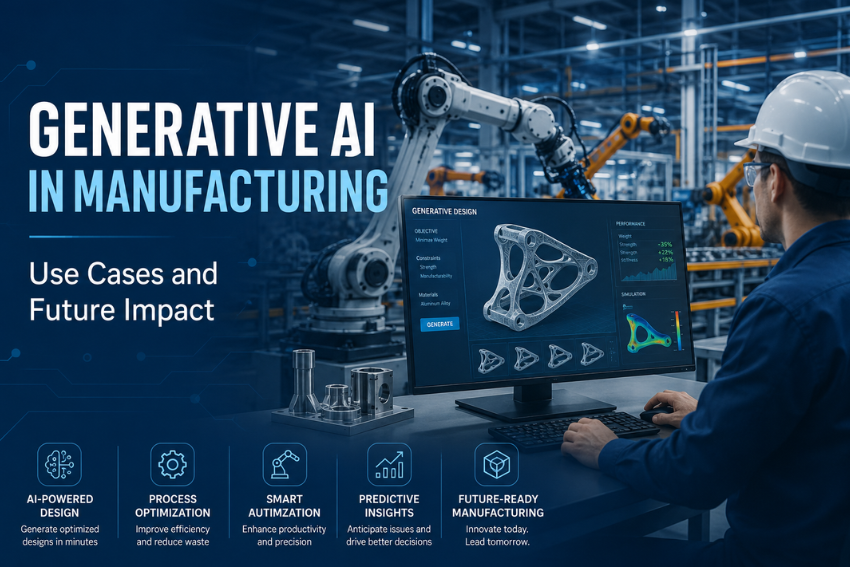
Understanding Generative AI in Manufacturing
Generative AI systems generate original content through their ability to create new material, new product designs, new predictive models, new simulation methods, and new solutions, which they develop using existing data. The traditional AI systems study data to perform automated tasks, whereas generative AI systems create new product designs and process recommendations, code, and digital twins and predictive models.
The manufacturing industry uses generative AI technology to:
- Create better product designs
- Develop better production schedules
- Forecast when the equipment will break down
- Create automated processes for generating documents
- Create better quality control methods
- Create virtual models of manufacturing operations
- Help employees work more efficiently
- Create better supply chain management systems
The manufacturing industry achieves operational progress through AI technology implementation, which transforms its business operations from reactive to intelligent manufacturing systems.
Why Generative AI Matters in Manufacturing
Manufacturers face multiple challenges today, including:
- Rising operational costs
- Supply chain disruptions
- Increasing customer expectations
- Workforce shortages
- Demand for faster product development
- Sustainability concerns
- Equipment downtime
- Quality control complexities
Generative AI helps address these issues by improving efficiency, reducing manual intervention, and enabling data-driven decision-making.
Generative AI solutions differ from traditional manufacturing systems because they learn from operational data and improve their functionality through continuous learning. This adaptability allows manufacturers to remain agile and competitive in changing market conditions.
Key Use Cases of Generative AI in Manufacturing
Product Design Optimization
The application of intelligent product design through generative AI technology. Traditional product development processes need multiple design changes because they depend on physical testing and extensive engineering work. The workload decreases because generative AI automatically creates optimized design solutions that match the established design criteria.
Manufacturers can input parameters such as:
- Material constraints
- Weight limitations
- Performance targets
- Manufacturing feasibility
- Sustainability goals
- Cost considerations
The AI system produces various design solutions that satisfy these requirements while enhancing both efficiency and innovative progress.
Benefits:
- Faster product development cycles
- Reduced material waste
- Lightweight and efficient product designs
- Lower production costs
- Improved innovation capabilities
Industries including automotive, aerospace, electronics, and industrial machinery sectors currently use AI-generated designs to enhance their manufacturing processes.
Predictive Maintenance and Equipment Monitoring
Manufacturing operations face their highest costs because equipment downtime represents one of their most significant difficulties.
Generative AI enables manufacturers to forecast equipment breakdowns by studying sensor information and operational records and equipment functionality and surrounding environment data.
The AI systems provide predictive insights about several factors, which include:
- Component wear and tear
- Potential equipment malfunctions
- Maintenance schedules
- Failure probabilities
- Energy consumption anomalies
Manufacturers can use predictive maintenance models that run continuously in their operations, reducing equipment downtime instead of using reactive maintenance methods.
Benefits:
- Reduced unexpected breakdowns
- Lower maintenance costs
- Increased equipment lifespan
- Improved production efficiency
- Better resource allocation
This field represents the most rapidly expanding segment within the manufacturing industry that adopts artificial intelligence technology.
Intelligent Quality Control
Product quality must be sustained in manufacturing environments because it holds essential importance that applies to all industrial sectors, especially automotive, healthcare, electronics, and aerospace industries. The generative AI-based computer vision systems conduct real-time product inspections, which achieve exceptional precision when they detect defects. AI systems can analyze:
- Surface defects
- Structural inconsistencies
- Assembly errors
- Packaging issues
- Dimensional inaccuracies
The generative AI model system improves its detection capabilities through continuous learning, which occurs when it processes historical production data. The advantages of this system include:
- Decreased product defects
- Enhanced consistency of products
- Accelerated inspection procedures
- Decreased requirement for human workers
- Increased customer satisfaction
The AI-based quality assurance systems help manufacturers minimize both product waste and product recalls.
Supply Chain Optimization
The complexities of modern supply chains have increased because of globalization, demand fluctuations, geopolitical uncertainties, and transportation disruptions, which now affect their operations.
Manufacturers use Generative AI to enhance their supply chain operations through its capacity to forecast and simulate their systems.
AI systems can generate:
- Demand predictions
- Inventory recommendations
- Supplier risk assessments
- Logistics optimization plans
- Procurement strategies.
Manufacturers can use AI-generated simulations to evaluate different supply chain scenarios and identify the most efficient operational strategies.
The benefits of the system include:
- The system provides better inventory management.
- The system helps reduce operational costs.
- The system enhances demand forecasting.
- The system helps minimize supply chain disruptions.
- The system enables organizations to achieve faster delivery timelines.
Manufacturers are now investing more in Generative AI development services because they want to build supply chain systems that can support their operations during times of disruption.
Digital Twins and Manufacturing Simulations
Digital twins create virtual models that represent actual manufacturing systems and machines, and production lines.
Digital twin technology receives a boost from Generative AI, which allows users to conduct real-time simulations and create predictive models, and optimize their processes.
- Manufacturers can create simulations of their operations, which include
- Factory operations
- Machine performance
- Workflow efficiency
- Energy consumption
- Production bottlenecks
- Equipment failures
Organizations can evaluate their operational changes through virtual testing before they implement these changes into real production environments.
Advantages include
- Reduction of operational risks
- Accelerated process optimization
- Decreased expenses for testing procedures
- More effective production scheduling
- Better visibility into operational processes
Generative AI-powered digital twins have become vital components of intelligent manufacturing systems.
Smart Factory Automation
Smart factories use automation and robotics along with IoT and AI-driven systems to optimize their operational processes.
Generative AI can automate multiple manufacturing processes, including:
- Workflow management
- Production scheduling
- Inventory allocation
- Resource planning
- Documentation generation
- Workforce coordination
AI-powered automation systems can dynamically adjust production schedules based on real-time demand, machine availability, and workforce capacity.
Benefits:
- Organizations achieve better operational efficiency
- They need less human work to operate their systems
- Organizations need less time to produce their products
- Organizations make better choices
- Workers achieve more output
The rise of smart factories is accelerating the adoption of AI in manufacturing industry operations worldwide.
Workforce Assistance and Knowledge Management
The workforce shortages and skill deficiencies of manufacturing companies affect their operations because of their need for specialized technical personnel.
Generative AI provides virtual assistant functions to employees through its ability to deliver:
- Real-time operational guidance
- Troubleshooting assistance
- Automated training materials
- Technical documentation
- Safety protocols
- Process recommendations
AI-powered assistants help workers solve problems faster, which decreases downtime while increasing operational accuracy.
Benefits:
- Faster employee onboarding
- Improved workforce productivity
- Reduced training costs
- Better knowledge retention
- Enhanced workplace safety
The application serves its highest purpose in industrial spaces that require extensive operations.
Sustainability and Energy Optimization
Manufacturers around the world now consider sustainability as their main business responsibility.
Manufacturers use generative AI to decrease their environmental effects through better management of:
- Energy consumption
- Material usage
- Waste reduction
- Carbon emissions
- Production efficiency
AI systems create energy-saving production methods while they determine which business activities produce unnecessary waste.
The advantages of the system include:
- Environmental footprint reduction
- Energy cost savings
- Better environmental, social, and governance compliance
- Resource usage efficiency
- Sustainable manufacturing operations
Manufacturers dedicated to environmentally friendly production methods now use AI-based sustainability systems for their operations.
Future Impact of Generative AI in Manufacturing
The upcoming manufacturing sector will operate through automated systems that use intelligent technology together with automated decision systems that rely on artificial intelligence.
The development of generative AI technologies will create multiple new applications that will affect manufacturing operations.
Hyper-Personalized Manufacturing
The upcoming manufacturing systems will provide enterprises with the ability to produce customized goods at mass production levels.
Generative AI will assist manufacturers in developing tailored products which meet customer demands while maintaining financial viability through optimal resource use.
This will transform industries such as:
- Automotive
- Fashion
- Consumer electronics
- Healthcare
- Furniture
- Industrial equipment
Mass customization will become a major competitive advantage.
Autonomous Manufacturing Systems
Manufacturing environments will develop into systems that operate without human control. AI systems will perform these tasks without human help:
- They will observe production lines
- They will improve operational processes
- They will find existing problems
- They will modify work processes
- They will handle stock control
- They will manage robot operations
Humans will mainly work on making decisions and monitoring operations.
This change will lead to better productivity and more flexible business operations.
Faster Innovation Cycles
Generative AI enables rapid development through its capability to create prototypes and simulate designs and execute tests automatically.
Manufacturers will achieve their product launch goals at an increased pace while they spend less money on development.
The automotive manufacturing and consumer electronics sectors, which experience fast innovation cycles, will gain major advantages.
Enhanced Human-AI Collaboration
The future of manufacturing will not eliminate human workers because it needs better human and intelligent system partnerships. Engineers, operators, and decision-makers will receive required support through AI, which delivers actionable insights and automation solutions. The collaboration will enhance five different areas, which include:
- Productivity
- Safety
- Innovation
- Operational accuracy
Organizations that start their AI-human collaboration strategies before their competitors do will achieve substantial competitive advantages.
Intelligent Global Supply Networks
Future supply chains will become increasingly AI-driven.
Generative AI systems will continuously analyze global market conditions and supplier performance, transportation networks, and geopolitical risks to create real-time supply chain optimization solutions.
The manufacturing ecosystems will become more robust because of this development.
Challenges of Implementing Generative AI in Manufacturing
The use of generative AI in manufacturing brings various benefits but also creates multiple operational difficulties.
- Data Quality and Integration: AI systems need substantial amounts of operational data, which must meet high standards of quality. The presence of poor data quality leads to negative impacts on AI systems, which results in reduced decision-making accuracy.
- Cybersecurity Risks: The growing connectivity of manufacturing systems results in a corresponding rise in cybersecurity threats.
- High Initial Investment: The process of implementing AI infrastructure requires businesses to spend extensive funds on model training and system integration.
- Workforce Adaptation: Employees need to receive training in order to operate AI-powered systems efficiently.
- Regulatory and Ethical Concerns: Manufacturers must establish responsible AI usage practices, which include maintaining transparency and adhering to industry-specific regulations.
The process of overcoming these obstacles needs to start with organizations establishing their strategic plans and working together with trusted vendors who specialize in Generative AI development.
Why Businesses Should Invest in Generative AI Now
The manufacturing industry is becoming more competitive. The industry now relies on data analysis and advanced technological systems to operate its business functions. The delay in AI implementation by businesses results in:
- Falling behind competitors
- Higher operational costs
- Slower innovation
- Reduced productivity
- Supply chain inefficiencies
Manufacturers who invest in AI solutions will achieve operational sustainability while developing smart manufacturing systems that scale with their needs.
Early adopters achieve substantial efficiency improvements, together with cost savings, while they speed up their innovation processes.
Conclusion
Manufacturing operations now use generative AI technology because it brings advanced operational capabilities, quick product development, forecasting capabilities, and automated operational processes. The manufacturing industry shows increasing evidence of AI’s impact, transforming the sector through product design optimization, predictive maintenance, and smart factories, as well as supply chain resilience.
The continuous development of technology will create an edge for manufacturers who adopt AI-based solutions because these technologies enhance their operational output, work efficiency, and their ability to meet customer needs.
Companies that work with Generative AI development service providers will succeed in creating AI-based manufacturing systems which meet their specific operational needs and industry standards.
The manufacturing industry will become intelligent and connected through AI technology, with generative AI serving as the core element of this evolution.