You don’t need to complicate losing weight. There are countless diets available that will claim to get you immediate results but it’s actually very simple to lose weight – it’s just a matter of creating a calorie deficit. There is a scientific process to it, and knowledge of this process can help you make better decisions, stay away from common dieting myths and, most importantly, achieve results without going to extremes.
Here you will discover what is meant by a calorie deficit, how a calorie deficit enhances healthful weight loss, how to determine your daily calorie requirement, and techniques for safely keeping a calorie deficit. If you are just starting to lose weight or want to fine-tune your strategy, this article will help you gain both knowledge and confidence to help you achieve your goals.
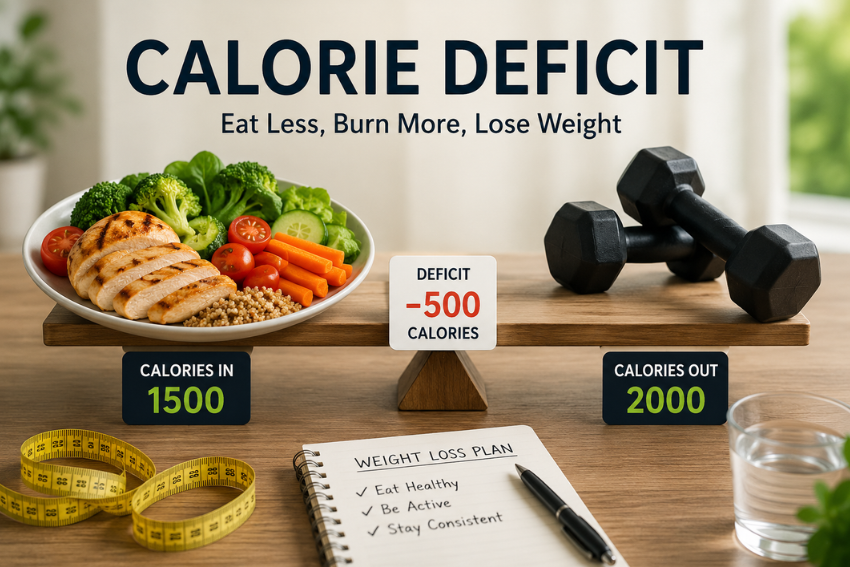
What Is a Calorie Deficit?
Knowing how weight loss works is like knowing how a high-performance engine runs. That fuel is what your heart uses when it beats while you sleep. Climbing a flight of stairs does, too. Everything you do requires fuel. In our bodies that fuel is measured in calories.
A calorie deficit is when you are feeding your body less fuel from food than it needs to function throughout the day.
When you do this energy gap, your body doesn’t just shut down. Instead, it is forced to search for another fuel within itself. Then it burns the fat you already have stored. It breaks down the fat it uses for energy. Without making this deficit, your body will never get to that stored fat, and your weight is going to stay right where it is. It’s just a physics equation.
Why Standard Diets Keep Failing You
Most people fail their diets because the advice they are given is totally unrealistic, not because they lack willpower. Perhaps you’ve tried eliminating entire food groups, forcing yourself to eat plain kale, or buying “diet” snacks full of artificial chemicals. In general, this just means a really bad headache, a grumbling stomach, and terrible bloating. You last a few days, feel awful, and give up.
You don’t have to starve yourself to lose weight. You just need to know where the energy balance is. Now let’s compare typical diet traps to what a calorie deficit actually does:
| The Standard Diet Trap | The Truth About Deficits |
|---|---|
| Buying expensive pre-packaged keto meal plans. | Just eat less of the usual foods you buy |
| Tough, exhausting cardio until you feel sick. | Focus on moving more naturally, for example, walking, to boost your daily calorie expenditure. |
| Drinking laxative “detox” teas that upset your stomach. | Structured eating windows to give your digestion a break. |
Weight loss occurs when your total intake is less than your total output. It is a mechanical process, not a financial one. You cannot purchase a slimmer body; you must change how you nourish it.
The Four Pieces of Your Daily Energy Burn
Knowing where your energy is really going can help you to create a gap between what you eat and what you burn. Most people think they only burn calories when they sweat it out in the gym. This misconception leads people to over-exercise and burns out. The truth is, your body burns energy in 4 different ways:
- Basal Metabolic Rate (BMR): The huge amount of energy your vital organs (brain, heart, liver, etc.) need to keep you alive and breathing if you stayed in bed all day.
- Non-Exercise Activity Thermogenesis (NEAT): This is the energy you burn doing everyday activities that are not structured exercise. Walking around the house. Fidgeting at your desk. Cooking. Cleaning. One of the simplest ways to increase your fat loss is to increase your NEAT.
- Thermic Effect of Food (TEF): Calories are burned in order to process and digest the food you eat. Digestion of lean protein such as chicken takes a lot more energy than digestion of a sugary soda.
- Exercise Activity Thermogenesis (EAT): This is the exercise you do on purpose, like lifting weights or running. Interestingly enough, that’s usually the smallest part of the total energy you burn in a day.
Three Simple Ways to Build a Deficit Without Counting Every Crumb
You don’t have to live your life weighing every single strawberry or drop of cooking oil on a digital scale. For most people, that level of tracking results in high anxiety and eventual frustration. Instead, you can create a calorie deficit naturally by structurally changing your daily routine.
- Try an intermittent fasting window. Stop eating at night while watching TV. Shut your kitchen at 7 PM and don’t eat your next meal until 11 AM the next day. With a 16-hour break in digestion, it is much harder to overeat your calories for the day.
- Cut Out Liquid Calories: Swap sugary coffee drinks, sodas, and juices for plain water, sparkling water, or black coffee. Liquid calories won’t fill you up, but they can easily add hundreds of calories to your daily intake without you noticing.
- Focus on Whole, Dense Foods: Fill your plate with lean meats (such as chicken, fish, or lean beef) and coarse, fibrous vegetables. These foods take longer to chew, occupy more physical space in your stomach, and make you feel full for hours.
As you start to make these changes, you will feel real hunger from time to time. The emptiness is not a medical emergency; it is just the physical sign that your body is currently tapping its fat reserves for energy.
Getting Through the Mind Game of Fat Loss
The science of a calorie deficit is very simple, but the mental side of losing weight is a battle. Our brains are wired to love highly processed, sugary, and salty foods because they give us a quick hit of dopamine.
As you start eating less, your brain will try to fight back. It will start to make excuses by mid-afternoon. It’ll tell you that you had a hard day at work and you deserve a treat. Or that you can always hit the reset button next week.
“When you get those cravings, you’ve got to remember food is fuel for your engine and not an emotional crutch.” The absolute secret to long-term success is learning how to cope with the temporary boredom of not snacking all the time.
Choosing Long-Term Health Over Short-Term Comfort
You have to get out of your comfort zone to lose weight. Even when the food is terrific, you have to say no to seconds. And your stomach will growl in your fasting window, and you will have to sit in that feeling instead of immediately reaching for a snack.
But if you embrace the temporary discomfort, the rewards are life-changing. You are choosing to get rid of the heavy, suffocating inflammation that damages your joints and wears your organs down. You’re trading out short-term cravings for long-term health, energy, and confidence.
Conclusion: Enhance Your Wellness Journey
The science behind losing weight is to be in a calorie deficit, but you don’t have to figure out how to get there by yourself. Are you tired of guessing your numbers? Are you tired of battling stubborn belly fat? Are you tired of the same frustrating diet cycles? It’s time to get personalized.
We can help you cut through the confusion and build a clear, sustainable strategy that fits with your everyday life. We can help you cut through the confusion and build a clear, sustainable strategy that fits with your everyday life.
Ready to create lasting change? Let’s discuss your aspirations and the challenges you’ve encountered and develop a tailored strategy to help you restore your health, boost your energy, and permanently lose excess weight.
Frequently Asked Questions
What is a calorie deficit and how do you drop weight?
This is called a calorie deficit and happens when you eat fewer calories than your body needs to keep your present weight. So, your body still needs energy to power your organs and to sustain your daily activities, so it is forced to break down the stored body fat and burn it for fuel. This leads to a steady weight loss.
How many calories do I have to cut to lose weight in a healthy way?
For most people, a reasonable and safe goal is to eat about 500 to 1,000 fewer calories than you burn on a daily basis. Such a chronic deficit results in losing about 1 to 2 pounds of body fat per week or so. If you go much lower than this in your calories, you can feel fatigue, muscle loss, and extreme cravings.
Can you lose weight without counting calories and tracking?
Yes, of course. You don’t need an app to put yourself in a caloric deficit. The important thing is to make lifestyle changes like cutting out sugary drinks, not eating late at night, intermittent fasting, and filling your plate with lean proteins and vegetables, and you will automatically eat fewer calories.
I am eating less and not losing weight. Why is that?
If you have held the same weight for a few weeks, you are not in a calorie deficit at this time. It’s very easy to accidentally underestimate portion sizes, miss the calories in cooking oils, salad dressings, and condiments, or overestimate how many calories you burn during a workout.
How long does it take to see real results from a calorie deficit?
How soon will you see real results from a calorie deficit? Change is usually your body losing stored water and carbohydrates. Real, visible changes in your body shape and how your clothes fit typically become noticeable after about 2 to 4 weeks of continuous consistency.
Will I lose muscle if I’m in a calorie deficit?
If you are in too much of a calorie deficit or not eating enough protein, your body can use muscle as fuel. If you are looking to lose fat while keeping your lean muscle, then make sure you keep your protein intake high and focus on gentle movements like walking rather than hours of exhausting, high-intensity cardio.