Cross platform app development has evolved from a niche alternative to the dominant strategy for businesses launching mobile products in 2026. Instead of building separate native applications for iOS and Android, cross platform development lets you write a single codebase that runs seamlessly on both operating systems. Statista projects the global cross platform app market will reach $546 billion by 2026, and that number keeps climbing. But what exactly does this approach entail, and is it the right move for your next project?
Let’s break down what cross platform app development really means, explore its tangible benefits, and honestly examine the challenges you will face along the way.
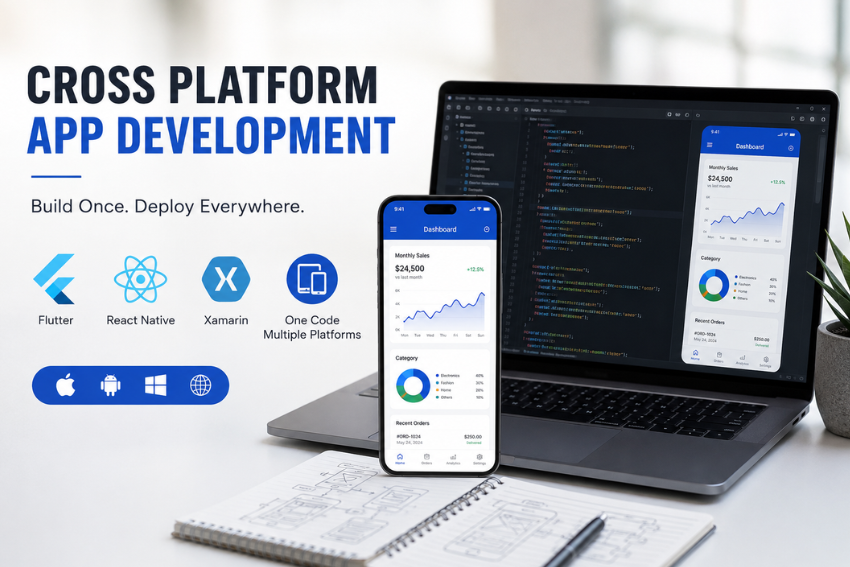
Understanding Cross Platform App Development
At its core, cross platform mobile app development means creating applications that work across multiple mobile operating systems using a single codebase. Traditional native development requires separate codebases for each platform—Swift or Objective-C for iOS, and Java or Kotlin for Android. Cross platform frameworks eliminate that duplication.
Modern frameworks like Flutter, React Native, and Kotlin Multiplatform have completely transformed what cross platform apps can do. Early hybrid solutions delivered clunky experiences that frustrated both developers and users. Today’s tools provide near-native performance with exceptional user interfaces. About a third of mobile developers already use cross platform frameworks, and that number grows every quarter.
The fundamental promise is simple: write once, run anywhere. A well-architected cross platform application works flawlessly across iOS, Android, and often the web without requiring separate development teams for each platform.
Why Companies Choose Cross Platform
Significant Cost Savings
The most obvious benefit of cross platform app development is cost reduction. Maintaining separate native teams for iOS and Android doubles your engineering overhead. Cross platform eliminates that duplication. A single development team builds and maintains one codebase that serves both platforms.
One Forbes Technology Council member reported that their work on over 20 cross platform projects showed development time drops by at least 30%. That translates directly to lower payroll costs, fewer hires, and reduced operational overhead. Some estimates suggest cross platform can cut development costs by 30 to 60% compared to maintaining separate native codebases.
Faster Time to Market
Speed matters in today’s competitive app economy. Cross platform development accelerates delivery by eliminating duplicated work. Instead of building features twice, your team builds them once and deploys everywhere simultaneously.
This simultaneous deployment matters more than many executives realize. When you launch features on iOS and Android at the same time, you avoid the awkward “coming soon to Android” messaging that frustrates users and damages your brand. Faster launches (sometimes by half the time) give you a critical advantage when markets move quickly.
Code Reusability
Modern cross platform frameworks achieve impressive code sharing rates. Flutter apps often share 95 to 99% of their source code across platforms. React Native typically shares 80 to 90% with some platform-specific styling adjustments.
This massive code reuse unlocks several advantages:
- Faster feature development across all platforms
- Consistent business logic everywhere
- Simplified testing and quality assurance
- Easier bug fixes that apply universally
Simplified Maintenance
Maintaining a single codebase is dramatically simpler than managing two separate ones. Updates, bug fixes, and new features roll out across all platforms simultaneously. Your team doesn’t need to remember which platform received which fix or track feature parity across separate codebases.
Maintenance costs drop by roughly 30% with cross platform approaches. QA cycles become more predictable, and the risk of platform-specific regressions decreases significantly.
Consistent User Experience
Users expect your app to work and feel the same whether they access it from an iPhone or a Samsung Galaxy. Cross platform development ensures uniform functionality and appearance across devices. When your app displays and operates consistently everywhere, users stay engaged rather than becoming frustrated by mismatched experiences.
Wider Audience Reach
Cross platform development lets you target both iOS and Android users from day one. You don’t need to choose one platform to launch first or delay your Android release while you perfect the iOS version. Your app reaches the full mobile market immediately.
The Challenges You Will Encounter
Cross platform app development isn’t a magic bullet. Here are the real challenges you will face.
Performance Limitations
The most persistent technical challenge is achieving native-like performance. Many cross platform frameworks rely on intermediate layers or bridges that translate shared code into native components. This abstraction layer introduces overhead that can impact speed, especially for resource-intensive applications.
Graphics-heavy apps, games, and applications with complex animations may struggle on cross platform frameworks. While Flutter’s Impeller rendering engine now delivers consistent 60-120 FPS animations, not every framework matches that capability. Performance bottlenecks often appear in:
- Memory management
- Database access speed
- GPU utilization
- Complex UI rendering
The good news? The performance gap between cross platform and native has narrowed considerably. For most business applications, the difference is imperceptible to users.
UI and UX Consistency Challenges
Maintaining consistent user interfaces across platforms requires deliberate effort. Each operating system has its own design patterns, navigation conventions, and user expectations. iOS users expect certain gestures and behaviors that Android users don’t, and vice versa.
Cross platform frameworks give you a unified UI toolkit, but that doesn’t automatically mean your app feels native on both platforms. Achieving true platform-appropriate design while maintaining code sharing requires thoughtful architecture and design systems.
Platform-Specific Feature Access
Not every device feature is equally accessible through cross platform frameworks. Camera controls, biometric authentication, AR capabilities, and advanced sensors may require platform-specific code. While frameworks provide plugins and bridges for most common features, cutting-edge or platform-exclusive capabilities often demand native module development.
Security Considerations
Cross platform apps introduce unique security challenges. The bridge between cross platform code and native components can become a vulnerability point. Bridged methods may lack proper obfuscation, making platform-specific security controls more visible to reverse engineers.
Security features can also vary significantly between iOS and Android. Your cross platform solution must account for these differences while maintaining consistent protection across both platforms.
Framework Dependency and Lock-In
Choosing a cross platform framework is a long-term commitment. Switching frameworks mid-project or migrating an existing app to a different approach is expensive and time-consuming. Each framework has its own ecosystem, community, and update cadence. If a framework loses popularity or stops evolving, your app could face significant maintenance challenges.
Debugging Complexity
When something goes wrong in a cross platform app, determining whether the issue lies in your shared code, the framework, or the platform-specific layer adds complexity. Debugging tools have improved dramatically, but troubleshooting cross platform issues often requires understanding multiple layers of the stack.
Leading Frameworks
Understanding the major players helps you make an informed decision.
Flutter
Google’s Flutter holds approximately 46% of the cross platform developer market share. It uses the Dart programming language and offers a rich widget-based architecture. Flutter excels at:
- Pixel-perfect, consistent UIs across platforms
- High-performance rendering with the Impeller engine
- Multi-platform support including web and desktop
Flutter is ideal for startup MVPs, e-commerce apps, fintech platforms, and enterprise applications.
React Native
Meta’s React Native accounts for roughly 35% of the market. It uses JavaScript and React, making it especially attractive for web developers transitioning for mobile. React Native offers:
- A massive JavaScript talent pool that makes hiring easier
- Strong third-party support and a large plugin ecosystem
- Shared logic with React web apps
React Native works well for social networking apps, content platforms, marketplaces, and SaaS mobile applications.
Kotlin Multiplatform
Kotlin Multiplatform is gaining traction rapidly, with adoption more than doubling between 2024 and 2025. It offers true native performance with shared business logic. Teams using Kotlin Multiplatform report improved collaboration and performance.
Other Options
Xamarin (.NET MAUI) remains relevant for enterprise apps with Microsoft ecosystems. Ionic continues to serve developers who prefer web technologies like HTML, CSS, and JavaScript.
Making the Right Choice
Cross platform app development isn’t automatically the best choice for every project. Here is how to decide:
Choose cross platform when:
- You need to launch on both iOS and Android quickly
- Your budget doesn’t support two full native teams
- Your app doesn’t require cutting-edge device features
- You value consistent user experience across platforms
Choose native development when:
- Your app relies heavily on platform-specific hardware features
- You need maximum possible performance for graphics or gaming
- Your team already has deep expertise in Swift or Kotlin
- Platform-specific design and interactions are critical to your product
The Bottom Line
Cross platform app development has matured into a legitimate, business-savvy approach to mobile application delivery. The cost savings, faster time to market, and simplified maintenance make it compelling for most projects. Yes, challenges exist around performance, UI consistency, and platform-specific features. But modern frameworks have narrowed the gap with native development to the point where many businesses choose cross platform as their default strategy.
As one engineering leader put it, cross platform development represents more than a technical decision; it is a strategic realignment of how organizations approach mobile development. The question is no longer whether cross platform can work for your business. The question is which framework and strategy will work best.
Frequently Asked Questions
Is cross platform app development cheaper than native?
Yes, significantly. Cross platform development typically reduces costs by 30 to 60% by eliminating the need for separate iOS and Android development teams and codebases.
Which cross platform framework is best?
Flutter and React Native dominate the market, with Flutter at roughly 46% and React Native at 35%. Flutter excels at UI consistency and performance, while React Native offers a larger talent pool and easier hiring.
Can cross platform apps match native performance?
For most business applications, yes. The performance gap has narrowed considerably. Graphics-intensive apps and games may still benefit from native development.
How much code can I reuse with cross platform development?
Flutter apps often share 95 to 99% of code across platforms. React Native typically shares 80 to 90%.
Is cross platform development good for startups?
Absolutely. The lower costs and faster time to market make cross platform development ideal for startups validating product-market fit and launching quickly.
What are the main disadvantages of cross platform apps?
Performance overhead, UI consistency challenges, platform-specific feature limitations, security considerations, and framework dependency are the primary drawbacks.