Universities in USA attract the largest international student community in the world because they blend world‑class research, flexible academics, and strong career pathways like OPT. Recent Open Doors data confirms the U.S. hosted more than 1.12 million international students in 2023 to 2024, with California, New York, and Texas as the leading host states.

In this guide, you will find a clear, practical take on standout universities in USA across research strength, global reputation, funding, and international support. I also include fresh tips on programs, visa‑work links, and what matters for ROI.
Why The U.S. Still Dominates for International Students
- Scale and diversity. International enrollment hit a record 1,126,690 in 2023 to 2024. International students represented 5.9 percent of total U.S. higher education enrollment.
- STEM and OPT pull. OPT participants reached about 294,000 in 2024 to 2025, and STEM fields continue to dominate new enrollments.
- Geographic magnets. California, New York, Texas, and Massachusetts host the most students from abroad.
How I Chose the Top 10
I weighed five things’ students tell me matter most:
- Global standing across leading rankings like THE World University Rankings to benchmark academic and research clout.
- International community and support, based on official campus statistics and dedicated offices.
- Funding and affordability for non‑U.S. citizens, especially true need‑based aid policies.
- Career outcomes and pathways, including the relevance of STEM, co‑ops, and OPT readiness discussed by universities and national data.
- Location and network that open internships, alumni connections, and industry partnerships. When two schools tie, I favor options with wider internship ecosystems.
The Top 10 Universities in USA for International Students
Order reflects a blend of reputation, support, and international fit. Every school here sits inside the leading tier of U.S. institutions in current ranking snapshots.
Massachusetts Institute of Technology (MIT) Cambridge, Massachusetts
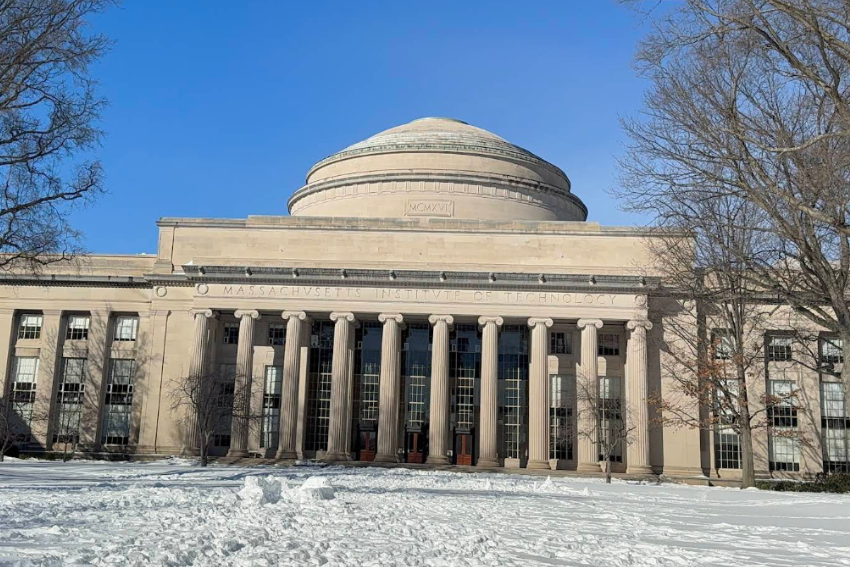
MIT marries elite research with an unusually high share of international graduate students. In 2024 to 2025, international students at MIT numbered 3,430, including 40 percent of the graduate body. That global density matters for belonging, labs, and cross‑border teams.
Why it stands out
- Engineering and computing depth with top‑tier research across AI, climate, and biotech. THE ranks MIT at or near the very top among universities in USA.
- Selective but transparent. MIT’s Class of 2029 acceptance rate was 4.6 percent, with detailed admissions statistics available for international applicants.
Good fit if you want: Research intensity, culture maker, and quick access to Boston’s biotech and tech.
Princeton University — Princeton, New Jersey

Princeton is a powerhouse for undergraduate teaching with one of the most generous aid policies for international students. The university meets full demonstrated need for all admitted students and applies the same aid methodology to international and U.S. students.
Why it stands out
- Full need met with grants. Princeton’s program replaces loans with grant aid and treats international students the same in the aid process.
- Top research and mentoring at scale, reflected in consistent top placements in global and national rankings.
Good fit if you want: Liberal arts rigor with generous, predictable funding.
Harvard University — Cambridge, Massachusetts

Harvard couples unmatched brand strength with scaled financial aid. The Griffin Financial Aid Office states that aid is available to international students on the same basis as for U.S. students, with free tuition for many families and comprehensive need‑based packages.
Why it stands out
- Need‑based aid at scale. Harvard communicates that families with incomes up to $200,000 can see tuition covered, with full coverage at lower incomes and additional support.
- Research breadth and Boston location buoy internships in finance, policy, and biotech.
Good fit if you want: A global alumni network and strong aid backed by a large endowment.
Stanford University — Stanford, California

Stanford sits at the heart of Silicon Valley, and its graduate population is about 35 to 36 percent international, an indicator of its global draw.
Why it stands out
- Innovation pipeline. Startups, labs, and corporate links surround campus.
- International density in graduate schools provides deep networks across engineering, CS, and medicine.
- Consistently top ranked among U.S. institutions in leading international tables.
Good fit if you want: Research that translates to startups and industry quickly.
University of California, Berkeley — Berkeley, California

Berkeley pairs elite public research with a massive Bay Area ecosystem. Despite national fluctuations, UC Berkeley recently increased new international enrollment by 29 percent in 2025 to 2026, signaling sustained interest and strong support systems on campus.
Why it stands out
- Flagship public value with strengths across engineering, computer science, economics, and data. THE places Berkeley among the top global universities in USA.
- International Office data and services show an established infrastructure for visas, advising, and settlement.
Good fit if you want: A top public option with deep tech links and a diverse, global student body.
Yale University — New Haven, Connecticut
Yale shines for social sciences, humanities, and an increasingly strong STEM footprint. It also remains a steady top‑ten U.S. presence in major global rankings, which supports international recognition of your degree.
Why it stands out
- Interdisciplinary culture that blends global affairs, law, and data.
- Global prestige that carries in public service and private sectors worldwide.
Good fit if you want: A broad intellectual community with strong graduate and professional pathways.
University of Chicago — Chicago, Illinois
UChicago offers a research‑driven Core curriculum and excellent international student support through the Office of International Affairs. Resources span visa advising, OPT webinars, and global mentorship, which helps you focus on academics while meeting compliance needs.
Why it stands out
- Serious academics, serious support. The OIA portal centralizes check‑ins, travel signatures, and employment guidance.
- Global city advantage with finance, consulting, analytics, and policy roles in reach.
Good fit if you want: A theory‑rich education with practical visa and career guidance baked in.
Columbia University — New York City, New York
Columbia enrolls one of the largest international communities in the U.S. In Fall 2024 it reported 13,745 international students from 145 countries, with engineering, SPS, GSAS, and Business School hosting major cohorts. Location multiplies opportunity across finance, media, policy, and tech.
Why it stands out
- Scale and diversity in New York with robust ISSO support and a large international cohort.
- Global reputation and steady top placements in global rankings support career mobility.
Good fit if you want: A big‑city network and a campus where international is the norm.
California Institute of Technology (Caltech) Pasadena, California
Caltech offers a small, laser‑focused environment with exceptional faculty access. Recent snapshots indicate international students account for roughly 30 percent of the total student body, reflecting a sizable global presence for a compact campus.
Why it stands out
- Tiny classes, giant science with an unmatched faculty to student ratio.
- Jet Propulsion Laboratory ties boost space, physics, and planetary science pathways.
Good fit if you want: Close mentorship in hardcore STEM and strong research immersion from day one.
Johns Hopkins University — Baltimore, Maryland
Hopkins anchors U.S. leadership in public health, biotech, and data science. It sits inside the U.S. top fifteen in THE’s 2026 U.S. list and has a record of research influence.
Why it stands out
- STEM‑plus‑policy mix with Bloomberg School of Public Health and strong engineering.
- Research‑first culture that supports publications, labs, and clinical collaborations.
Good fit if you want: Health, biomedical engineering, and analytics with global reach.
What These 10 Have in Common
- Global rankings power. All appear at or near the top of the 2026 THE U.S. cohort, a reliable cross‑institution benchmark.
- International density and services. From MIT and Stanford to Columbia and UChicago, each school publishes dedicated resources and robust statistics on international enrollment and support.
- Clear pathways to work. Their advising teams know OPT and STEM OPT rules and run regular programming to keep you compliant and career ready.
Funding and Scholarships for International Students
Here is how funding really works for a few leaders:
- Princeton meets full demonstrated need for all admitted international undergraduates with grants, not loans.
- Harvard states aid is available to foreign students on the same basis as Americans, with clear thresholds where tuition can be free and additional costs covered based on need.
- Across the U.S., aid is primarily need based at Ivies and merit based at many other institutions. Use each school’s net price tools and read the international financial aid page carefully. The Open Doors series and EducationUSA explain system‑level context.
Pro move: Build a three‑tier list. Include a few super‑selective need‑based aid schools, some strong public flagships with lower total cost for international students, and a couple of merit‑friendly privates. This mix raises your odds of a good offer without sacrificing quality.
Practical Selection Checklist for International Applicants
Academics and labs
- Confirm the department’s strengths, recent grants, placement into PhD or industry, and lab availability for undergrads.
- Benchmark against THE subject indicators and U.S. research stature.
International community and services
- Look for a dedicated international office with these basics: status maintenance guides, OPT webinars, tax help, and responsive email support. UChicago’s OIA pages are a good model.
- Check actual counts of international students, not just marketing pages. Columbia, MIT, and Stanford publish detailed year‑by‑year data.
Total cost and aid
- Verify if the school meets full need for internationals or offers merit awards to non‑U.S. citizens. Harvard and Princeton show how to read these commitments.
Career and visa outcomes
- Scan career services for employer engagement and visa workshops.
- Note STEM majors that qualify for a 24‑month OPT extension after the initial 12 months, which many international students leverage. National data shows OPT is widely used.
Short Profiles: Strengths and Signals to Watch
MIT
- Signal: high share of international grad students and elite labs in CS, AI, and materials.
- Watch: intense pace. Use support resources early.
Princeton
- Signal: loan‑free aid for internationals once admitted.
- Watch: more focused on undergrad teaching, which can be a plus for research access.
Harvard
- Signal: strong grant‑based aid that applies to internationals.
- Watch: competitive campus recruiting means start networking in semester one.
Stanford
- Signal: 35 percent international graduate share and top research across engineering and medicine.
- Watch: housing planning matters in Silicon Valley.
UC Berkeley
- Signal: growing new international intake and a top public research footprint.
- Watch: class sizes in early courses. Use office hours and peer groups.
Yale
- Signal: humanities and social sciences excellence with rising STEM.
- Watch: plan internships in New York or Boston summers to widen options.
University of Chicago
- Signal: OIA structure that handholds F‑1 and J‑1 processes end to end.
- Watch: rigorous workloads. Pair with practical projects through UChicago GRAD and data institutes.
Columbia
- Signal: one of the largest international cohorts in the U.S. inside the world’s most connected city.
- Watch: cost of living. Use ISSO and on‑campus roles to balance budget.
Caltech
- Signal: small scale with high international ratio and close contact with world‑class faculty.
- Watch: limited course breadth compared to big universities in USA. Depth is the advantage.
Johns Hopkins
- Signal: cross of engineering, health, and data with top research impact.
- Watch: build links with labs and adjacent hospitals early.
The Bigger Picture: Trends That Affect Your Decision
- India leads; China follows. India and China remain the top sources of students, with India rising in the latest counts. That trend strengthens peer networks in CS, data, and engineering.
- Graduate numbers and STEM. Graduate enrollment remains strong and STEM still dominates. Plan your course map to align with skill‑based hiring in AI, cloud, and health tech.
- Host hubs are stable. California, New York, Texas, and Massachusetts continue to attract the most international students, which amplifies internship possibilities.
Final Word
If you want a U.S. education that pays off, anchor your search around transparent funding, a real international community, and a campus that integrates visas, academics, and career planning. Top universities in USA here do that consistently, backed by current enrollment data, rankings context, and strong international services.
FAQs
Is the U.S. still the best destination for international STEM students?
Yes. The top universities in USA and employer demand. The Open Doors series shows sustained record enrollments and significant OPT participation. That combination creates a strong pipeline from labs to jobs.
Do elite schools actually fund international students well?
Several do. Princeton meets full need for internationals with grant aid. Harvard provides aid on the same basis as U.S. students and clearly communicates generous thresholds. Always review the official aid pages for current details.
How should I shortlist if my budget is tight?
Balance two need‑based elites, two flagship publics, and two merit‑friendly privates. Use EducationUSA and Open Doors resources to understand nationwide context and keep applications strategic.
Will a top public university help as much as a private one for internships?
Yes in many fields, especially near tech hubs. UC Berkeley’s Bay Area location and growing international intake illustrate how public flagships can deliver elite outcomes at scale.