Home renovation is often the perfect time to refresh the visible parts of a room—new flooring, updated cabinets, fresh paint, or modern fixtures. But behind those upgrades, the plumbing system deserves just as much attention. Many homeowners try to reuse existing plumbing parts to save money, especially if the old parts still “look fine.” In some cases, that may work. But in many renovation projects, reusing worn or outdated plumbing parts can lead to leaks, poor performance, and expensive repairs later.
Replacing small plumbing parts during renovation is usually much easier than dealing with problems after the walls, cabinets, or flooring are already finished. Here are the key plumbing parts homeowners should inspect carefully before deciding whether to reuse or replace them.
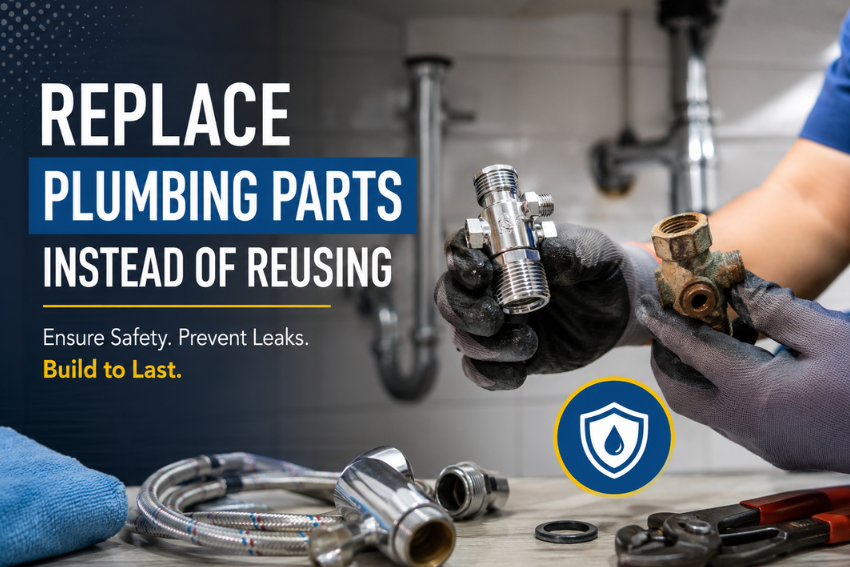
Worn Shut-Off Valves
Shut-off valves are easy to overlook, but they are one of the most important parts of any plumbing setup. These valves control water supply to sinks, toilets, appliances, and other fixtures. If a valve is old, stiff, leaking, or difficult to turn, it is usually better to replace it during renovation.
A worn valve may still allow water to pass through even when closed. This becomes a problem if you need to repair a faucet, replace a toilet, or stop a leak quickly. Old multi-turn valves are also more likely to seize up over time. During a renovation, upgrading to a reliable quarter-turn valve can make future maintenance much easier.
Before closing up a vanity, laundry area, or appliance connection, check every valve. If there is corrosion, mineral buildup, dripping, or loose movement, replacement is the safer choice.
Old Supply Hoses
Flexible supply hoses connect fixtures and appliances to the water supply. They are commonly used under sinks, behind toilets, for washing machines, and for some appliance hookups. While these hoses are convenient, they do not last forever.
If a hose is kinked, brittle, swollen, rusted at the ends, or older than several years, it should not be reused. Rubber washers inside the hose can also harden over time, making leaks more likely after reconnection. Even if the hose worked before the renovation, disconnecting and reinstalling it can disturb old seals.
When updating a bathroom, kitchen, or laundry room, replacing old hoses is a small cost compared with potential water damage. Homeowners can find common replacement hoses, valves, fittings, and other plumbing parts through suppliers like PlumbingSell, making it easier to prepare before the renovation starts.
Corroded or Damaged Fittings
Fittings connect pipes, valves, hoses, and fixtures together. Because they often sit in hidden or tight spaces, corrosion can go unnoticed for years. During renovation, look for green discoloration on copper or brass, rust on steel parts, white mineral buildup, or any signs of pitting.
A fitting does not need to be fully broken to be risky. Corrosion can weaken the connection and make it more likely to leak after pipes are moved or reconnected. If a fitting looks worn, has damaged threads, or no longer tightens cleanly, replacing it is usually the best option.
This is especially important when updating older homes. Older plumbing may include mixed materials or outdated connection types that are no longer ideal for the new fixture layout. Replacing questionable fittings during renovation helps avoid future compatibility issues.
Cracked Drain Parts
Drain parts are often made from PVC, ABS, brass, or tubular plastic. These components handle wastewater rather than pressurized supply water, but they still matter. A cracked drain elbow, worn trap, loose slip joint, or brittle tubular pipe can lead to slow leaks, odors, or water damage inside cabinets.
During a kitchen or bathroom renovation, inspect the drain assembly carefully. Look for hairline cracks, staining, soft spots, loose washers, or parts that no longer line up properly. If the sink, vanity, or cabinet layout is changing, the old drain parts may not fit the new position correctly.
Rather than forcing old drain parts into a new layout, it is better to replace them with properly sized components. This helps the drain work smoothly and reduces the chance of leaks after the renovation is complete.
Outdated Connection Types
Renovation often brings old plumbing systems into contact with new fixtures, appliances, or materials. This can create problems if the existing connections are outdated or incompatible.
For example, an old valve may not match the new supply hose size. A threaded fitting may be worn down. A previous DIY repair may have used the wrong adapter. In some homes, old connections may still function but may not be the best choice for long-term reliability.
Before reusing any connection, confirm the pipe size, thread type, and connection style. If you are unsure, replacing the old part with the correct modern component is usually safer than trying to make mismatched parts work together.
Parts That Were Disturbed During Demolition
Even if a part looked fine before renovation, demolition and installation work can stress the plumbing. Moving cabinets, cutting walls, removing fixtures, or shifting pipes can loosen old connections. Parts that have been bent, twisted, bumped, or disconnected may not seal as well when reused.
This is why renovation is a good time to replace small parts that are already exposed. Once the project is finished, accessing those same parts may require removing cabinets, opening walls, or disrupting finished surfaces.
Small Parts Can Prevent Big Problems
Replacing valves, hoses, fittings, and drain components may not be the most exciting part of a renovation, but it can make a major difference in long-term reliability. Many plumbing problems start with small, inexpensive parts that were reused when they should have been replaced.
A practical renovation plan should include a simple plumbing checklist: inspect shut-off valves, check supply hoses, review fittings, examine drain parts, confirm connection types, and order replacements before work begins. Having parts ready helps prevent delays and avoids last-minute trips to the hardware store.
For homeowners, contractors, and DIY renovators preparing for a project, PlumbingSell offers a convenient way to source plumbing parts early, compare common connection types, and keep renovation work moving smoothly.
In the end, replacing small plumbing parts during renovation is not just about avoiding leaks. It is about building a more dependable system behind the finished space—one that supports the renovation long after the new fixtures and finishes are installed.