A complete wedding planning checklist helps take the daunting sequence of decisions and breaks it down into a step-by-step plan to get ready for your big day. When it comes to planning a wedding, you’re expected to coordinate with multiple vendors, manage budgets, and stay on top of a ton of details. However, once you organize these duties into an easy to follow schedule, you will have control over your schedule and will make it less stressful.
This guide takes you through each step of the process of your engagement day through to your walk down the aisle. Follow this wedding planning checklist to keep your work organized, prioritize your costs and have a seamless path towards your wedding day!
Why You Need a Wedding Planning Checklist
Before you set your eyes on one thing or visit one site, have a moment to consider the entire project. A wedding planning checklist isn’t simply a list of tasks. It provides you with a realistic perspective of the entire process and helps you to allocate your time, energy and money effectively.
Couples who begin with a detailed timeline will not end up wasting precious money such as choosing a venue before establishing a budget or being in love with a photographer who is already booked on the wedding date. The checklist is your anchor. If you get stuck in chaos, you can visualize it and see what to do next.
The 12-Month Wedding Planning Checklist (Step by Step)
Typically, engagements run anywhere from 12 to 18 months. With most couples, this is the right timeline, but it can be shortened or lengthened based on the circumstances. The secret is to accomplish the significant milestones in the correct sequence.
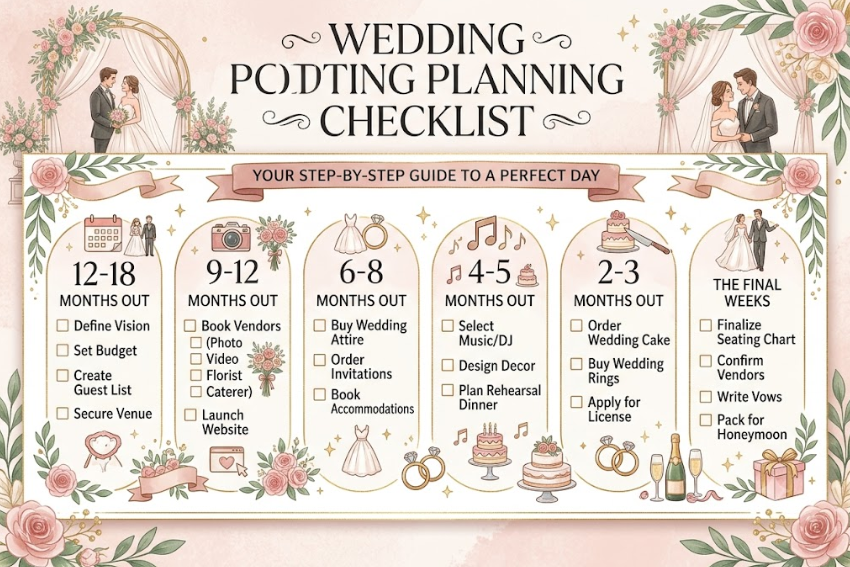
12 to 18 Months Out: Setting the Foundation
How you plan at the beginning will ultimately affect the rest of your project. Don’t forget to set financial expectations with your spouse and family members who may be contributing to the household during these first few months.
Define Your Vision and Priorities
Talk to your partner about the entire mood, size, and style of your wedding. Choose between an intimate gathering in the back yard, rustic barn gathering, or a grand city ballroom party. Pick your top 3: whether it be high end catering, top of the range photography, or a special live band. Understanding what’s important will assist you to save wisely later on.
Establish a Realistic Budget
Know what your entire budget is before booking any services. Include family spending and divide total spending into categories.
- Venue and Catering: 40% to 50%
- Photography and Videography: 10% to 15%
- Attire and Beauty: 8% to 10%
- Decor and Floral: 10% to 12%
- Music and Entertainment: 8% to 10%
- Logistics, Invitations, and Buffer Fund: 10%
Draft Your Guest List
Your budget and venue choice will depend on your guests. Make a first list of guests you cannot do without and a second list of potential guests. Ask immediate family members for suggestions early so as to avoid unforeseen additions to the guest list.
Book Your Venue and Lock in the Date
Visit multiple places to see what styles work best for your crowd and which don’t. Make comparisons about venue features such as tables, chairs, linens and catering policies. After signing the contract and paying the deposit the date is official.
9 to 12 Months Out: Assembling Key Vendors
The top event professionals often reserve clients a year ahead of time. Find your key service providers ASAP to form your dream team!
Hire Primary Vendors
- Photographer and Videographer: Review full wedding galleries, not just curated portfolio highlights. Ensure their visual style matches your preferences.
- Caterer and Bartender: If your venue allows outside vendors, request quotes and sample menus from licensed caterers.
- Wedding Planner or Coordinator: Hire a full-service planner or a day-of coordinator early so they can advise you on vendor selection.
Launch Your Wedding Website
Have a hub for your visitors. Include information about the event, maps of the location, links to travel advice and answers to frequently asked questions. Keep this site current as you plan and change.
Send Save-the-Dates
Send save-the-date cards to your guests, particularly if you’re having a destination wedding or are getting married on a busy holiday week. Send guests to your wedding website to keep up with travel and hotel information.
6 to 8 Months Out: Designing Details and Experiences
With your venue and primary vendors secured, shift your attention to visual elements, attire, and guest experiences.
Select Floral and Decor Design
Discuss color palettes with florists and event designers, floral arrangements, lighting and table design. Pack inspirational pictures, but be ready for seasonal flower options that are still just as attractive without the high price tag.
Shop for Wedding Attire
Custom suits and wedding gowns may take a number of months to manufacture and change. Go early to bridal shops and tailors and choose your style. Have clothes, shoes, underwear and jewelry ordered in advance.
Reserve Guest Accommodations
Call local hotels to make reservations for out-of-town visitors. Set up available dates and details for reservations on your wedding website at various prices.
Create Your Gift Registry
Select two to three retailers for your registry. Include items across various price points so every guest finds a comfortable option.
Also Read – What Does a Wedding Planner Do?
4 to 5 Months Out: Finalizing Logistics
In this stage, you restrict your entertainment options, do some stationery ordering and calendar planning of important event dates.
Book Music and Entertainment
Arrange your music and entertainers for ceremony, cocktail hour and DJ/band for reception. Talk about special songs such as your first dance, parent dances and processional songs.
Order Invitation Suites
Design your formal invitation suite, including main cards, response cards, and enclosure notes. Double-check all addresses, spelling, and postage requirements before placing the final printing order.
Plan the Rehearsal Dinner
Choose a venue for your rehearsal dinner and draft the guest list. Typical invitees include immediate family, the wedding party, and out-of-town guests who arrive early.
2 to 3 Months Out: Polishing the Schedule
As the event draws near, direct your energy toward administrative tasks, legal requirements, and fine-tuning guest details.
Mail Formal Invitations
Send formal invitations eight to ten weeks before the wedding day. Set your RSVP deadline for three to four weeks before the event so you have adequate time to finalize catering counts.
Apply for Your Marriage License
Research your local county clerk requirements for marriage licenses. Note processing times, waiting periods, expiration dates, and necessary identification documents.
Purchase Wedding Bands
Shop for and order your wedding rings. Allow extra time if you need custom sizing or personalized engravings.
Finalize Ceremony Elements
Meet with your officiant to structure the ceremony order, review readings, and write custom vows if you choose to share them.
1 Month Out: Final Reviews and Fits
The final weeks require clear organization and direct communication with all vendors.
- Attend your final attire fitting with shoes and accessories.
- Track down outstanding RSVPs to lock in your guest list.
- Create a detailed seating chart and send draft layouts to your caterer.
- Build a comprehensive day-of timeline and share it with vendors and the wedding party.
- Attend menu tastings and submit final dish choices to your caterer.
1 Week Out: Execution and Calm
Delegate remaining responsibilities so you can focus on enjoying the experience.
- Pack emergency kits with safety pins, stain remover, fashion tape, and basic medicines.
- Organize vendor final payments and place cash tips into labeled envelopes.
- Confirm final headcounts and arrival times with all vendors.
- Hand off ceremony decor, place cards, and favors to your coordinator or trusted friends.
- Pack your bags for the wedding night and honeymoon.
Conclusion
Wedding planning is one of the most thrilling and stressful times in your life. However, a comprehensive wedding planning checklist can turn your wedding day chaos into clarity. You will know what to do, when to do it, and who to call for assistance.
Keep in mind that the checklist is meant to be used as a tool and not a jail. Be kind to yourself when it doesn’t go as planned. Focus on the most important things to you as a couple, and accept everything else. Your wedding day is really a celebration of your love with those who are significant to you.
Now, breathe deep, pick up your checklist and start ticking off all of these tasks! You won’t know what you’ll be doing until you’re walking down the aisle with a smile and a confident heart.