Understanding the difference between a wedding planner vs wedding coordinator is one of the first and most important decisions you will make after getting engaged. Unfortunately, many couples think they can use these terms interchangeably, but they are two distinct types of service, investment, and commitment to your wedding.
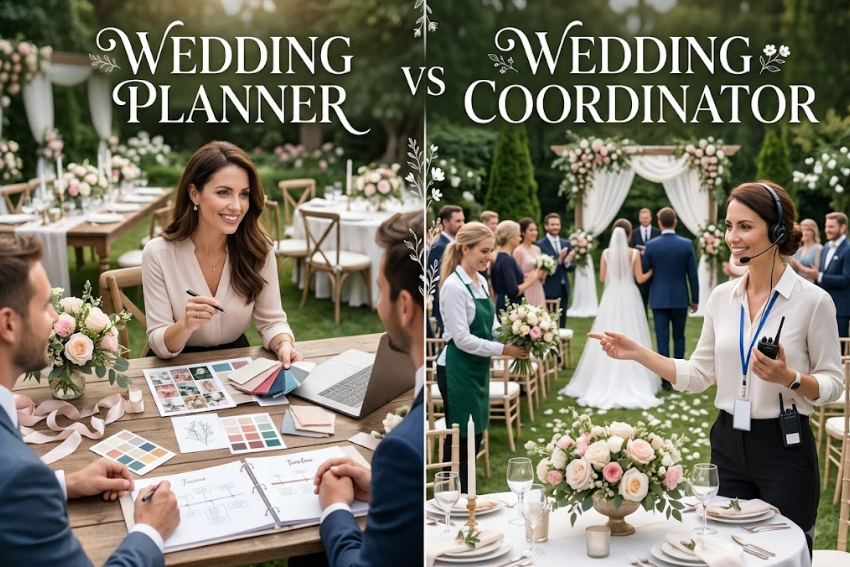
Whilst they both want to make your big day run smoothly, their role, time and duties are different. If you select the correct one, you could end up saving a few thousand dollars, a ton of stress and actually enjoying your engagement, instead of drowning in spreadsheets.
Let’s explain exactly what each role does, the cost of each and how to determine which one is best for your circumstance.
What Is a Wedding Planner?
Imagine a wedding planner as your project manager, creative partner and personal advocate from the get-go. A wedding planner will show you through the entire wedding planning process. Their involvement is usually for 12-18 months which is just after the engagement.
Here is what a wedding planner actually does:
- Budget creation and management: They help you determine if your vision is realistic for your budget and track every penny.
- Vendor sourcing and booking: They research, vet, and recommend reliable vendors. They attend meetings with you, negotiate contracts, and handle all the paperwork.
- Venue scouting: They accompany you on site tours and help you choose the perfect location.
- Design and styling: Many planners offer full creative direction, helping you choose color palettes, floral concepts, and décor.
- Timeline development: They create a master timeline for the entire planning process, not just the wedding day.
- Navigating family dynamics: Experienced planners often act as mediators, handling tricky family situations so you do not have to.
Your wedding planner is like your second brain. They do not only help you plan your wedding; they help you design it, plan through it, and pull it off in a cohesive manner. A planner is a great tool if you are busy, planning a trip out of town, or just don’t know where to begin.
Also Read – What Does a Wedding Planner Do? A Guide for Couples
What Is a Wedding Coordinator?
The wedding coordinator is also known as a “month-of” coordinator, and is your logistics expert in your wedding process. They don’t coordinate your wedding, you coordinate your wedding and they come in to do the job. They usually start working 4-8 weeks in advance of the big day.
Here is what a wedding coordinator actually does:
- Review vendor contracts and plans: They review all your booked vendors and confirm every detail, but they do not choose or hire them.
- Create the final wedding day timeline: They build a detailed, minute-by-minute schedule for the ceremony and reception.
- Manage vendor communication: They contact all vendors to confirm arrival times, setup locations, and special instructions.
- Run the rehearsal: They direct your wedding rehearsal (if included in their package).
- Manage setup and breakdown: They oversee the setup of décor, manage the flow of the event, and handle any last-minute issues.
- Ensure venue policies are followed: They coordinate with the venue manager to make sure all rules are respected.
The coordinator is like a stage manager. The casting, set design and direction are already completed and the coordinator will make sure everything goes smoothly behind the scenes. This is great for couples who have done the majority of the wedding planning, but still want to be prepared on the big day.
Key Differences at a Glance
| Feature | Wedding Planner (Full-Service) | Wedding Coordinator (Month-Of) |
|---|---|---|
| Timeline | 12–18 months (from engagement) | 4–8 weeks before the wedding |
| Vendor Selection | Researches, vets, and books vendors | Manages vendors you have already booked |
| Budgeting | Creates and manages the total budget | Not involved in budget creation |
| Design | Full creative direction and styling | Executes your pre-designed vision |
| Typical Cost | $2,500–$10,000+ | $800–$2,500 |
The Venue Coordinator Factor
The term “venue coordinator” is one area of uncertainty. Many couples think that since they have a coordinator at their wedding venue, they do not require a wedding planner or coordinator. That’s a hazardous belief.
Venue coordinator is an employee of the venue. Their role is to coordinate the arrangement of the venue including but not limited to the following:
- Making sure the event space is clean and in good working order.
- Facilitating the layout and setup of the main floor plan.
- Handling on-site catering and house bar service.
- Managing the arrival and parking of wedding guests.
- Upholding the venue’s policies.
A venue coordinator is not going to check in with you on a monthly basis, or contact your photographer to develop a music schedule. They don’t represent you; they represent the venue. They don’t have the time to troubleshoot the problem with your florist or make sure your grand entrance runs smoothly. Don’t trust a venue coordinator to be a substitute for your own wedding planner or coordinator.
Also Read – Wedding Planning Checklist
Wedding Planner vs Wedding Coordinator: Which One Do You Need?
Choosing between the two comes down to a few key factors:
Choose a Wedding Planner If:
- You have a busy schedule and little time to research vendors.
- You are planning a wedding from out of town.
- You are hosting a luxury wedding with lots of details.
- You want guidance from an expert every step of the way.
- You feel overwhelmed and do not know where to start.
- You want help designing the look and feel of your day.
Choose a Wedding Coordinator If:
- You have already booked your venue and major vendors.
- You enjoy planning and want to be hands-on.
- You are comfortable managing timelines, budgets, and vendor contracts.
- You simply want peace of mind on the wedding day.
- You are on a tighter budget but still want professional execution.
Why the Industry Is Moving Away from “Day-Of” Coordination
The industry is moving away from the term “day-of coordinator”, you may hear it being used. Experts have found that it is not possible to conduct a wedding without preparing for at least four weeks in advance. You do not just pick up a coordinator in the morning of your wedding and all of a sudden make it happen. They must take the time to read the contracts, reach out to vendors, and make a comprehensive schedule. This is why most professionals these days are able to offer a “month of coordination” package.
Final Verdict
It’s important to understand the difference between a wedding planner vs wedding coordinator in order to decide what type of help you need, what your logistical needs are, and how much involvement you desire. A wedding planner will be your friend from the beginning, helping you make decisions and develop your wedding from scratch. A wedding planner is the execution specialist who comes in at the end when you have everything in place to make it a perfect wedding.
There is no right or wrong answer. It all comes down to self-honesty with your time, money, and stress level. If you’re up for the planning process, and have bandwidth, a coordinator is a wise investment and nice budget. A planner isn’t a cost; it’s a must-have if you’re overwhelmed by the prospect of vendor contracts and budgets.
No matter which way you go, getting the help of a professional is one of the top investments you can make. Your wedding day is a special day and you don’t want to miss the fun by having an expert on your team!
Frequently Asked Questions
Can a wedding planner also act as a coordinator?
Yes, many full-service planners offer month-of coordination as a separate, lower-cost package. The difference is the level of involvement, not the skill set.
Do I need both a planner and a coordinator?
Not usually. A full-service planner will handle everything from start to finish, including the day-of execution. You only need a coordinator if you are doing the planning yourself.
How much does a wedding planner cost compared to a coordinator?
Planners typically cost $2,500 to $10,000 or more, while coordinators range from $800 to $2,500. The price difference reflects the vast difference in time and effort involved.
Is a venue coordinator enough?
No. A venue coordinator represents the venue, not you. They handle venue-specific logistics but will not manage your vendors, timeline, or personal details.