Hachiko has been left behind as one of the heart moving instances of loyalty in history and the tale of Hachiko has its impact on people all over the world. When we discuss unconditional love and faithfulness, hardly any stories in our life can be compared to such an outstanding relationship of this Akita dog with his owner. To this day, almost a hundred years after, the word Hachiko evokes a feeling, a feeling of amazement and awe over how much animals love.
The real-life story of the most faithful dog in Japan is not simply a story of a pet that is waiting in a line to see its owner. It is an effective reprimand of devotion, routine and unspoken trust that develops between humans and human companions. When we further explore the life of Hachiko we get to learn how a common dog could come to be an eternal representation of loyalty to the world.
The Hachikō Story in Brief
Hachikō was a loyal Akita dog who, in the 1920s, would greet his owner, Professor Hidesaburō Ueno, at Shibuya Station every day after work. Tragically, Professor Ueno died at work in 1925 and never returned. Hachikō continued to wait for his return at the station every day for nearly 10 years until his own death in 1935.
His unwavering loyalty became a national symbol in Japan, and a statue was erected in his honor.
The Original Statue (1941-1946)
- Sculptor: Takeshi Ando (the son of the famous sculptor who made the first statue).
- Date Erected: August 1941.
- Location: The same spot in front of Shibuya Station where it stands today.
- Fate: Melted down for metal during World War II. Like many metal statues and artifacts across Japan, Hachikō’s first bronze statue was sacrificed for the war effort in 1944.
The Current Statue (1948-Present)
After the war, there was a strong public desire to rebuild the statue.
- Sculptor: Takeshi Ando again, the original sculptor. He used the same molds he had saved, ensuring the new statue was identical to the first.
- Date Erected: August 1948.
- Location: The same spot as the original, just outside the Hachikō Exit of Shibuya Station.
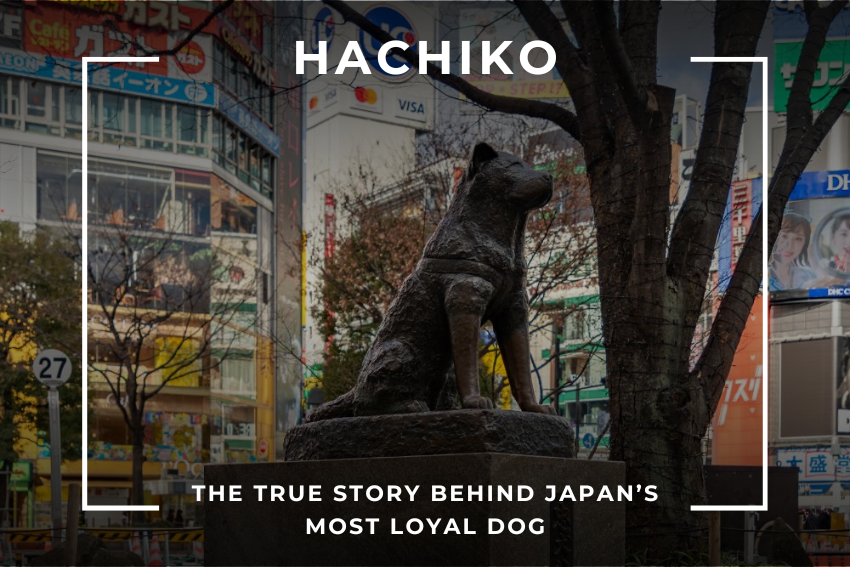
- Significance: This is the iconic statue known worldwide today. It is one of Tokyo’s most famous meeting spots and a must-see for visitors.
Key Facts for Your Visit
- What to See: The statue is life-sized and depicts Hachikō waiting patiently. You will often see a crowd of people taking photos with it.
- Location: Just outside the Hachikō Exit (Hachikō-guchi) of Shibuya Station. It’s impossible to miss.
- The “Real” Hachikō: If you want to pay respects to Hachikō himself, his preserved remains are on display at the National Museum of Nature and Science in Ueno Park. His fur was preserved and mounted after his death, and this is what is displayed.
The Beginning of Hachiko’s Journey
Hachiko was born in November 1923 to a small city in Japan called Odate which is a breed of Akita dogs. Akitas are powerful, smart, and instinctively loyal, that created the fate of Hachiko long before he met his owner.
Hachiko was later adopted in 1924 by Professor Hidesaburo Ueno, a well-known agricultural scientist at the University of Tokyo. The professor was directly attracted by the quiet nature of the puppy and kind eyes. Hachiko set off to Tokyo, and he started a new life with Professor Ueno.
Right after the first encounter, they developed a special relationship. The professor did not only treat Hachiko like a pet but a real companion. Hachiko was behind him all along and this was an early indication of loyalty that would win the hearts of the world later.
A Daily Routine Filled with Devotion
Hachiko also used to accompany Professor Ueno to Shibuya Station every morning. The professor would take his train to go to work and before entering, he would pat the head of Hachiko. During the nights, Hachiko would go to the station by himself and wait outside the ticket gates patiently awaiting his beloved owner.
This daily routine was going on day after day. When walking past, people became accustomed to seeing the quiet Akita staring at the entrance with his eyes, and in fact, his tail usually wags when he heard the train coming his way. To a lot of commuters, the image of Hachiko, waiting patiently, was now something to look forward to in his or her everyday life.
Hachiko was a faithful person, and he reported to the office precisely at the same time every day. The loyal dog stood at the same place, whether it was raining or not, and was waiting to meet the professor.
A Heartbreaking Turning Point
Something tragic occurred on May 21, 1925. Professor Ueno had a sudden cerebral hemorrhage during one of the lectures at the university. He died and never came back to Shibuya Station where Hachiko stood that evening with his excitement and hope in his heart.
This day relegated all that, but Hachiko could not comprehend what had occurred. He just knew that his master had not returned. The following day he came to the station at the same time again waiting patiently.
And again, the day after.
What is special about Hachiko was that he did the routine all through the nine years. He would come to Shibuya Station exactly when the train was coming, sitting at the same place, and scanning the faces of all the people who stepped out of the train.
Commuters started spreading his story. People began bringing him food, water, and shelter in times of storms. They adored the undying loyalty of the dog and were touched by his sad devotion. Hachiko gradually turned out to be a favorite.
How Hachiko Became a National Symbol
In 1932, an ex-pupil of Professor Ueno wrote an article in a Japanese newspaper concerning Hachiko. Thousands of hearts were touched at once by the story. Individuals who came around Japan to Shibuya Station simply came to view the Akita dog, which was loyal.
Among the strong human feelings, the story shed light on a number of them:
- Unconditional loyalty.
- Grief and hope intertwined.
- Devotion exceeding manly reach.
- The special relationship between man and animals.
Hachiko became a national treasure soon after becoming a local symbol. His story was the embodiment of the values that were deeply entrenched in the Japanese culture, i.e., devotion, loyalty, and endurance.
There were even international audiences who read the story. Hachiko was one of the most renowned dogs in history, as000 newspapers all over the planet spread the news about him.
Hachiko’s Final Day at Shibuya Station
Hachiko died at Shibuya Station almost ten years after the death of Professor Ueno on March 8, 1935. He lay quietly on the street where he had crossed so many times waiting to meet his owner.
He was a sorrowful person to people all over Japan. To a great number of people, Hachiko now was a representation of unquestionable faithfulness and emotional perseverance. His death was like the death of a dynasty, yet his history was still in the present.
Hachiko was buried next to Professor Ueno and had his way to see his long-awaited man. Their narrative is one of the loveliest instances of devotion that has ever been recorded.
The Statue That Became a Global Landmark
A statue was constructed outside the station of Shibuya in 1934 one year before the death of Hachiko. Hachiko was also present at the unveiling ceremony, but he sat proudly next to the sculpture which would forever remember his faithfulness.
The Hachiko Statue is currently a popular place for sightseeing in Tokyo. Millions of people are Snapchat users. It has become a:
- Popular meeting spot
- Japanese culture of loyalty.
- Couples’ attraction of tourists and dog owners around the world.
The statue has survived the war, reconstruction, and modernization. It is not only a monument to a dog but also a monument of eternal force of love and loyalty.
Why Hachiko’s Story Still Touches Millions
What is so strong about the story of Hachiko? Human beings are very emotional when it comes to loyalty particularly when it is shown without any conditions or expectations. Hachiko did not wait to get food, attention but only love.
His story is eternal due to a number of themes:
- Love Beyond Words: Hachiko was not able to speak but his behavior expressed the love that transcends all languages.
- Routine as Expression of Loyalty: The power of habits made by true love was seen in his day-to-day walk to the station.
- Grief That Never Faded: Hachiko did not forget but remembered it on a daily basis. That memory fueled his hope.
- A Universal Lesson: Hachiko not only teaches us to know about loyalty, but he also teaches us to cherish the bonds we build with people.
Hachiko in Movies, Literature and Global Culture
Hachiko has become the subject of films, books, art, and documentaries. His story, Hollywood film, Hachi: A Dogs Tale was released in 2009 and was started by Richard Gere and brought the story of Hachi to millions of people outside Japan. It depicted the pathetic side of the relationship between Hachiko and Professor Ueno and many viewers cried.
The stories of Hachiko appearing in books and stories about children are used in schools to educate about the principles of honesty, patience, and love.
Hachico has a statue in the city of Odate (the area where Hachiko was born) and museum, as well, in honor of the Akita dog.
Lessons We Can Learn from Hachiko
Hachiko did not live a life of luxury or fame. He simply waited because he believed his owner would return. From this quiet perseverance, we learn strong lessons:
- Love can transcend time.
- Loyalty does not fade, even in uncertainty.
- Small daily actions can express deep emotions.
- Companionship is powerful, even without words.
Hachiko’s story reminds us that devotion is not measured by grand gestures but by consistency.
The Breed Behind the Legend: The Akita
Hachiko was an Akita Inu, one of Japan’s oldest and most respected dog breeds. Akitas are known for:
- Exceptional loyalty
- Strong protective instincts
- Calm and dignified temperament
- Deep bonding with their families
Their devotion is almost legendary, and Hachiko became the ultimate example of Akita’s loyal nature.
Hachiko’s Legacy Today
Almost a century after Hachiko, his legacy is still even stronger. He is a Japanese national holiday, commemorated on March 8 annually, on the so-called Hachico Memorial Day, when people go to his statue and pay their respects to his loyalty.
His tale is taught in schools to instill the spirit of trust and devotion. Adorers of dogs still post photos and tales of him on the internet. And the sculpture at the Shibuya Station is always a reminder of love that does not end.
The world is shifting, cities are developing, yet loyalty, pure and unconditional, will always be eternal.
Conclusion
The Hachiko story does not merely involve a dog that waits till his owner arrives. Loyalty which never falters, the love which endures overtime and the strong connection between humans and animals is about. The loyalty of Hachiko teaches us about the level of emotion animals have and how well they can be integrated into our lives.
In the modern world, when people worldwide are constantly going to his statue and telling his story, Hachiko will always be a bright example of what loyalty is all about. His tale is heartfelt in that it appeals to something universal the need to love and be loved, loyal and forever.
When you happen to be in Tokyo, you should stop by and have a glimpse of the Hachiko Statue. It is more than a landmark. It is an ode to love that will never die.
FAQs About Hachiko
Why is Hachiko so famous?
Hachiko turned out to be a renowned daily waiter at the Shibuya Station during the period of almost 10 years to meet his dead owner. His religious following reached into millions and made him one of the world’s pictures of devotion.
Where can I find the Hachiko Statue?
The legendary Hachicoke Statue is located just outside Shibuya Station in Tokyo. It is also among the most popular meeting places in the city.
What kind of dog was Hachiko?
Hachiko was an Akita Inu which is a powerful and loyal breed of Japanese dog with strong attachment among the owners.
How long did Hachiko wait for his owner?
Hachiko did not leave his habit of coming back to the station every day until after nearly nine years when Professor Ueno died.
Did Hachiko and Professor Ueno get buried together?
Yes. Their remains were later buried jointly, and this was a sign of the strong connection that existed among them and their everlasting companionship.