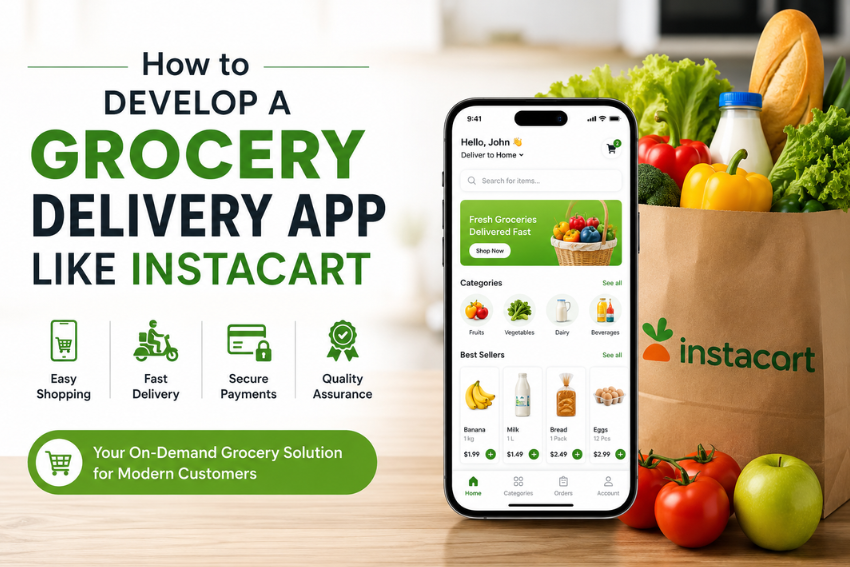
Developing a grocery delivery service app like Instacart isn’t as easy as it seems and involves several steps. It involves creating a seamless shopping experience, connecting customers, grocery stores and delivery service providers on a secure and scalable platform. As eCommerce grocery sales continue to grow, it’s a great opportunity to make a splash in the market with a feature-rich grocery mobile app with a focus on convenience, speed, and customer satisfaction.
As you’ll read in this guide, you’ll need to come up with an on-demand grocery delivery solution that has all the necessary features, the correct technology setup, and takes you through the process of building a grocery app like Instacart, including estimated costs and tips on building a successful on-demand grocery delivery business. Whether you’re a new start up or an existing retailer, this article will help you understand the essential components to start a competitive grocery delivery app.
Understanding the Business Model
Any grocery delivery app development process begins with knowing the working of the app, similar to Gourmet, where users can connect with the store and purchase groceries. In these uses, users can look around and buy groceries, pay for it and even have it delivered to their doorstep.
Conduct Market Research
Market research is the first step to a successful grocery application development. Behaviors, competitor analysis and trends should be evaluated. The gaps in the marketplace and customer needs for a new grocery app should be determined.
Key research areas include:
- Customer demographics
- Shopping preferences
- Delivery expectations
- Competitor strengths
- Revenue models
Understanding these factors helps develop a platform that stands out in a global market.
Core Features
If you want to create a grocery delivery app similar to Instacart, you should have a solid collection of features for customers, admin, and delivery people.
Customer Features
- User registration and login
- Product search and filtering
- Product categories
- Shopping cart
- Secure payment gateway
- Order tracking
- Push notifications
- Reviews and ratings
- Wishlist functionality
Delivery Partner Features
- Profile management
- Order assignment
- Route optimization
- Earnings dashboard
Admin Features
- Product management
- Inventory control
- Customer management
- Order monitoring
- Analytics and reporting
- Promotional campaign management
Right Tech Stack for Grocery Delivery Apps
Selecting the appropriate technology stack ensures scalability and performance.
Frontend
- Flutter
- React Native
- Swift (iOS)
- Kotlin (Android)
Backend
- Node.js
- Laravel
- Django
- Express.js
Database Solutions
- MySQL
- PostgreSQL
- MongoDB
Cloud Infrastructure
- AWS
- Google Cloud
- Microsoft Azure
A well-planned technology stack helps maintain smooth operations even during high traffic periods.
Design an Intuitive User Interface
User experience plays a major role in customer retention. A grocery delivery app like Instacart should feature the following:
- Clean navigation
- Easy checkout process
- Fast loading times
- Mobile responsiveness
- Attractive product displays
The design should minimize friction and make grocery shopping quick and enjoyable.
Implement Advanced Features
Many of the grocery apps have advanced features that help to increase customer satisfaction.
- AI-Based Recommendations: Make product recommendations according to history of purchase and user behavior.
- Real-Time Tracking: Enable customers to monitor orders as they are being processed through to delivery.
- Multiple Payment Options: Credit and Debit cards, digital wallet, net banking and cash on delivery.
- Subscription Programs: Include membership programs offering benefits like free delivery and exclusive discounts.
Develop Delivery Management Capabilities
Managing the delivery is an important part of the business and it has a huge impact for the success of the business. The delivery app should come with a range of features, such as route optimization, driver assignment, and tracking, to ensure smooth functioning.
Ensure Security and Compliance
Customer trust is built on secure transactions and data protection.
Important security measures include:
- SSL encryption
- Secure payment processing
- Two-factor authentication
- GDPR compliance
- Regular security audits
Protecting customer information should be a top priority throughout the development process.
Testing and Quality Assurance
Before launch, conduct extensive testing to identify and resolve issues.
Testing types include the following:
- Functional testing
- Performance testing
- Security testing
- Compatibility testing
- User acceptance testing
A thoroughly tested application delivers a reliable experience to end users.
Launch and Marketing Strategy
After development, create a comprehensive launch plan.
Effective marketing channels include:
- Social media marketing
- Influencer partnerships
- Referral programs
- Email campaigns
- Search engine optimization
A strategic launch helps attract users and generate early adoption.
Development Cost Factors
There are a number of technical, as well as business, requirements that affect the overall cost of a grocery delivery app. Below is a list of the primary factors which affect the development budget.
| Cost Factor | Impact on Development Cost |
|---|---|
| Number of Features | Advanced features such as AI recommendations, real-time tracking, loyalty programs, and multiple payment options increase development time and cost. |
| Platform Selection | Building for Android, iOS, or both platforms affects the overall budget. Cross-platform development can help reduce costs compared to separate native apps. |
| UI/UX Design Complexity | Custom animations, interactive interfaces, and personalized user experiences require additional design and development effort. |
| Third-Party Integrations | Integrating payment gateways, maps, GPS tracking, SMS, push notifications, and analytics tools adds to the project cost. |
| Development Team Location | Development rates vary by region. Hiring developers from North America or Europe is generally more expensive than outsourcing to Asia. |
| Technology Stack | The choice of frontend, backend, cloud infrastructure, AI capabilities, and database technologies influences the total investment. |
| Testing & Quality Assurance | Comprehensive testing ensures a secure, bug-free, and high-performing application, increasing overall development effort. |
| Maintenance & Support | Regular updates, security patches, feature enhancements, and server maintenance require an ongoing budget after launch. |
Prior to deciding upon the budget of the project, it is necessary to understand the requirements of the business, target audience, and future goals of the project.
How to Monetize a Grocery Delivery App Like Instacart
Creating an application for delivering grocery is just the start of the journey; what is critical is to build a source of income. A great grocery delivery program such as Instacart generates income from various sources, which profit all individuals associated with the business procedure.
- Delivery Charges: Revenue is mainly generated from delivery charges. These can vary depending on other factors such as the distance to be covered for delivery, the number of orders placed, the time slot selected or, indeed, the express delivery service. Premium members will always be billed more for quick and timed delivery.
- Vendor Commission: These are based on the commission earned from every purchase made through this channel from the partnership with the grocers or supermarkets. It is invariably 10 to 20% of the price and therefore guarantees that the vendors are working properly and will be getting a steady income.
- Subscription Plans: These offer customers premium plans with privileges like free delivery, special offers and more.
- Sponsored Listings & Advertisements: Brands and sellers who want to sell their grocery products will be able to pay for sponsored listings where their products will be displayed on top of the search results, banners on their home page and promotions.
- Dynamic Delivery Pricing: In high volume situations, on holidays or when there is increased demand, the application can implement surge pricing. This will make sure that the delivery supply is effectively managed and driver availability is ensured.
- Small Order Convenience Fees: Orders below a predefined minimum order value can have a small order convenience fee. This aids in reducing shipping and service costs, and promotes larger orders from customers.
- Value-Added Services: With in-app value-added services, such as adding a package as a gift, delivery at a specific time, express delivery, loyalty bonuses, or a personalized shopping experience, additional revenue can be generated.
- Dual-Sided Monetization: The best grocery delivery software is profitable to both the food delivery company and the merchant. It is because customers are paying for the service, they are getting so that they can enjoy the convenience and comfort of delivery, while the merchants are spending money on commission, advertising, analytics.
Why Work with Helpful Insight, an Experienced Development Partner?
This is because there is a delicate balance of skills, knowledge, and development strategy that needs to be established when creating an efficient grocery app. A reputable grocery delivery app development company will ensure you get your app designed, developed, and implemented properly, as well as cooperate in planning.
The team has experience of how challenging it is to run a grocery business and how to build a scalable application that will make sure that your clients’ grocery business will run smoothly and you’ll get the opportunity to expand. Artificial Intelligence, route optimization and lots of other technologies are used by professional developers to enhance the app’s features.
Last but not least, expert developers concentrate on the security and performance of the app.
Conclusion
Creating a grocery delivery app like Instacart demands a great deal of planning, right technology stack and a keen attention to user experience. Every element is crucial in building a robust and scalable platform, from customer-friendly features to efficient order management and secure payment integration to real-time delivery tracking. A well-designed and developed app has the potential to increase customer satisfaction and keep businesses ahead in the competitive online grocery market.
Investing in an on-demand grocery delivery solution is a great time to invest as consumer demand for fast and hassle-free grocery shopping is also growing. Leveraging an experienced app development team, testing your business model, and continuously nurturing your platform in response to user feedback and input can help you create a grocery delivery app that not only drives loyal customers, but generates recurring orders and long-term business growth.