Both online and offline classes have their own advantages and disadvantages, as each mode of learning possesses distinct strengths and limitations. Nevertheless, both can be effective in the learning process. Choosing between them depends on various factors, such as learning preferences, goals and objectives, available resources, and the circumstances surrounding their use.
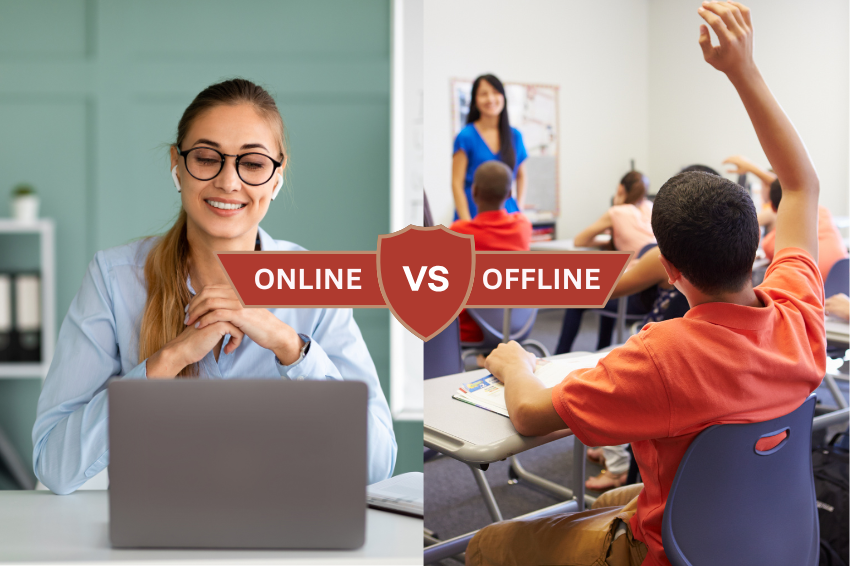
The question also arises as to whether online classes or offline classes are more beneficial. This article discusses both learning methods and helps you decide which one is best suited to your needs and preferences.
Quickly Compare Online vs Offline Classes
| Aspect | Online Classes | Offline Classes |
|---|---|---|
| Learning Mode | Delivered via the internet on computers or mobile devices; location‑independent. | Conducted face‑to‑face in a fixed physical classroom. |
| Flexibility | Highly flexible – students can choose their own time, place, and learning pace. | Low flexibility – fixed schedule and location; little room for adjustment. |
| Teacher‑Student Interaction | Weaker – limited real‑time, face‑to‑face contact; communication is often asynchronous or via chat/video. | Strong – direct, immediate interaction with instructors and peers; instant feedback and lively discussions. |
| Self‑Discipline Required | High – requires strong self‑motivation, time management, and the ability to avoid procrastination. | Moderate – the structured timetable and campus environment help maintain study routines. |
| Hands‑on / Practical Experience | Limited – less effective for subjects that require lab work, equipment, or physical practice (e.g., medicine, engineering). | Rich – offers ample opportunities for practical exercises, using tools and real‑world equipment. |
| Social & Networking Opportunities | Weaker – networking happens mostly online; relationships tend to be more superficial. | Strong – enables deep connections with classmates, professors, and industry professionals through in‑person events and daily interaction. |
| Cost | Lower – tuition is generally more affordable, and students save on commuting, accommodation, and campus fees. | Higher – besides tuition, extra costs include transport, housing, meals, and other on‑campus expenses. |
| Course Variety | Very wide – almost any subject is available worldwide, regardless of geographic location. | Comparatively limited – course offerings depend on the institution’s location and specialisation. |
| Technology Dependence | High – learning relies heavily on stable internet, devices, and software. | Low – mainly relies on physical facilities, printed materials, and in‑person instruction. |
| Best Suited For | Working professionals, parents, self‑motivated learners, and those who value flexibility and remote access. | Students who prefer a structured environment, need extensive hands‑on training, and value social interaction. |
Understanding Online Classes
Over the past decade, online classes have become quite popular and are being widely used to deliver educational services. These courses are typically taken online via computer, allowing learners to access information from anywhere in the world.
Advantages of Online Classes
- Flexibility and Convenience: This has made online education the most convenient mode of learning as compared to the traditional systems of learning. Made it is quite flexible that students can decide on which time of the year or which day of the week or even which part of the day they can engage in studies. This is most helpful pertaining to working adults, parents or anyone living in rural areas.
- Variety of Course Types: The World Wide Web provides virtually any type of course that is not offered in the local college or another institute. The option allows education seekers to be specialized in certain areas or even in more complex courses.
- Flexibility: Most online courses demonstrate that students may follow their own learning schedule. The learning model accommodates students at different instructional levels by enabling them to work with either extra time on a subject or a quicker approach to finish lessons early.
- Affordable: Tuition fees and other charges required by institutions to undertake online classes are comparatively cheap than that of physical classes. They are cheaper since it relieves expenses such as transport, accommodation, and the cost of physically bound books.
- Global Interaction: Since the students get to interact with many people online from different parts of the world, this enhances globalization in learners by exposing them to various cultures.
Challenges of Online Classes
- Lack of Face-to-Face Interactions: This is one of the biggest drawbacks of online learning since little contact is made with fellow students, and even the instructors.
- Self-Discipline Crucial: It needs stiff self-motivation to make a success as a student in online learning. As there is no rigid framework as seen in the actual class, it becomes hard not to procrastinate.
- Restricted Practical Exposure: There are certain disciplines or courses like practical sessions, laboratory and some other similar practices where effective learning cannot happen in the online mode.
- Challenges: Since the delivery relies on technology, the learners have to contend with the availability of the internet connection and platform malfunctions.
Understanding Offline Classes
Face-to-face classroom teaching has long been a standard method of learning. Offline classes provide a structured learning environment where students have the opportunity to interact directly with the instructor.
Advantages of Offline Classes
- Structured Environment: Offline classes involve a specific format and conduct of the classes which helps adhering to discipline and structure.
- Direct Interaction: Student get direct contact with the instructors and peers hence feedback, group and individual discussions.
- Real Life Practice: Most areas of study that involve the use and application of certain tools and equipment are more effective when practiced in physical classes.
- Networking Propensity: Campus based college leverage the opportunity to network with various people in the job market, either through referrals, recommendations, contacts from employers and other senior individuals hence enhancing the chances of job promotion.
- On-campus Availability of Facilitators: Having academic and or administrative facilitators on standby can be very important given that they may be required in times of emergencies by students who have special requirements.
Challenges of Offline Classes
- Less Flexible Classes: It can also be difficult to get an appointment for the standard classes as they are fixed mostly throughout set time.
- High Costs: Offline education involves cost implication such as tuition fee, cost of transport and cost of accommodation among others.
- Restricted Program Offerings: This is likely to be an issue mostly arising due to the geographical location of the online universities.
- SDE-Intensive: Face-to-face classes involve time use of time, energy and finances in form of transports which may be a hindrance to individuals who are working and studying at the same time.
Factors to Consider: Which Fits Your Goals Better?
The following factors should be taken into consideration when determining whether to opt for either online or offline classes:
- Learning Style: Consider yourself as a person who works well under structured learning environment or would rather study on your own.
- Career Relevance: Establish a correlation between each of the modes and one’s career goals. It can be still asserted that some professions entail more appropriate qualifications or certifications when it comes to one format or another.
- Time Management: Self–assessment of time management skills is often difficult. However, an attempt has to be made to assess one’s inclination as well as performance towards time management. Online learning requires a lot of self-motivation especially with regard to study and research while offline classes have close schedules for the classes.
- Financial Situation: Assess your budget and financial resources. Despite the opportunities provided by the Internet, you have to remember that even here the value of education received can be rather expensive.
- Materials and Equipment: As for the last measure, make sure that you have a stable Internet connection and all the equipment that can be required for online classes if this option is chosen.
- Communication: Look at the extent to which you require social interaction thus the group participation when it comes to offline classes or the freedom of online classes.
- Responsiveness: Some subjects may be more suited to certain forms of interaction with students. Thus, it would be reasonable to conclude that fields such as engineering or medicine would benefit from offline classes, while in contrast, subjects such as philosophy or computer science could be taught more effectively online.
Hybrid Learning: A Middle Ground
Such education methods yield the best results because they offer flexibility rather than a rigid structure. These programs typically combine distance learning (including web-based classes) with face-to-face sessions to meet the needs of diverse learners.
Benefits of Hybrid Learning
- Blending of Both: While taking their classes online, the students are able to benefit from the face-to-face interaction in other classes.
- Increased Interest: A link between the online and offline components of the course increases material interest and reviews.
- Practical and Theoretical Aspects: One instructs the student through the internet while the other provides the hands-on experience in the class by doing it physically.
- Face to Face Interactions: The students are able to have some face-to-face interactions and networking advantages while also enjoying the online components.
Making the Decision
Whether one should attend online classes or offline classes depends on a number of factors, important to the growth of the individual. The following is an example checklist that you will use when trying to make a decision:
- Self-Assessment: Evaluate your learning style, preferences, and goals. Think about what is required for the further success and what is most interesting concerning the learning process in a particular subject or course.
- Research: To carry out this process effectively, the following steps should be taken: One of the ways is to search for reviews; accreditation of the course providing institutions; and their reputation.
- Information Gathering: Consult with teachers, colleagues and other experts in the line of work that the project is aligned with. As such, their opinions could give helpful insights towards the strengths and weaknesses of the two formats.
- Trial Experience: If possible, you should try both the formats before coming to any conclusion. Most of the educational institutes have trial classes sessions or open days that make one have a feel on the environment.
- Long Term Consequences: Consider how each one of the options will affect your future and professional advancement. Discern the importance and regard of the qualifications you will obtain.
Conclusion
One thing should be absolutely clear: the decision to choose between online and offline classes is not set in stone, nor is it irreversible. Both have their own advantages and disadvantages, and the best option depends on circumstances and the learner’s preferences. Ultimately, if you consider your learning preferences and values, your chosen specialization, your financial situation, and other key factors relevant to you, you will be able to make the right decision aligned with your educational and life goals.
Despite the changes taking place in the education sector, both online and offline classes will remain integral parts of the educational system. Adopting flexibility and hybrid learning models allows one to leverage the benefits of both systems, thereby helping to achieve key objectives and meet the specific requirements of educational courses. Ultimately, the goal is to choose an option that fosters success and helps you realize your full potential.