The healthcare industry is in the middle of a massive digital overhaul, and cloud-based EMR software sits right at the center of it all. For decades, medical practices and hospitals relied on clunky on-premise systems that demanded expensive servers, constant IT attention, and frequent manual upgrades. Those days are fading fast. Today, cloud-based electronic medical records are reshaping how clinicians work, how patients engage with their care, and how healthcare organizations plan for the future.
This isn’t just a technology upgrade. It’s a fundamental shift in how healthcare delivers value. Let’s walk through what’s actually happening, why it matters, and where this transformation is headed.
What Is Cloud-Based EMR Software?
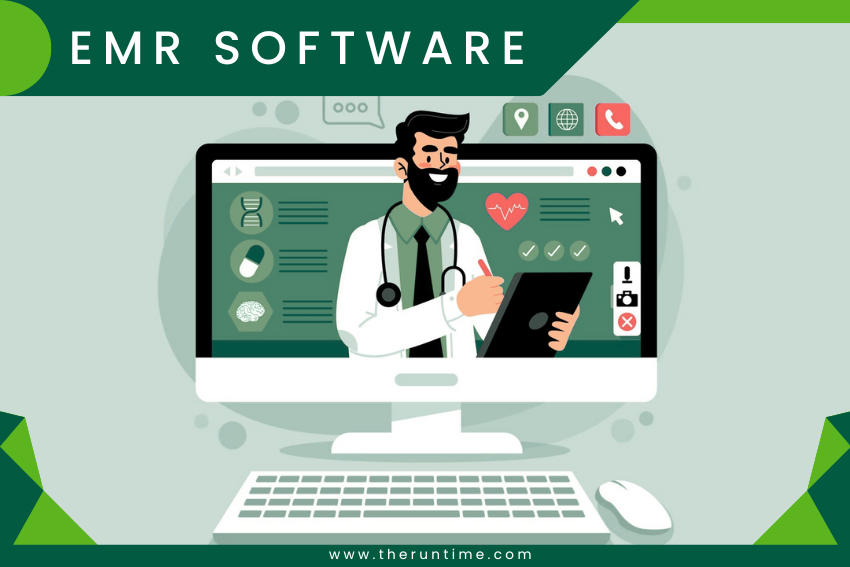
Before we dive into the impact, let’s get clear on what we’re talking about. A cloud-based EMR system stores patient data on remote, vendor-managed servers rather than on computers or servers physically located at your practice. You access everything through a web browser or mobile app, from any device with an internet connection.
Think of it like the difference between keeping all your files in a physical filing cabinet versus storing them in a secure, always-accessible online drive. The cloud version gives you flexibility, security, and scalability that on-premise systems simply can’t match.
The Numbers Don’t Lie: Cloud Adoption Is Accelerating
The market tells a compelling story. The cloud-based EMR software market is projected to grow from USD 5.74 billion in 2025 to USD 12.5 billion by 2035, representing a compound annual growth rate of around 8.1%. More than 80% of U.S. hospitals now use cloud-based EHRs, according to HHS data. And cloud-based deployment already holds a 56.4% market share, making it the fastest-growing deployment model with an 18.4% CAGR through 2031.
But these numbers only tell part of the story. The real transformation is happening on the ground, in exam rooms, hospital wards, and administrative offices across the country.
Also Read – How Cloud Based Hospital Management System Improves Healthcare Transparency
Why Healthcare Is Finally Embracing the Cloud
Massive Cost Savings
Let’s start with the obvious one: money. Traditional on-premise EMR systems come with hefty upfront costs. You need to purchase servers, networking equipment, and storage. You need a dedicated IT team or outside consultants to maintain everything. You pay for software licenses, support contracts, and expensive upgrades.
Cloud-based EMR software flips that model completely. Most solutions operate on a subscription basis with predictable monthly fees. You don’t buy hardware. You don’t hire extra IT staff. The vendor handles maintenance, backups, and security updates. When your practice grows, you simply scale up your subscription rather than buying new servers.
One health system, Tufts Medicine, saved millions by migrating its 800-application portfolio to the cloud. Hendry Regional Medical Center anticipates significant long-term financial savings by shifting from multiple concurrent EHRs to a single integrated cloud platform.
For small and medium practices operating on tight budgets, these savings can be the difference between thriving and barely getting by.
Anywhere, Anytime Access
Picture this: It’s 2 AM, and you get called about a patient in the ER. With on-premise systems, you’d have to drive to the office or hope someone else can access the records. With cloud-based EMR software, you pull up the patient’s complete history on your phone or laptop from wherever you are.
This isn’t just convenient. It’s lifesaving.
Clinicians can perform telehealth appointments from home, check clinical notes between patient visits, and collaborate with colleagues across different locations. HCA Healthcare UK, for example, implemented a cloud-based EHR that gives clinicians secure access to patient information from anywhere in the UK, supporting more timely remote care.
The COVID-19 pandemic accelerated this need dramatically. Healthcare organizations that had already moved to the cloud were able to adapt quickly. Those still on legacy systems struggled.
Better Collaboration and Coordination
Healthcare is a team sport. Patients often see multiple specialists, receive care in different settings, and have complex medical histories. Cloud-based EMR software makes sure everyone on the care team has the same up-to-date information.
When a patient moves from primary care to a specialist to a hospital, their records move with them seamlessly. Multiple departments can share information without redundant data entry or missed details. This reduces errors, eliminates unnecessary tests, and ensures consistent care across the board.
The unified healthcare information system provides clinicians with a comprehensive view of each patient’s clinical, administrative, and financial information, supporting informed decision-making and improving operational efficiency.
Security That Actually Works
Here’s a common misconception: “The cloud isn’t secure.” In reality, cloud-based EMR software often provides better security than on-premise systems.
Think about it. Most medical practices don’t have the resources to match what cloud vendors invest in security. These vendors employ dedicated security teams, implement enterprise-grade encryption, maintain multiple layers of backup, and continuously update their defenses against emerging threats.
Data is encrypted both in transit and at rest. Reputable vendors sign Business Associate Agreements (BAAs) that detail exactly how they’ll meet or exceed HIPAA requirements. They provide detailed audit logs, real-time monitoring, and proactive threat detection.
When you consider the alternative—managing your own security with limited resources—the cloud model starts to look much safer.
Automatic Updates and Continuous Improvement
Remember the last time your practice had to schedule a system upgrade? The downtime, the training, the unexpected glitches. With cloud-based EMR software, those disruptions become a thing of the past.
Updates happen automatically, often overnight, with no interruption to your daily operations. You always have the latest features, security patches, and compliance updates without lifting a finger.
This continuous improvement model means your software gets better over time rather than becoming outdated and obsolete. Cloud vendors are constantly adding new capabilities—AI-powered documentation, advanced analytics, improved interoperability—and you get them automatically.
Scalability That Grows with You
Small practices worry about outgrowing their systems. Large health systems worry about capacity limits. Cloud-based EMR software solves both problems.
When you add new providers, open a new location, or start offering new services, scaling up is as simple as adjusting your subscription. You don’t need to buy new hardware, install new software, or worry about hitting capacity thresholds.
This flexibility is particularly valuable for practices experiencing rapid growth or seasonal fluctuations in patient volume.
The AI Revolution: Where Cloud EMR Is Headed
This is where things get really exciting. Cloud-based EMR software isn’t just about storing and accessing records anymore. It’s becoming the foundation for artificial intelligence in healthcare.
Frost & Sullivan recently highlighted a visible transition from the first wave of “lift-and-shift” cloud migration toward a second wave focused on AI readiness, operational resilience, and measurable outcomes. Healthcare organizations are no longer asking whether to move to the cloud. They’re asking how to get more value out of it.
What does this look like in practice?
- AI-powered clinical documentation that reduces the documentation burden on clinicians
- Predictive analytics that identify at-risk patients before they deteriorate
- Voice-first interfaces that let doctors dictate notes naturally
- Clinical decision support that provides real-time, data-driven recommendations
Oracle recently launched an AI-powered EHR built from the ground up on a secure, modern cloud architecture with AI embedded in every layer and workflow. InterSystems debuted IntelliCare, an EHR designed with AI and interoperability “at its core”.
This is just the beginning. As cloud infrastructure becomes more sophisticated and AI models become more capable, the possibilities will expand exponentially.
Real-World Impact: What Healthcare Organizations Are Seeing
The benefits of cloud-based EMR software aren’t theoretical. Healthcare organizations across the country are seeing measurable improvements.
North York General Hospital became the first hospital in Canada to migrate its EHR to Oracle Cloud Infrastructure. The results? A 26% decrease in response time for all transactions and a 40% reduction in average login response time.
Medcare Hospitals implemented TrakCare as a Service across four hospitals and 16 medical centers. The cloud-hosted EMR platform eliminated the need for significant upfront infrastructure investments while improving clinical outcomes and patient care delivery.
Scotland County Hospital implemented a cloud-native EHR that gives providers a complete, real-time view of each patient’s health history, no matter where or when they received care.
These aren’t isolated success stories. They’re part of a broader trend where healthcare organizations are recognizing that cloud-based EMR software isn’t just an IT decision—it’s a strategic imperative.
Addressing the Challenges
Let’s be honest. Moving to the cloud isn’t always smooth sailing. Healthcare organizations face real challenges in this transition.
- Interoperability remains a significant hurdle.Many cloud EMR systems still struggle to exchange data seamlessly with other systems, creating fragmented data silos that impede real-time clinical decision-making. The industry is making progress with standards like FHIR (Fast Healthcare Interoperability Resources), but we’re not there yet.
- Data governance takes time.Spinning up cloud infrastructure can happen quickly. Getting governance models, bias reviews, clinical validation, and compliance pipelines in place takes considerably longer.
- Skills gaps are real.Healthcare hasn’t historically needed to compete for machine learning and AI talent, and that’s now showing up in transformation efforts.
- Cost management requires attention.Some organizations underestimate cloud costs due to hidden fees and complex pricing structures.
But these challenges aren’t reasons to avoid the cloud. They’re reasons to approach the transition thoughtfully, with clear goals and realistic timelines.
The Future: What’s Next for Cloud-Based EMR Software?
Looking ahead, several trends will shape the evolution of cloud-based EMR software.
- Hybrid and multi-cloud environmentswill become the norm rather than the exception. Care is now delivered across hospitals, outpatient clinics, home settings, and connected devices. The infrastructure supporting that care has to keep up.
- Patient engagement will deepen.Cloud-based EMR platforms are increasingly including patient portals that let patients view records, schedule appointments, send secure messages, and participate in telehealth visits. This shift toward patient-centered care is transforming the patient-provider relationship.
- Integration with wearable devices and remote monitoringwill become standard. As patients generate more health data outside clinical settings, cloud EMR systems will need to incorporate this information meaningfully.
- Generative AI will change everything.From automated note summarization to clinical decision support to patient communication, generative AI will become deeply embedded in cloud EMR workflows.
Making the Switch: Practical Considerations
If you’re considering moving to cloud-based EMR software, here’s what you need to know.
- Start with your goals.Don’t migrate just because everyone else is. What problems are you trying to solve? What outcomes do you want to achieve?
- Evaluate vendors carefully.Look beyond the feature list. Consider security, compliance, integration capabilities, and the vendor’s track record.
- Plan for the transition.Moving to the cloud isn’t an overnight project. Develop a realistic timeline, communicate clearly with your team, and prepare for some bumps along the way.
- Train your people.The best technology in the world is useless if your team doesn’t know how to use it effectively. Invest in training and ongoing support.
- Think long-term.Cloud-based EMR software is an investment in your practice’s future. Consider not just immediate costs but long-term value, scalability, and innovation potential.
The Bottom Line
Cloud-based EMR software is transforming healthcare because it addresses real, persistent problems that have plagued the industry for decades. It reduces costs, improves access, enhances security, enables collaboration, and lays the foundation for AI-powered innovation.
The question isn’t whether healthcare will move to the cloud. That ship has sailed. The question is how quickly organizations can move beyond basic migration toward strategic transformation and measurable business outcomes.
For practices and hospitals still running on legacy systems, the clock is ticking. Every day spent maintaining outdated infrastructure is a day not spent improving patient care, reducing costs, or preparing for the AI-driven future.
The healthcare organizations that embrace cloud-based EMR software today will be the ones leading tomorrow. The ones that don’t will be left playing catch-up.
The choice, as they say, is yours. But the direction of the industry is clear. Cloud-based EMR software isn’t the future of healthcare. It’s the present. And it’s transforming everything.