Cloud-based hospital management system is redefining transparency in healthcare as it has real time access to accurate medical and administrative information. As the data is safely stored in the cloud, hospitals will be able to guarantee efficient communication between departments and enhance patient care and operational organization.
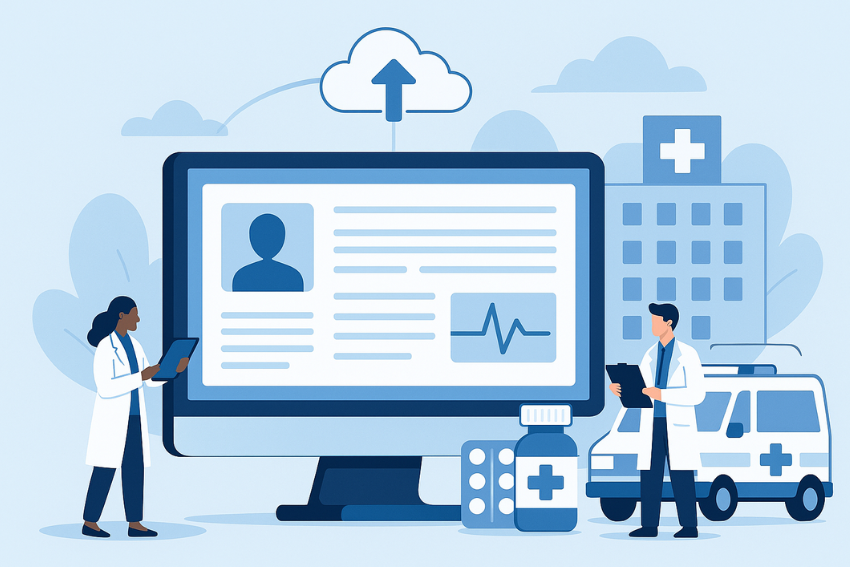
When it comes to the hospital management system, cloud-based solutions have been particularly useful since they enable scalable processes, accessibility over a distance, and effective data sharing. This results in more transparent operations, reduced errors in the manual, and increased accountability at all levels of care.
The ability to monitor all operations, appointments, records, billing, diagnostics, etc. and view all activities is one of the greatest benefits of the hospital management system. This is further improved by a smart hospital management system, which is also automated and based on analytics to make better decisions.
With increased adoption, Hospital management system remains a very important tool in enhancing transparency, where healthcare organizations are becoming more efficient and trustworthy in the delivery of their services.
Understanding Healthcare Transparency in the Digital Era
The issue of healthcare transparency has turned into a burning concern because digital technologies transform the model according to which hospitals manage, provide, and follow up care. As the expectations of patients grow, and the data flow requires smooth and effective flow, more modern facilities are turning to the use of sophisticated tools such as a Hospital Management System to promote transparency of work. Transparency in the modern context implies providing patients with clear access to their medical histories, treatment plans, billing records, and general care paths. This is where the benefits of the hospital management system get transformative and real time visibility and structured sharing of information across departments are made possible.
In a smart hospital management system, communication is enhanced through the unification of clinical, administrative, and financial workflow into a single digital environment. Hospitals can minimize ambiguity and gain patient trust through improved patient portal, automated reporting, audit trails, and electronic documentation features of the hospital management system. The features also assist the clinicians in having the right information on the hospital management system and making evidence-based decisions.
Hospital management system is in the process of changing to provide accessible cloud-enabled solutions to the increased adoption of digital. The modern hospital management system gives the hospitals transparency tools that enhance compliance, accountability, and patient engagement. Finally, the digital age is revisiting healthcare transparency through facilitating clear, reliable, and timely communication across all touchpoints.
Role of Cloud Technology in Modern Hospital Operations
Cloud technology is changing the nature of the functioning of hospitals to be more efficient, scalable, and data-driven in its approach to day-to-day operations. Cloud-enabled platforms assist the hospital in centralizing the information, facilitating workflow, and enhancing the interdepartmental collaboration as the healthcare industry moves toward the digital ecosystems. An online hospital management system on a cloud can enable clinicians and managers to view up-to-date information about patients, histories of their treatment, and diagnostic reports once in any place, which means that the care provided to patients will be continuous, and their decisions will be made more quickly.
The benefits of modern hospitals also include the ability of the hospital queue management system to shorten the waiting time, automate the process of appointments, and enhance the overall experience of patients. Cloud solutions have different modules of the hospital management system such as billing and OPD/IPD management, pharmacy, laboratories, inventory, and human resource, which allow hospitals to move their operations on a single digital backbone.
In places where digitalization is becoming more common, like in the case of the hospital management system, cloud-based systems can enable facilities to expand without incurring significant infrastructure expenditure. Moving to Hospital Management System Software on cloud would guarantee that the data is secure, backed automatically and meets the healthcare standards. Altogether, cloud computing is one of the essential aspects of the functioning of the hospitals nowadays as it enhances efficiency, reinforces connectivity, and promotes the changing requirements of the healthcare sector.
Real-Time Data Accessibility for Staff and Patients
Accessibility of real-time data has become a major necessity in the contemporary health care setting and advanced Hospital Management Systems in Healthcare have been at the center of providing this functionality. As care teams can now access updated patient records, lab results, prescriptions, and treatment progress, more effectively and minimize delays in decision-making. Cloud based hospital management system will make sure that doctors, nurses, and administrative staff will receive congruent information at each point, which reduces errors and enhances care continuity.
In the eyes of the patient, instant access provides the patient with the authority to be aware of their health progression. Individuals will be able to check their appointments, get notifications, look at reports, and track treatment plans at any point with the aid of the features the patients management system provides. It is a transparency that creates stronger trust and increases the involvement of patients in healthcare, which becomes more collaborative.
Real-time accessibility is emerging as a key distinguishing factor of hospitals which want to become efficient in its operations, especially in those areas where digital adoption is rapidly growing as seen in the case of hospital management system. Modern hospital management system assures the immediate reflection of the updates throughout the departments that include pharmacy and radiology to billing and discharge. Real-time data availability enhances clinical accuracy, increases productivity, and makes the patient experience in the healthcare ecosystem more seamless by facilitating the real-time flow of information.
Enhancing Operational Transparency Across Departments
It is necessary to increase the level of operational transparency in all departments as it helps to build trust, advance care delivery, and provide effective coordination among healthcare providers. An online system of hospital management is very important as it is centralizing the clinical, administrative, financial workflows and putting them into a single digital platform. This will enable all departments of the hospital (OPD, IPD, pharmacy, laboratory, radiology, billing, etc.) to have access to the same information on the hospital management system that is accurate, updated, and accessible in real time.
The large portfolio of modules of the hospital management system guarantees that information would be flowing without replication or human errors. To illustrate, the inclusion of a hospital queue management system assists in streamlining patients through the hospital, minimizing bottlenecks, and offers good visibility of waiting time in the hospital across departments. This transparency will increase cooperation among the staff, in addition to patient satisfaction.
The adoption of digital is assisting hospitals in eliminating the traditional silos in the hospital management system, which is a rapidly changing market. As the demands of clarity and accountability increase, the benefits of the hospital management system, including automated reports, audit trails, and centralized dashboards, will gain more value.
Modern hospital management system provides a culture of transparency and productivity where all actions will be recorded and could be traced. Hospitals will be able to provide safer, quicker, and more transparent healthcare services by enhancing communication between different departments and the visibility of data across all departments.
Also Read – How AI is Enhancing Hospital Management Systems
Key Features Supporting Transparency in Cloud HMS
Hospital management systems that run on the cloud are meant to increase the levels of clarity, accuracy, and accountability at every tier of healthcare operation. Centralized data management with patient records, clinical histories, billing details, and administrative inputs is one of the most influential features where patient records are stored in a single digital environment. This will guarantee that employees who utilize a Hospital Management System have access to real time and consistent information without delay or inaccuracies. This kind of availability can also greatly decrease the distance created in communication and enhance integrated care.
Cloud HMS also provides automated reporting, audit trails, and logs of activity. All these make the workflow transparent as every activity in the system, whether clinical or financial, is recorded. Secure patient portal is also a part of Modern Hospital Management System Software, and with it, one can easily monitor their appointments, review reports, and learn the treatment processes with ease.
Hospital management system focuses on transparency in quickly digitizing markets by providing such features as role-based access control, digital signatures, and integrated dashboards. These will assist in maintaining compliance levels and enhance accuracy within the departments. Cloud HMS as the holistic healthcare management system has the capability to help hospitals retain a clear communication channel, avoid any form of data silo, and foster trust with their staff and patients, consequently delivering better-quality and more transparent healthcare.
Data Security, Compliance, and Trust Building
The concept of data security and compliance is the fundamental question of contemporary digitalization of healthcare, particularly with the trend of progressively implementing cloud-based systems in hospitals. An effective smart hospital management system is one that will guarantee that sensitive patient data is safeguarded by using advanced encryption, secure access control, and attentive monitoring. Using a medical records protection system, hospitals will be able to ensure confidentiality and enhance a level of trust among patients and other stakeholders by protecting medical records, billing data, and diagnostic reports.
In the fast-changing market such as hospital management system, it is important that regulatory standards are complied with. Cloud-based HMS Software can meet such requirements by providing the following features: audit logs, digital authentication, automated backups, and controlled data access. The tools assist hospitals in compliance with industry standards and minimize the possibility of information leakage or misuse.
The different features in the hospital management system also are important in ensuring transparency and accuracy. Cloud solutions improve the integrity of administrative and clinical operations, since the security of records will be increased, as well as standardized workflows. Easy and open hospital management system information also enhances communication between departments, which simplifies safe and accountable operations.
Generally, the benefits of the patient information management system are not limited to efficiency, as it enhances the level of trust by providing data privacy, regulatory standards, and ethical management of patient data. Such a base of safety promotes status and boosts long-term patient relationships.
Cloud-Based Reporting and Analytics for Clear Insights
Online reporting and analytics have become the necessary part of the current healthcare work, which provides hospitals with the opportunities to analyze raw information to get valuable insights. A cloud-based Hospital Management System gathers data at multiple touchpoints, such as clinical, administrative, financial, and operational, and summarizes it on unified dashboards. This will enable the decision-makers to evaluate the performance patterns, detect areas of inefficiency, and make sound decisions that will improve the quality-of-service delivery and practice.
Analytics will be able to monitor the flow of appointments, the results of treatment, the productivity of the staff, and the performance of departments in real-time with the development of advanced modules of the hospital management system. The addition of other tools like a hospital queue management system also contributes to the clarity of the integration that shows real-time movement of patients and lessens the bottlenecks in service delivery. These lessons can assist hospitals in developing a more streamlined workflow and increase patient satisfaction.
Decision-making based on analytics has become competitive in the expanding digital environment of hospital management systems. The Hospital Management System Software based on the cloud makes data visualization easier and achieves faster strategic planning by means of automated charts, reports, and predictive insights. Since the system runs the hospital management system online, updates and reports are immediately available via authorized personnel hence timely flow of information that will be accurate.
Finally, reporting and analytics addressed with the help of clouds allow hospitals to become more transparent, efficient, and accountable in all their operations.
Streamlined Communication Between Patients and Providers
Community-based communication promoting safe, timely, and patient-centered care depends on effective communication between patients and healthcare providers. The emergence of digital transformation is seeing the modern Hospital Management Systems in the Healthcare sector changing the way hospitals communicate with the patients by providing quick, transparent, and organized communication channels. Cloud-based solutions ensure that the patients have easy access to their medical records, lab results, prescriptions, and appointment information without delay, eliminating the barriers that previously created obstacles in care coordination.
Patient portals, real-time notifications, online appointment reminders and so on are among the features that help people stay fully informed in the process of healthcare. These applications enhance trust through transparency, responsiveness, and effortless accessibility. To the providers, being able to get updated information about patients as it happens will mean that they make accurate decisions when it comes to making the treatment and minimize the risk of making mistakes. Nurses and doctors will be able to provide updates on care, data to be followed up on, and information about education by just using the system systematically and consistently.
With the changing nature of the digital space hospital management systems, communication-oriented features have been a priority in enhancing the processes of patient satisfaction and providing smooth experiences. Real-time messaging, tele talking services, and automatic service delivery are other means through which the interaction between patients and providers is further increased to ensure that there is no communication breakdown- irrespective of distance.
Streamlined communication within the healthcare teams is also accomplished with modern HMS Software as the departments can share patient updates, diagnostic outcomes, and treatment notes on an immediate basis. This will eliminate redundancy and accelerate care provision. Since communication is a part of a single digital ecosystem, it helps hospitals to become more connected, transparent, and friendly to patients, which supports relationships in the long term and improves the quality of care.
Conclusion
Cloud-based Hospital Management Systems can help in a massive way to increase the transparency of healthcare by centralizing data and making it accessible in real-time and boosting the communication between patients and providers. Hospitals in question can provide more responsible and patient-focused care with streamlined workflow, comprehensive reporting, and safe information sharing. Such systems decrease uncertainty, error, and give both employees and patients a chance to have precise, timely information. Finally, digital transformation based on the cloud develops trust, enhances teamwork, and creates a more open, productive, and transparent healthcare environment.