Short-term and long-term fixed deposits remain one of the most trusted investment options for Indian investors who value stability, predictable income, and capital protection. While market-linked instruments often dominate financial conversations, fixed deposits still play a quiet but powerful role in personal finance. They offer peace of mind in uncertain times and clarity in a world filled with volatility.
Many investors, however, face a familiar dilemma. Should they lock money into a short-term FD for flexibility, or should they commit to a long-term FD for potentially higher returns? The answer rarely sits at one extreme. It depends on timing, goals, cash flow needs, and interest rate cycles.
This detailed guide breaks down the difference between short-term and long-term fixed deposits, compares returns, explains tax impact, and helps you decide which option suits your financial journey best.
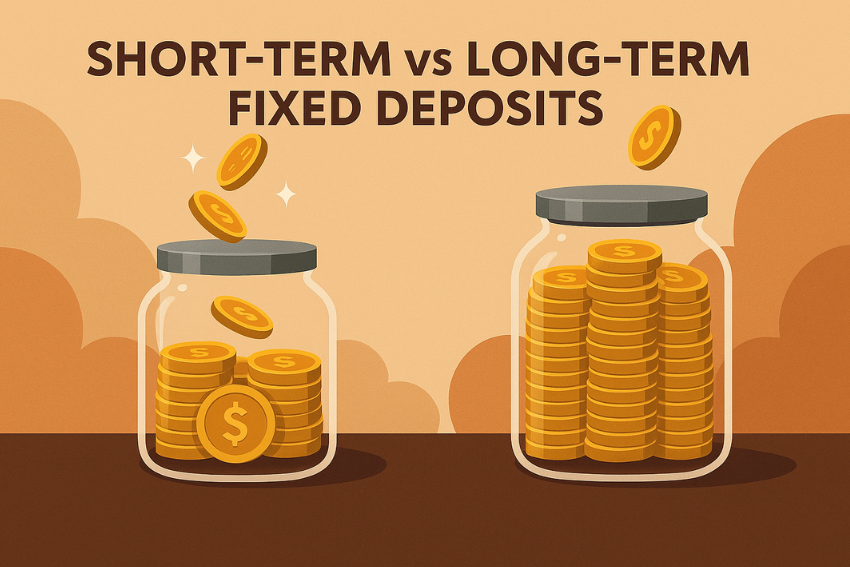
What is a Fixed Deposit (FD)?
A fixed deposit is a financial instrument where you deposit a lump sum with a bank or NBFC for a specific period at a predetermined interest rate. The institution pays interest either periodically or at maturity, depending on the chosen structure.
How Fixed Deposits Work
You invest a fixed amount for a chosen tenure. The bank applies a fixed interest rate for the entire duration. At maturity, you receive the principal along with earned interest.
Key Features of Fixed Deposits
- Fixed interest rate that does not change during the tenure
- Guaranteed returns unaffected by market movements
- Flexible tenure options ranging from day to year
Types of Fixed Deposits
- Regular FDs for general investors
- Tax saving FDs with 5-year lock in
- Senior citizen FDs offering higher interest rates
- Cumulative FDs where interest compounds and pay at maturity
- Non-cumulative FDs that provide regular income
Each type caters to a specific financial requirement, making FDs suitable for a wide range of investors.
What Is Short Term Fixed Deposits?
Short term fixed deposits usually have a tenure ranging from 7 days to 1 year. Banks design them for savers who prefer liquidity and flexibility over returns.
Key Features of Short-Term FDs
- High liquidity with easier access to funds
- Generally lower interest rates compared to longer tenures
Ideal Uses of Short-Term Fixed Deposits
- Parking emergency funds safely
- Managing near-term expenses
- Temporary parking during volatile markets
Short term FDs work best when financial goals lie close or when interest rates are expected to rise in the near future.
What Is Long Term Fixed Deposits?
Long term fixed deposits typically run from 1 year up to 10 years. These FDs reward patience by offering higher interest rates and compounding benefits.
Key Features of Long-Term FDs
- Higher interest rates compared to short tenures
- Compounding increases total returns over time
Ideal Uses of Long-Term Fixed Deposits
- Preserving wealth over long periods
- Planning for future milestones such as education or retirement
Long-term FDs suit investors who do not need immediate liquidity and prefer predictable long-range outcomes.
Short-Term vs Long-Term Fixed Deposits: Quick Comparison
| Feature | Short-Term FDs | Long-Term FDs |
| Tenure | 7 days to 1 year | 1 year to 10 years |
| Interest Rates | Lower | Higher |
| Liquidity | High | Low |
| Risk | Low | Low |
| Returns | Moderate | Better over time |
| Flexibility | High | Limited |
Short-Term vs Long-Term Fixed Deposits: Differences Explained
While both short-term and long-term fixed deposits offer safety and guaranteed returns, their real difference lies in how they fit into an investor’s financial timeline. Understanding these differences helps investors use FDs strategically rather than treating them as a one size fits all product.
Tenure and Investment Horizon
The most visible difference between the two lies in tenure. Short term fixed deposits usually span from a few days to up to one year. Investors use them to meet immediate or near future needs. In contrast, long term fixed deposits typically range from one year to ten years and align with medium to long range goals.
Shorter tenures appeal to investors who prefer flexibility, while longer tenures suit those with a clear and distant financial objective.
Interest Rates and Return Potential
Interest rates increase with longer commitment. Banks usually offer lower interest on short term deposits because funds remain available for repricing. Long term fixed deposits reward patience by offering higher interest rates and better maturity values.
Over time, the impact of compounding adds significant value to long term cumulative FDs. Short term FDs, while stable, rarely contribute meaningfully to wealth creation due to limited interest accumulation.
Liquidity and Access to Funds
Short term FDs allow quicker access to funds and function closer to a savings account, although with slightly higher returns and limited withdrawal flexibility. Investors often use short term fixed deposits as an alternative to idle savings account balances when they want safety along with marginally better interest.
Long term FDs, on the other hand, restrict liquidity significantly compared to a savings account. Premature withdrawals attract penalties and may reduce effective returns. Investors should avoid locking money required for flexible or day-to-day expenses into long-term deposits and instead keep such funds in a savings account or short-term FD.
Risk and Capital Safety
Both short- and long-term fixed deposits carry low risk. Returns remain unaffected by market volatility, which makes them appealing to conservative investors. The difference lies not in capital risk, but in opportunity risk.
Short-term deposits reduce the risk of locking money at low interest rates. Long-term deposits reduce reinvestment risk by securing stable returns for extended periods.
Flexibility and Financial Control
Short term FDs offer greater control over investment decisions. Investors can frequently reassess rates, switch institutions, or redirect funds toward better opportunities.
Long term FDs limit flexibility but encourage financial discipline. They work well for investors who prefer structured saving and predictable outcomes without frequent portfolio adjustments.
Returns Over Time
Returns from short term FDs remain moderate due to limited interest duration. Long term FDs benefit from higher rates and compounding, resulting in stronger maturity values over time.
Although both options provide guaranteed income, long term fixed deposits perform better when the goal involves stability and gradual capital growth.
Interest Rate Comparison
Tenure plays a major role in FD interest rates. Financial institutions reward longer commitments with higher rates to encourage stable deposits.
- Impact of Tenure on Interest Rates: Short durations generate lower returns because banks can reprice deposits quickly. Longer tenures lock funds, allowing banks better capital planning.
- Role of RBI Policy Changes: Repo rate movements directly influence FD rates. When rates rise, new deposits offer higher returns. When rates fall, long term FDs protect investors by locking higher rates earlier.
- Example Across Banks: A one-year FD might offer moderate returns, while the same bank may pay noticeably higher interest for a five-year commitment.
- Effect of Compounding: Long term cumulative FDs benefit significantly from compounding. Interest earns interest, accelerating total returns over time.
Pros and Cons of Short-Term FDs
Advantages
- Easy access to funds during emergencies
- Ability to reinvest at better rates if interest rises
- Lower exposure to changing interest cycles
Disadvantages
- Lower overall returns
- Frequent reinvestment effort
- Limited wealth building capability
Short term FDs serve tactical needs rather than long range growth.
Pros and Cons of Long-Term FDs
Advantages
- Stable and higher returns
- Suitable for disciplined long-term saving
- Compounding enhances maturity value
Disadvantages
- Limited liquidity
- Penalties apply for early withdrawal
- Locked rates may underperform future market rates
Long term FDs suit investors comfortably with predictability and long commitments.
Tax Implications
Interest earned from fixed deposits qualifies as taxable income under the Income Tax Act.
Key Tax Points to Know
- Banks deduct TDS if interest exceeds prescribed limits
- Senior citizens enjoy higher exemption thresholds
- Tax saving FDs offer deductions under Section 80C but include a 5-year lock in
Short term and long-term FDs follow similar tax rules, but higher interest over long periods increases tax outflow.
When Should You Choose Short Term FDs?
Short term fixed deposits make sense:
- When you require high liquidity
- When interest rates show upward trends
- When goals require funds within a year
They complement long-term investments by providing stability and access.
When Should You Choose Long Term FDs?
Long term FDs work best:
- When seeking predictable stable income
- When current interest rates appear attractive
- When planning long range financial goals
They suit conservative portfolios focused on capital protection.
Expert Tips to Maximize FD Returns
Seasoned investors use strategies to enhance returns without increasing risk.
- Follow laddering by spreading deposits across different tenures
- Comparing rates offered by banks and NBFCs
- Choose cumulative deposits to benefit from compounding
- Evaluate post tax and adjusted inflation returns
These steps improve efficiency and prevent missed opportunities.
Common Mistakes to Avoid
Many investors lose potential returns through avoidable errors.
- Locking long-term deposits during low-rate cycles
- Ignoring inflation impact on real returns
- Failing to compare interest rates across institutions
- Allocating excessive savings only to fixed deposits
Balanced planning helps preserve both returns and purchasing power.
Conclusion: Which Is Better?
Short term and long-term fixed deposits each serve a purpose. Neither wins universally.
Short term FDs offer liquidity and tactical flexibility. Long term FDs deliver stability and disciplined growth. The smarter approach blends both.
A balanced portfolio uses short term FDs for emergencies and near goals, while long term FDs support future security. This strategy aligns safety with growth and ensures peace of mind across economic cycles.
FAQs
Which FD gives the highest return?
Long-term fixed deposits usually offer higher returns due to better interest rates and compounding benefits.
Are short term FDs safe?
Yes. Short-term fixed deposits carry low risk and provide high liquidity, making them ideal for temporary funds.
Can I withdraw my FD before maturity?
Yes. Banks allow premature withdrawal, but they apply penalties or reduced interest.
Is long term FD better than short term FD?
It depends on financial goals, liquidity needs, and interest rate expectations. A mix of both often works best.