Skill-based learning has emerged as one of the most effective learning methods as it emphasizes practical learning, knowledge that can be used in real life situations. This learning approach goes beyond mere theory, equipping students, professionals, and lifelong learners with the ability to acquire and apply specific skills that have a direct impact on their academic success, career opportunities, and personal development.
In today’s changing job markets, with the rise of new technologies and a shift in the workplace, employers are looking for candidates with hands-on experience that goes beyond the classroom. As a result, skill-based learning has become a critical part of the learning landscape today and in the workplace.
In this guide, we explore the meaning of skill-based learning, its key characteristics, major benefits, and the expanding scope across education and industry.
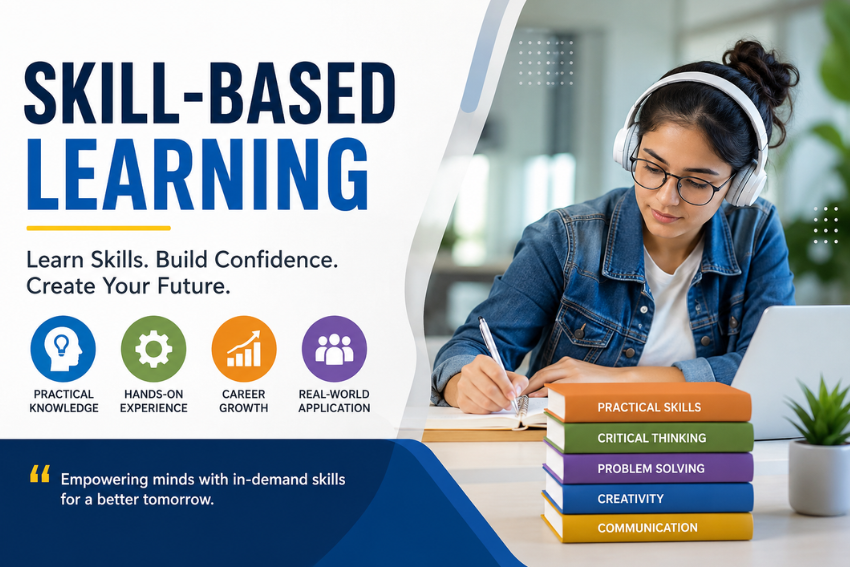
What Is Skill-Based Learning?
Skill-based learning is an educational technique that focuses on the development of knowledge, skills, and social and emotional competencies through hands-on activities and learning. Learners learn how to perform confidently in real world situations rather than memorizing information for examination.
The method aims to get students to put concepts into practice as soon as possible through projects, practical applications, simulations, workshops, internships, and group exercises.
Skill-based learning is a method by which people acquire the skills, problem solving skills and workplace competences through hands-on learning and practical applications.
Primary Goal of Skill-Based Learning
The main aim of skill-based learning is to close the gap between education and employment. Theoretical education is more popular, but skill-based education helps to make the students know how to apply their knowledge.
The continuous improvement approach allows students to learn, refine their skills, get feedback, and evolve in response to industry needs.
Skill-based learning focuses on developing competencies such as:
- Technical expertise
- Communication skills
- Leadership abilities
- Critical thinking
- Problem solving
- Time management
- Collaboration
- Digital literacy
- Creativity
- Adaptability
These skills are important for learners to develop not just for their working life but in everyday life too.
Key Features of Skill-Based Learning
It is important to note that there are several characteristics that differentiate skill-based learning from traditional learning.
- Practical Learning: Learners have practical experience on the work through practical actions rather than reading books.
- Active Participation: Students participate in discussions, experiments, presentations, workshops and collaborative projects that enhance understanding.
- Real World Application: Lessons are directly related to real world applications, and learners will be required to solve real world problems.
- Continuous Assessment: An assessment that is based not only on written examinations but on assignments, demonstrations, portfolios, practical tests and project outcomes.
- Personalized Learning: Learners use their strengths, interests, and career goals to pave their own path, and build competencies at their own speed.
- Industry Relevance: Courses are tailored to meet the expectations of industry and the changing requirements of the job market.
Why Skill-Based Learning Matters Today
The modern workplace is more than an academic credential. Employers look for workers that can tackle problems, communicate clearly, work in a team, and be flexible with new technology.
Skill-based learning helps learners get ready for these expectations, giving them confidence in doing so.
Some reasons why this approach has become increasingly important include:
- Rapid technological advancements
- Automation across industries
- Growing demand for specialized skills
- Increased competition in the job market
- Rising emphasis on lifelong learning
- Greater focus on employability
Employers often prioritize candidates who demonstrate practical capabilities over those with only theoretical knowledge.
Major Benefits of Skill-Based Learning
There are benefits to skill-based learning for students, for professionals, and for educational institutions.
- Improves Employability: Skills make candidates more appealing to recruiters and boost their job readiness. The person with the competencies will do better in the interview and workplace assessment.
- Enhances Problem Solving Skills: Real-life activities engage students in solving real problems which involve analytical thinking and informed decision making. Rather than just memorizing responses, students learn to assess and produce good solutions.
- Builds Confidence: Frequent practice leads to competence. Gradually, as the learners are able to accomplish practical tasks, they feel good about their capabilities and are prepared to accept new duties.
- Encourages Independent Learning: Skill-based learning encourages curiosity and self-improvement. Learners are actively seeking out and acquiring information and are working independently and continuing to build their skills outside of class.
- Develops Communication Skills: There are many learning activities that include presentations, teamwork, discussion and client interaction which assist people in communicating clearly and professionally.
- Supports Career Growth: Workers who are always acquiring new skills will be more competitive in the ever-evolving job market and better equipped to take on leadership and promotion opportunities.
- Strengthens Critical Thinking: Practical learning requires learners to evaluate information, compare alternatives, and make informed decisions rather than relying on memorization.
- Improves Knowledge Retention: People tend to retain information better when they have an opportunity to apply it through practice. Passive reading does not lead to as strong a long-term understanding as learning by doing.
Types of Skills Developed Through Skill-Based Learning
Skill-based learning helps individuals develop a balanced combination of technical expertise and soft skills.
Technical Skills
These include job specific competencies such as:
- Programming
- Graphic design
- Digital marketing
- Data analysis
- Accounting
- Machine operation
- Healthcare procedures
- Engineering techniques
Soft Skills
Soft skills contribute significantly to workplace success.
Examples include:
- Communication
- Leadership
- Teamwork
- Emotional intelligence
- Adaptability
- Time management
- Conflict resolution
- Negotiation
- Decision making
Digital Skills
Modern careers increasingly require digital proficiency.
Important digital skills include:
- Artificial intelligence tools
- Cloud computing
- Cybersecurity awareness
- Spreadsheet analysis
- Online collaboration
- Content creation
- Social media management
- Data visualization
Skill-Based Learning vs Traditional Learning
This is important to note because it shows the difference between these two techniques, and why learning through doing has become popular.
| Skill-Based Learning | Traditional Learning |
|---|---|
| Focuses on practical application | Focuses mainly on theory |
| Encourages active participation | Often emphasizes lectures |
| Measures competency | Measures memorization |
| Uses projects and practical assessments | Relies heavily on written examinations |
| Builds workplace readiness | Builds academic knowledge |
| Promotes continuous improvement | Often follows fixed curricula |
While traditional education provides foundational knowledge, combining it with Skill-based learning creates well rounded individuals who are prepared for real world challenges.
Examples of Skill-Based Learning
Skill-based learning can be implemented across different educational levels and industries.
Common examples include:
- Coding boot camps
- Laboratory experiments
- Business case studies
- Internship programs
- Apprenticeships
- Clinical training
- Entrepreneurship workshops
- Robotics competitions
- Digital marketing projects
- Public speaking exercises
- Financial planning simulations
- Design thinking workshops
These activities encourage learners to practice, receive feedback, and continuously improve their performance.
Scope of Skill-Based Learning
This range of skill-based learning keeps growing as industries are revolutionizing and companies look for someone with hands-on knowledge. Nowadays it’s not only used in vocational education. Skill based education has become a part of the curriculum of schools, colleges and universities, corporate organizations and online learning platforms, so as to equip learners to meet real world challenges. With the need for flexible workers, skill-based learning has proven to be a beneficial approach in almost all industries.
- Education: To enhance student engagement and learning outcomes, educational institutions incorporate practical activities into their courses. Students engage in project-based tasks, laboratory activities, coding problems, presentations, and group research to boost their confidence and competence.
- Corporate Training: Businesses take the effort in investing in skill development programs to enhance employee performance and productivity. Leadership development, communication skills, technical training, customer service training, and digital transformation are common areas of focus for corporate training programs.
- Healthcare: Healthcare workers need to regularly update their skills to learn new procedures, technologies, and patient care practices. Hands on clinical training keeps health care workers at a high level of service quality.
- Information Technology: Continuous learning is needed as the technology industry keeps changing rapidly. Professionals are constantly learning new software development, cyber security, cloud computing, artificial intelligence, machine learning and data analytics skills.
- Manufacturing: Modern manufacturing relies on skilled workers who understand automation, quality control, safety procedures, equipment maintenance, and production management.
- Creative Industries: Designers, writers, photographers, video editors, marketers, and content creators refine their abilities through continuous practice, portfolio development, and industry projects.
Importance of Skill Based Learning Across Different Industries
The goal of modern education is to help students grow to be successful in their careers, not just in examinations. Skill based learning closes the divide between what’s taught in class and what’s expected at work.
Some key reasons why it is essential include:
- Improves job readiness
- Encourages innovation
- Promotes lifelong learning
- Enhances practical knowledge
- Increases confidence
- Supports entrepreneurship
- Builds leadership qualities
- Develops adaptability
- Improves teamwork and collaboration
- Strengthens decision making skills
Students who actively practice their skills often become independent learners capable of solving complex problems with confidence.
How to Implement Skill-Based Learning Effectively
The benefits of skill-based learning can be maximized when followed by a structured approach, whether in an organization or an educational institution.
- Identify Learning Objectives: Clearly state the practical competencies to be acquired by the learners. Objectives should be based on industry and career norms.
- Use Real World Projects: Give tasks that are similar to work tasks. Realistic projects are used for the learners to see how theoretical concepts are applied in the workplace.
- Encourage Active Participation: Encourage discussion, teamwork, presentations, workshops, and practical demonstrations that maintain active participation of learners.
- Provide Continuous Feedback: Encourage learners to see their strengths and how they can improve. Assessment encourages continuous growth through regular assessment.
- Leverage Technology: Skill development is more accessible and engaging with online collaboration platforms, artificial intelligence tools, virtual simulations and learning management systems.
- Promote Self Learning: Support the learner to look for further resources, complete online courses, obtain certifications, practice on their own.
Challenges of Skill-Based Learning
Although skill-based learning offers numerous advantages, institutions and organizations may face certain challenges during implementation.
Limited Resources: Practical training often requires specialized equipment, software, laboratories, or experienced instructors.
Solution: Invest in digital platforms, virtual labs, and partnerships with industry experts.
Curriculum Constraints: Some educational systems continue to prioritize theoretical examinations over competency development.
Solution: Balance academic knowledge with project-based assessments and practical evaluations.
Rapid Technological Changes: Technology evolves quickly, making some skills outdated within a short period.
Solution: Update course content regularly and encourage lifelong learning habits.
Assessment Difficulties: Evaluating practical competencies can be more complex than grading written examinations.
Solution: Use portfolios, practical demonstrations, peer reviews, presentations, and performance-based assessments.
Future of Skill-Based Learning
The future of skill-based learning looks promising as technology transforms education and employment. Several trends are shaping its evolution.
- Artificial Intelligence Powered Learning: AI driven platforms personalize learning experiences by identifying individual strengths and recommending targeted practice.
- Virtual Reality and Augmented Reality: Immersive simulations allow learners to practice complex procedures safely and effectively.
- Microlearning: Short, focused lessons help learners acquire new skills quickly while balancing work and personal commitments.
- Competency Based Education: Educational institutions increasingly award credentials based on demonstrated competencies rather than time spent in classrooms.
- Digital Credentials: Employers recognize digital certificates and verified skill badges as evidence of practical expertise.
As industries continue to evolve, continuous skill development will become essential for career advancement and long-term employability.
Conclusion
Skill-based learning has transformed the way we prepare for education, employment, and lifelong success. By emphasizing practical experience alongside theoretical knowledge, it equips learners with the confidence and competence needed to thrive in a rapidly changing world.
Whether someone is a student preparing for a first job, a professional aiming for career advancement, or an entrepreneur building a business, developing practical skills creates lasting value. Organizations also benefit by building capable teams that adapt quickly, solve problems efficiently, and contribute to innovation.
As technology continues to reshape industries, the importance of continuous learning will only increase. Individuals who invest in skill development today will be better positioned to embrace future opportunities, remain competitive in the job market, and achieve sustainable professional growth.
By integrating skill-based learning into education, training, and everyday practice, we create a future where knowledge is not only understood but also applied with confidence and purpose.
Frequently Asked Questions About Skill-Based Learning
What is skill-based learning in simple words?
Skill based learning is an educational approach that focuses on developing practical abilities through hands on activities, real world projects, and active participation instead of relying only on theoretical knowledge.
Why is skill-based learning important?
It prepares learners for real workplace challenges, improves employability, builds confidence, enhances problem solving abilities, and develops communication and leadership skills.
Who can benefit from skill-based learning?
Students, professionals, entrepreneurs, job seekers, educators, and organizations can all benefit from skill-based learning because it supports continuous growth and career development.
What is the difference between skill based learning and traditional learning?
Traditional learning primarily emphasizes theoretical knowledge and examinations, while skill-based learning focuses on practical application, competency development, and real-world performance.
Can skill-based learning improve career opportunities?
Yes. Employers increasingly prefer candidates who demonstrate practical expertise, adaptability, communication skills, and the ability to solve workplace problems effectively.